THE ADVENTURE COLLECTIVE® · Independent discovery and booking for outdoor travel

Cross the High Atlas and trade the bustle of Marrakech for the quiet of Erg Chebbi. This four-day circuit pairs kasbahs, dramatic gorges, and a camel-led night in the Merzouga dunes—ideal for travelers who want landscape, culture, and a clear night sky.
Cross the High Atlas and trade the bustle of Marrakech for the quiet of Erg Chebbi. This four-day circuit pairs kasbahs, dramatic gorges, and a camel-led night in the Merzouga dunes—ideal for travelers who want landscape, culture, and a clear night sky.
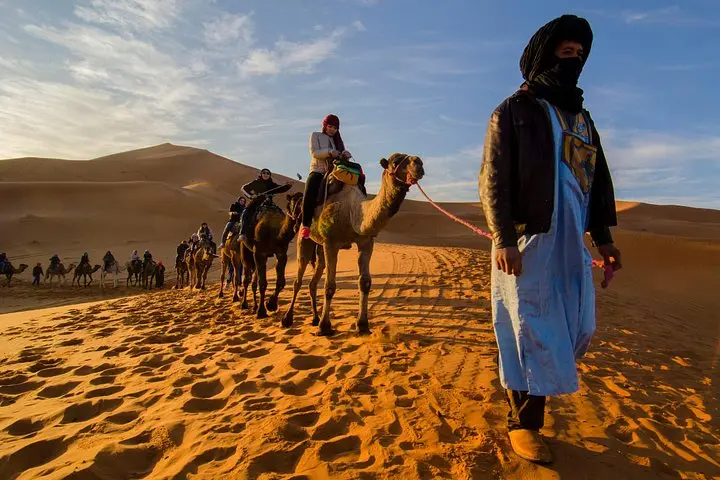
A line of asphalt unwinds from the Atlas foothills into a sea of ochre: wind-sculpted ridges of Erg Chebbi rise like waves, and the camel caravan is a slow, deliberate punctuation against the horizon.
Verified experiences and guided adventures in the surrounding area.
Operated by Marrakech Tours · Merzouga, Drâa-Tafilalet
A line of asphalt unwinds from the Atlas foothills into a sea of ochre: wind-sculpted ridges of Erg Chebbi rise like waves, and the camel caravan is a slow, deliberate punctuation against the horizon.
Over four days you move from Atlantic cities and packed medinas into an arid world shaped by wind and trade. The route threads Marrakech’s Koutoubia and Jemaa el-Fnaa, climbs the Tizi n'Tichka pass (about 2,260 m) over the High Atlas, then descends through palm-lined valleys into the Dades and Todra gorges before the dunes of Merzouga, where sand accumulates into crescents reaching roughly 100–150 m.
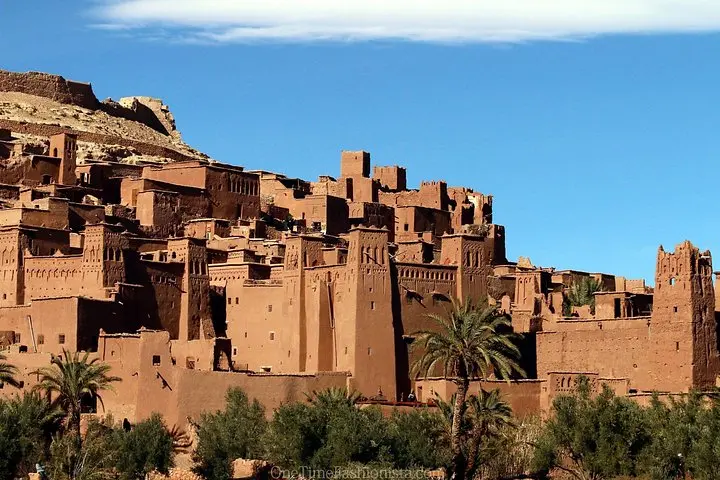
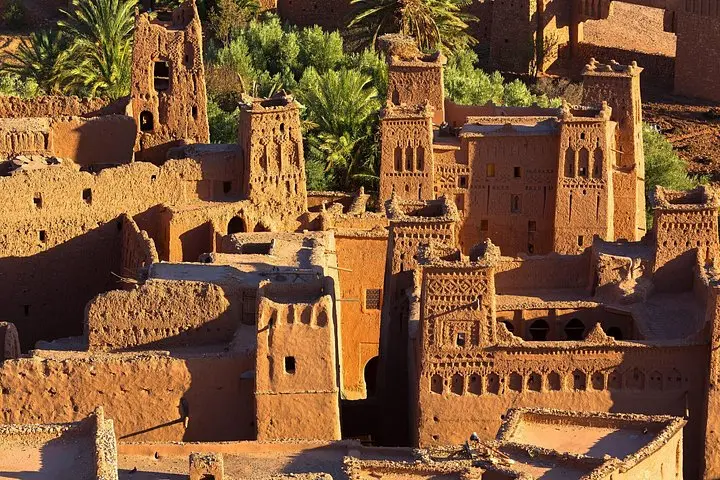
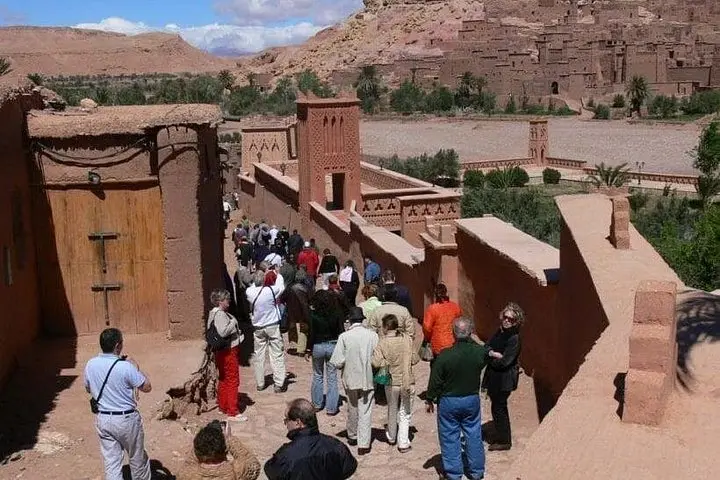
Aït Benhaddou’s earthen kasbahs recall a time when trans-Saharan caravans linked sub-Saharan markets with Mediterranean ports; local Berber communities maintain craft and music traditions you’ll encounter in villages and at a Gnawa music stop near Khamlia.
Practicalities are straightforward: expect long driving stretches (hundreds of kilometers of paved road), short guided walks, and a camel transfer to a well-equipped desert camp for an overnight under clear night skies. Temperatures swing widely—warm days and cool nights—so layer clothing. Bring ample water, sun protection, and a small daypack for camera gear and personal items.
Photography rewards early mornings and sunset hours on the dunes; stargazing is exceptional thanks to low light pollution. The experience balances cultural stops, dramatic geology, and the deliberate pace of desert travel—an accessible expedition that asks for patience on the road and curiosity in every village.
The itinerary begins in Casablanca and runs via Marrakech to Merzouga, returning to Marrakech for final drop-off on day four.
Camel treks are low-intensity and guided by experienced handlers; riders should be comfortable mounting/dismounting and sitting for about 1–2 hours.
Camps are typically well-equipped with private or shared tents, mattresses, meals, and ablution facilities—expect simple comforts rather than luxury hotel standards.
The highest point is the Tizi n'Tichka pass (~2,260 m); most travelers tolerate it well, but those sensitive to altitude should monitor symptoms and stay hydrated.
Marrakech Tours operates guided outdoor trips and adventures with an emphasis on safety, stewardship, and memorable experiences.
A line of asphalt unwinds from the Atlas foothills into a sea of ochre: wind-sculpted ridges of Erg Chebbi rise like waves, and the camel caravan is a slow, deliberate punctuation against the horizon.
A line of asphalt unwinds from the Atlas foothills into a sea of ochre: wind-sculpted ridges of Erg Chebbi rise like waves, and the camel caravan is a slow, deliberate punctuation against the horizon.
Over four days you move from Atlantic cities and packed medinas into an arid world shaped by wind and trade. The route threads Marrakech’s Koutoubia and Jemaa el-Fnaa, climbs the Tizi n'Tichka pass (about 2,260 m) over the High Atlas, then descends through palm-lined valleys into the Dades and Todra gorges before the dunes of Merzouga, where sand accumulates into crescents reaching roughly 100–150 m.
Aït Benhaddou’s earthen kasbahs recall a time when trans-Saharan caravans linked sub-Saharan markets with Mediterranean ports; local Berber communities maintain craft and music traditions you’ll encounter in villages and at a Gnawa music stop near Khamlia.
Practicalities are straightforward: expect long driving stretches (hundreds of kilometers of paved road), short guided walks, and a camel transfer to a well-equipped desert camp for an overnight under clear night skies. Temperatures swing widely—warm days and cool nights—so layer clothing. Bring ample water, sun protection, and a small daypack for camera gear and personal items.
Photography rewards early mornings and sunset hours on the dunes; stargazing is exceptional thanks to low light pollution. The experience balances cultural stops, dramatic geology, and the deliberate pace of desert travel—an accessible expedition that asks for patience on the road and curiosity in every village.