THE ADVENTURE COLLECTIVE® · Independent discovery and booking for outdoor travel

Drive the High Atlas, sleep in a desert camp, and ride camels at sunrise on this four-day loop from Marrakech to Merzouga. Expect kasbahs, palm oases, sculpted gorges and star-filled nights—ideal for travelers who want immersive desert landscapes with comfortable logistics.
Drive the High Atlas, sleep in a desert camp, and ride camels at sunrise on this four-day loop from Marrakech to Merzouga. Expect kasbahs, palm oases, sculpted gorges and star-filled nights—ideal for travelers who want immersive desert landscapes with comfortable logistics.
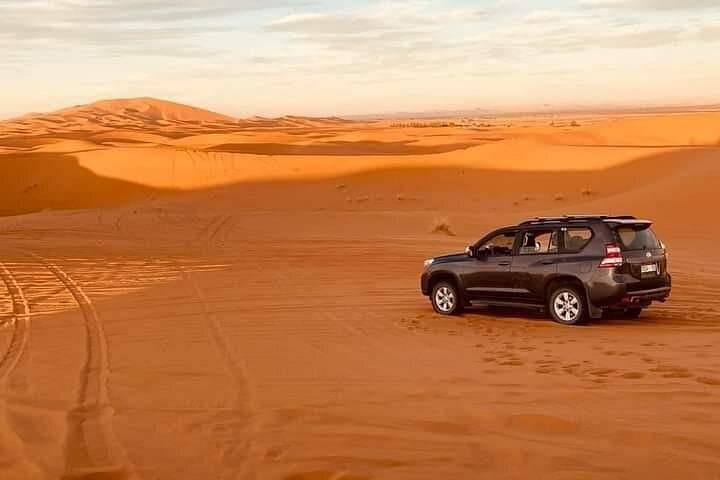
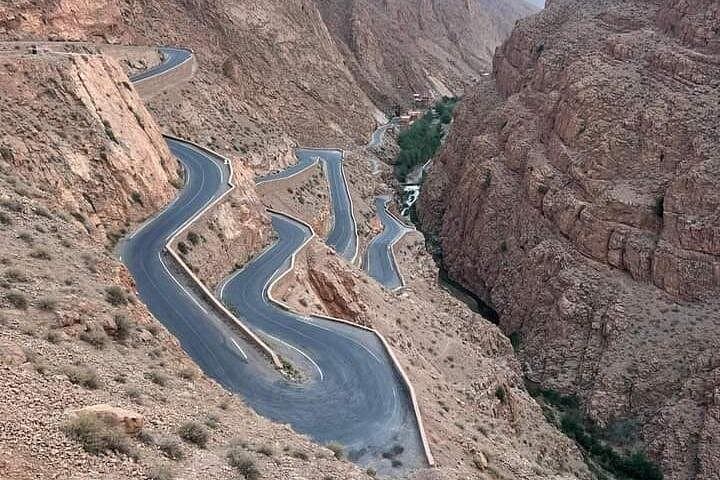
You step out before dawn onto Marrakech’s riad courtyard, coffee steam lifting into a chill that already smells of cinnamon and diesel. The road climbs Tizi n’Tichka, ribboning through the High Atlas as ochre villages shrink behind stone walls. Over four days the landscape opens—kasbah-lined gorges, palm-fringed oases, and the great sweep of Erg Chebbi where dunes lean like living waves.
Verified experiences and guided adventures in the surrounding area.
Operated by berber travel · Merzouga, Drâa-Tafilalet
You step out before dawn onto Marrakech’s riad courtyard, coffee steam lifting into a chill that already smells of cinnamon and diesel. The road climbs Tizi n’Tichka, ribboning through the High Atlas as ochre villages shrink behind stone walls. Over four days the landscape opens—kasbah-lined gorges, palm-fringed oases, and the great sweep of Erg Chebbi where dunes lean like living waves.
This route follows living history: the Ait Ben Haddou ksar and Ouarzazate’s film studios testify to a frontier that’s been traded, filmed and fortified for centuries. Geologically the region is a study in contrasts—folded High Atlas, the volcanic outcrops of Jbel Saghro, and wind-sculpted sand sheets that migrate under persistent Sahara winds.
Culture here is Berber and caravan-born: Rissani’s markets echo with the same rhythms that once guided salt caravans, and villages around the Draa Valley still handcraft pottery and silverwork.
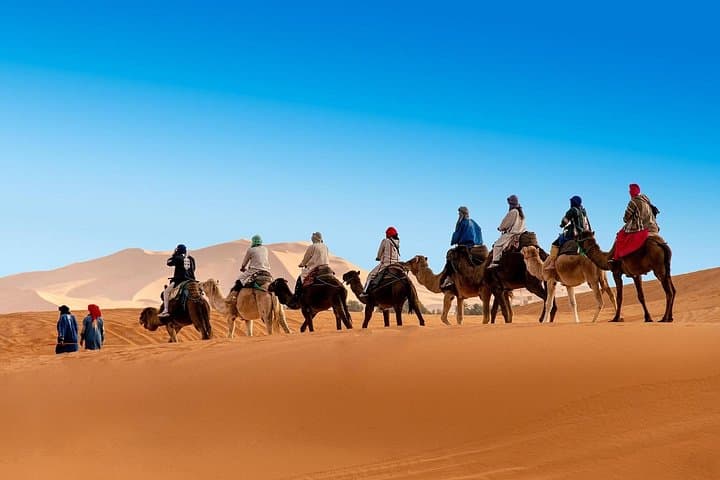
Practically, expect long, scenic drives punctuated by short walks at Todgha Gorges and photo stops at kasbahs. Two desert nights—one in a comfortable camp and one in simple guesthouse or riad—mean you’ll sleep under the stars and in stone-walled villages. Camel rides for sunrise and sunset are included; they’re slow, steady, and require basic balance.
Bring layers for hot days and cold nights, sun protection, and a reusable water bottle. Plan for early starts to avoid midday heat, and carry small-change for market purchases and tips. This tour is low on technical difficulty but rich in remote, tactile landscapes and culture.
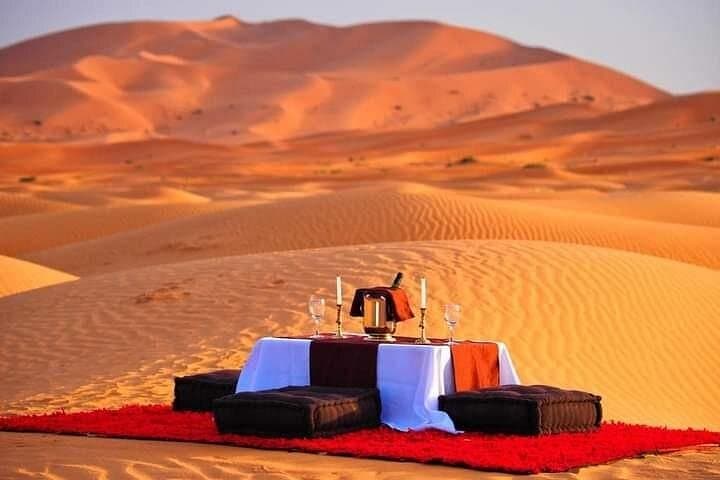
The itinerary includes riads or guesthouses in valleys and a Sahara desert camp for one night; camps range from simple nomad tents to more comfortable fixed-camp berths depending on operator choice.
Camel rides are gentle and slow; they’re generally suitable for most ages but require basic mobility to mount and dismount—inform the operator of mobility issues in advance.
This is a private tour, so timing and stops can often be adjusted within the driver’s schedule—confirm any special requests when booking.
Visa requirements depend on your nationality—many countries have visa-free entry for short stays; routine vaccinations are recommended, and consult your doctor for travel-specific advice.
berber travel operates guided outdoor trips and adventures with an emphasis on safety, stewardship, and memorable experiences.
You step out before dawn onto Marrakech’s riad courtyard, coffee steam lifting into a chill that already smells of cinnamon and diesel. The road climbs Tizi n’Tichka, ribboning through the High Atlas as ochre villages shrink behind stone walls. Over four days the landscape opens—kasbah-lined gorges, palm-fringed oases, and the great sweep of Erg Chebbi where dunes lean like living waves.
You step out before dawn onto Marrakech’s riad courtyard, coffee steam lifting into a chill that already smells of cinnamon and diesel. The road climbs Tizi n’Tichka, ribboning through the High Atlas as ochre villages shrink behind stone walls. Over four days the landscape opens—kasbah-lined gorges, palm-fringed oases, and the great sweep of Erg Chebbi where dunes lean like living waves.
This route follows living history: the Ait Ben Haddou ksar and Ouarzazate’s film studios testify to a frontier that’s been traded, filmed and fortified for centuries. Geologically the region is a study in contrasts—folded High Atlas, the volcanic outcrops of Jbel Saghro, and wind-sculpted sand sheets that migrate under persistent Sahara winds.
Culture here is Berber and caravan-born: Rissani’s markets echo with the same rhythms that once guided salt caravans, and villages around the Draa Valley still handcraft pottery and silverwork.
Practically, expect long, scenic drives punctuated by short walks at Todgha Gorges and photo stops at kasbahs. Two desert nights—one in a comfortable camp and one in simple guesthouse or riad—mean you’ll sleep under the stars and in stone-walled villages. Camel rides for sunrise and sunset are included; they’re slow, steady, and require basic balance.
Bring layers for hot days and cold nights, sun protection, and a reusable water bottle. Plan for early starts to avoid midday heat, and carry small-change for market purchases and tips. This tour is low on technical difficulty but rich in remote, tactile landscapes and culture.