THE ADVENTURE COLLECTIVE® · Independent discovery and booking for outdoor travel

A deliberate four-day trek through Arusha National Park that serves as both a serious acclimatization climb and a rewarding summit objective in its own right. Expect forested trails, alpine scree, crater-edge views and practical support—rangers, cooks and porters included.
A deliberate four-day trek through Arusha National Park that serves as both a serious acclimatization climb and a rewarding summit objective in its own right. Expect forested trails, alpine scree, crater-edge views and practical support—rangers, cooks and porters included.
A thin dawn steals over the forest as your group files out of the vehicle and into Arusha National Park. Mist clings to moss-draped trunks, and the first hour feels like a walking safari—colobus monkeys and hornbills marking the route while an armed ranger moves quietly at the rear. That opening day through montane forest is deliberate: the trail eases you upward, trading the city heat for the cool, damp hush of the upper slopes.
Verified experiences and guided adventures in the surrounding area.
Operated by Shah Tours Travel Ltd. · Arusha, Arusha Region
A thin dawn steals over the forest as your group files out of the vehicle and into Arusha National Park. Mist clings to moss-draped trunks, and the first hour feels like a walking safari—colobus monkeys and hornbills marking the route while an armed ranger moves quietly at the rear. That opening day through montane forest is deliberate: the trail eases you upward, trading the city heat for the cool, damp hush of the upper slopes.
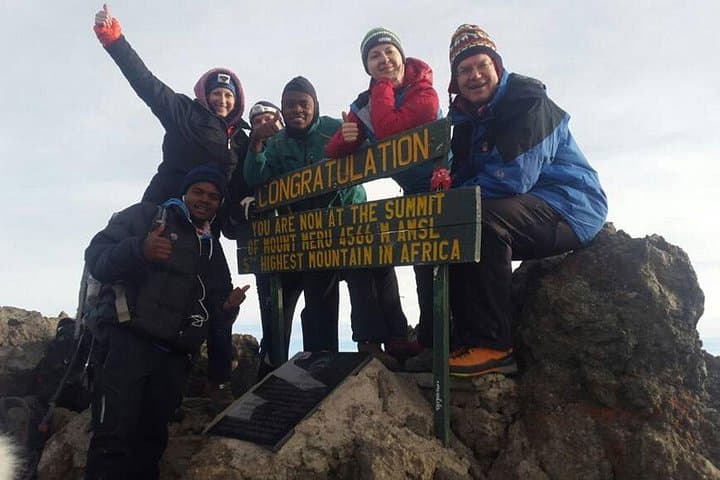
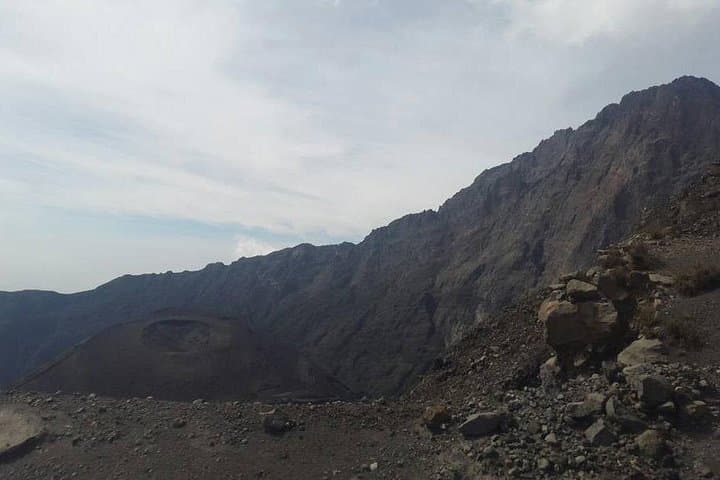
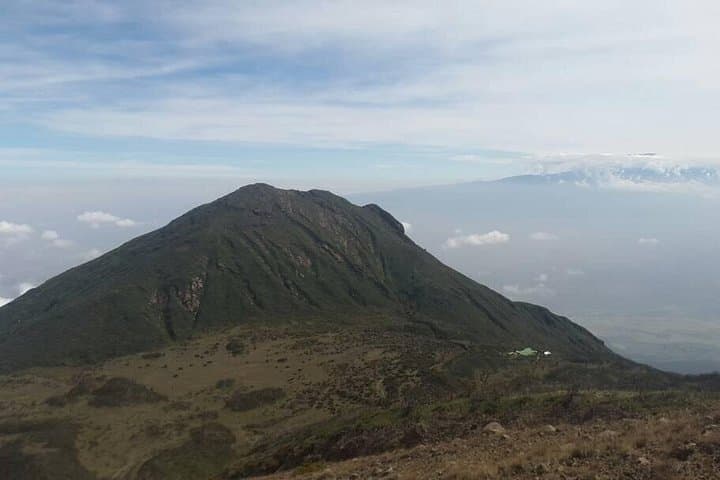
Mount Meru is Tanzania’s second-highest peak at 4,566 m (14,980 ft) and a live volcano whose broad cone and nested crater cut a dramatic bowl into the skyline. Geologically, Meru is younger than nearby Kilimanjaro and shows its volcanic past in alternating bands of forest, heathland and loose scree. The climb is often planned as an acclimatization trek before Kilimanjaro—its gradual profile and overnight huts give your body time to adapt—but Meru also rewards as a standalone objective: the summit ridge gives panoramic views into the Meru crater and, on a clear day, a distant Kilimanjaro dominating the eastern horizon.
Local context matters here. The mountain sits within Arusha National Park, a protected area that balances tourism and conservation; park rangers accompany groups not just for security but to protect wildlife and fragile plant communities. Cultural notes: the climb passes land historically used by the Meru and Maasai peoples—guides often weave stories of local ecology and traditional uses of medicinal plants into the route briefings.
Practically, the standard 4-day itinerary covers roughly 25–35 km round-trip with about 2,800–3,200 m of elevation gain from the park gate to the summit. Terrain moves from well-shaded singletrack in thick forest to ericaceous heath and then to loose volcanic scree and ridge walking above the huts. Shared mountain huts provide basic mattresses and public loos, with meals cooked by team cooks; boiled drinking water is provided from the first hut onward. Porters carry up to 12 kg per person and trained guides perform twice-daily health checks using a medical oximeter.
Preparation tips: train with long uphill walks and stair intervals, break in waterproof boots, and bring layered clothing—temperatures swing from humid forest warmth to alpine cold near the summit. Trekking poles and a headlamp are essential for the pre-dawn summit push. Altitude is the primary risk; heed guides’ advice, communicate symptoms early, and consider acetazolamide if you’ve discussed it with a clinician.
Logistics are straightforward: pre-climb briefings occur in Arusha or Moshi, transfers to park gates are included, and an armed ranger is provided by the park. For a compact, technically moderate climb that teaches you to read altitude and rewards you with crater-edge panoramas and rare forest wildlife, the 4-day Mount Meru climb is a practical, scenic gateway to high-altitude trekking in northern Tanzania.
The summit is 4,566 m (14,980 ft); the typical itinerary runs four days with a long pre-dawn summit day and descent afterwards.
No technical mountaineering experience is required, but you should have strong fitness and prior multi-day trekking experience is recommended.
Yes—park entry, hut fees and an armed park ranger are included as part of the climb arrangements.
All meals on the mountain are provided and boiled drinking water is available from the first hut onward; bring a personal water bottle or bladder.
Porters are included and carry up to 12 kg per person; additional porterage can sometimes be arranged with your operator.
Altitude sickness is the primary risk—guides perform health checks with an oximeter and will advise descent if symptoms appear.
Shah Tours Travel Ltd. operates guided outdoor trips and adventures with an emphasis on safety, stewardship, and memorable experiences.
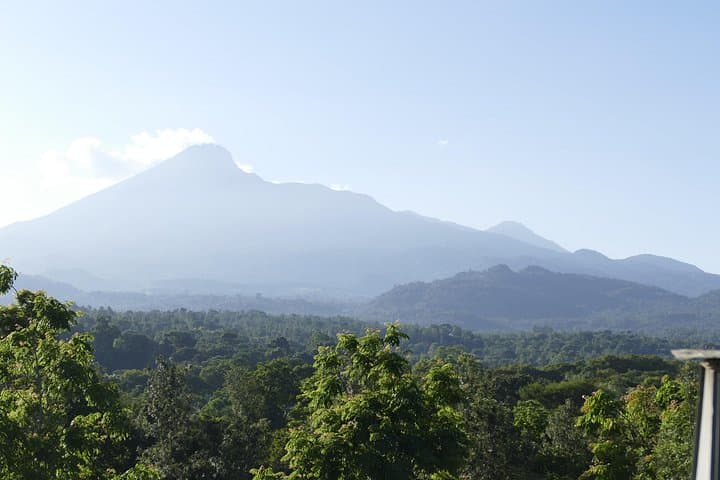
A thin dawn steals over the forest as your group files out of the vehicle and into Arusha National Park. Mist clings to moss-draped trunks, and the first hour feels like a walking safari—colobus monkeys and hornbills marking the route while an armed ranger moves quietly at the rear. That opening day through montane forest is deliberate: the trail eases you upward, trading the city heat for the cool, damp hush of the upper slopes.
A thin dawn steals over the forest as your group files out of the vehicle and into Arusha National Park. Mist clings to moss-draped trunks, and the first hour feels like a walking safari—colobus monkeys and hornbills marking the route while an armed ranger moves quietly at the rear. That opening day through montane forest is deliberate: the trail eases you upward, trading the city heat for the cool, damp hush of the upper slopes.
Mount Meru is Tanzania’s second-highest peak at 4,566 m (14,980 ft) and a live volcano whose broad cone and nested crater cut a dramatic bowl into the skyline. Geologically, Meru is younger than nearby Kilimanjaro and shows its volcanic past in alternating bands of forest, heathland and loose scree. The climb is often planned as an acclimatization trek before Kilimanjaro—its gradual profile and overnight huts give your body time to adapt—but Meru also rewards as a standalone objective: the summit ridge gives panoramic views into the Meru crater and, on a clear day, a distant Kilimanjaro dominating the eastern horizon.
Local context matters here. The mountain sits within Arusha National Park, a protected area that balances tourism and conservation; park rangers accompany groups not just for security but to protect wildlife and fragile plant communities. Cultural notes: the climb passes land historically used by the Meru and Maasai peoples—guides often weave stories of local ecology and traditional uses of medicinal plants into the route briefings.
Practically, the standard 4-day itinerary covers roughly 25–35 km round-trip with about 2,800–3,200 m of elevation gain from the park gate to the summit. Terrain moves from well-shaded singletrack in thick forest to ericaceous heath and then to loose volcanic scree and ridge walking above the huts. Shared mountain huts provide basic mattresses and public loos, with meals cooked by team cooks; boiled drinking water is provided from the first hut onward. Porters carry up to 12 kg per person and trained guides perform twice-daily health checks using a medical oximeter.
Preparation tips: train with long uphill walks and stair intervals, break in waterproof boots, and bring layered clothing—temperatures swing from humid forest warmth to alpine cold near the summit. Trekking poles and a headlamp are essential for the pre-dawn summit push. Altitude is the primary risk; heed guides’ advice, communicate symptoms early, and consider acetazolamide if you’ve discussed it with a clinician.
Logistics are straightforward: pre-climb briefings occur in Arusha or Moshi, transfers to park gates are included, and an armed ranger is provided by the park. For a compact, technically moderate climb that teaches you to read altitude and rewards you with crater-edge panoramas and rare forest wildlife, the 4-day Mount Meru climb is a practical, scenic gateway to high-altitude trekking in northern Tanzania.