THE ADVENTURE COLLECTIVE® · Independent discovery and booking for outdoor travel

A compact, four-day ascent of Tanzania’s Mount Meru that balances wildlife, intense climbs and high-altitude reward. Ideal as a Kilimanjaro warm-up or a standalone summit for trekkers wanting serious elevation gain over varied terrain.
A compact, four-day ascent of Tanzania’s Mount Meru that balances wildlife, intense climbs and high-altitude reward. Ideal as a Kilimanjaro warm-up or a standalone summit for trekkers wanting serious elevation gain over varied terrain.
You step out of the vehicle before dawn and the air is cold and sharp—thin, clean, smelling faintly of wet earth and eucalyptus. Mount Meru’s south face rises ahead: a hulking, green ridge that turns to rock and ash the higher you go. For four days the mountain sets the pace; its crater, ash cone and jagged ridgelines frame each camp and each hour of walking.
Verified experiences and guided adventures in the surrounding area.
Operated by Telly Africa Safaris · Arusha, Arusha Region
You step out of the vehicle before dawn and the air is cold and sharp—thin, clean, smelling faintly of wet earth and eucalyptus. Mount Meru’s south face rises ahead: a hulking, green ridge that turns to rock and ash the higher you go. For four days the mountain sets the pace; its crater, ash cone and jagged ridgelines frame each camp and each hour of walking.
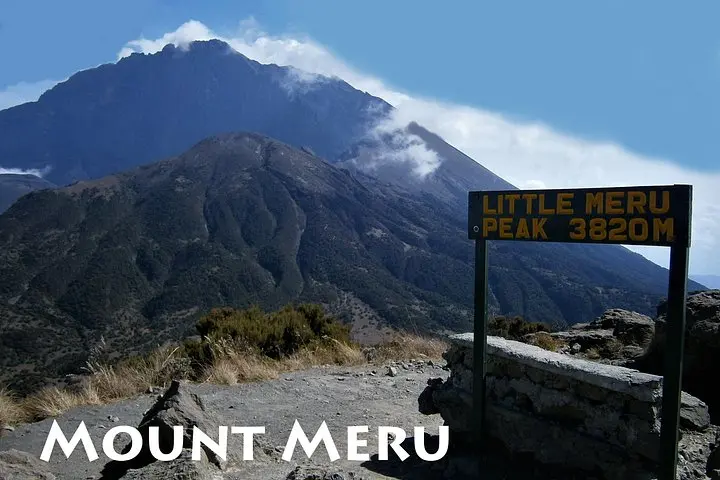
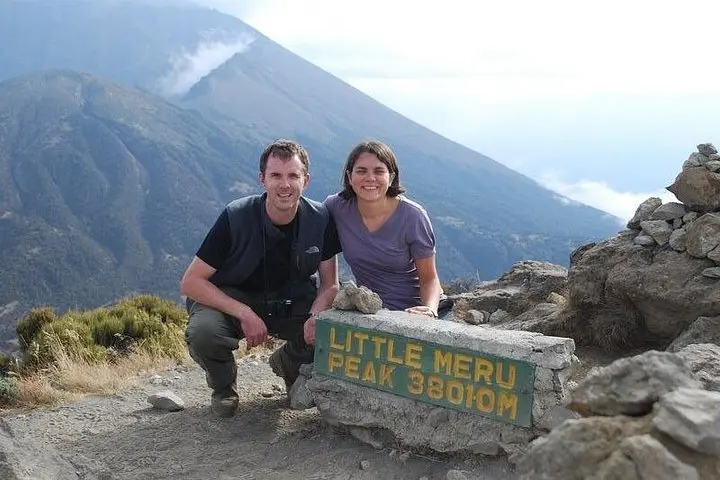
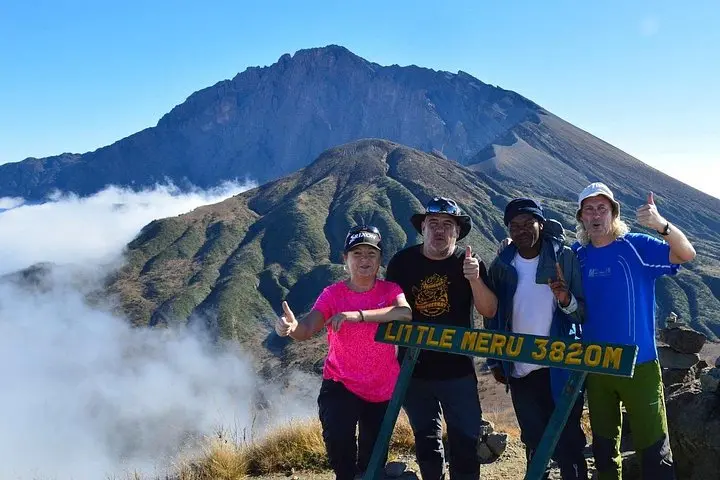
This route begins at Momella Gate (about 1,500m) and moves deliberately upslope through montane forest, moorland and finally the high scree that leads to Socialist Peak at 4,562m. Day 1 covers roughly 6km to Miriakamba Hut (2,500m) and introduces you to the park’s wildlife—giraffe browsing forest edges, bushbuck slipping through undergrowth, and troops of black-and-white colobus in the canopy. Day 2 climbs to Saddle Hut (3,500m) with an optional acclimatization walk to Little Meru (3,810m). Day 3 is the summit push and the longest haul: around 19km and 10–12 hours of steep gravel, rocky ridges and careful, altitude-heavy steps.
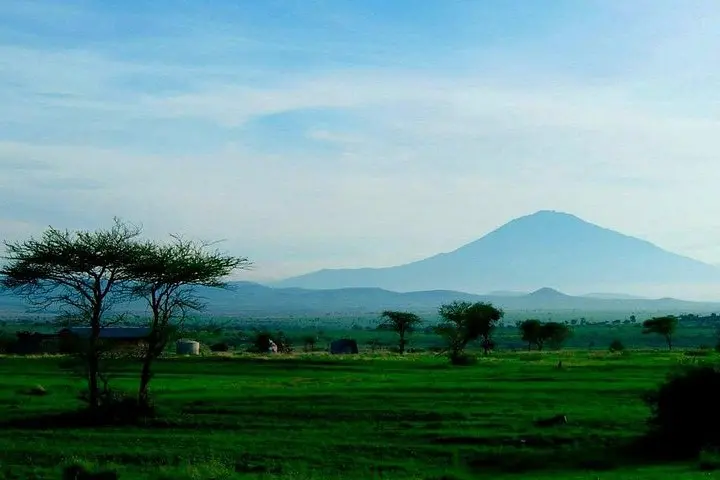
Geologically Meru is a younger, smaller volcanic neighbor to Kilimanjaro—a composite cone with an accessible crater and recognizable ash cone. The route threads old lava flows and thick montane soils; lower slopes support acacia and fig woods that are ecologically important to local Maasai communities. Rangers accompany climbers not only for safety but because the park supports a surprising concentration of wildlife within easy sight of the trail.
Practically: expect sustained climbs and a big day on the summit. The trail is non-technical but steep and at times loose—good boots, trekking poles and layered clothing are essential. The climb serves as a sensible acclimatization option for anyone planning Kilimanjaro afterward: you’ll gain about 3,000m over three days but include active acclimatization on day two.
Logistics are straightforward—private transfers from Arusha or Moshi, overnight hut accommodation, meals and park fees typically included. Weather is variable: nights can drop below freezing at higher huts and daytime sun on the saddle can feel intense. Hydrate proactively, watch for early signs of altitude sickness, and follow your guide’s pacing—short, frequent breaks beat long pushes at high elevation.
What you get at the top is not just the view but the relief of having earned it: the crater rim opens, Little Meru and the ash cone sit like pieces in a volcanic puzzle, and on a clear day Kilimanjaro’s shoulders appear on the horizon. It’s a compact, serious trek—rewarding, wildlife-rich, and eminently doable with good preparation.
Mount Meru is shorter but steeper—less distance overall but concentrated elevation gain; the terrain is non-technical but physically demanding, and is often used to acclimatize for Kilimanjaro.
Most private tour rates include park fees, camping/hut accommodations and ranger fees—confirm with the operator and check exactly which fees are covered before booking.
No technical climbing skills are required; however, you should be comfortable with long days of uphill hiking and basic high-altitude awareness.
Good—lower slopes are home to giraffe, buffalo, warthog, bushbuck and colobus monkeys; sightings are common in forest and savanna sections.
Build aerobic fitness, hydrate well, avoid alcohol before and during the climb, and discuss prophylactic medication like acetazolamide with your physician if you have concerns.
Yes—this is offered as a private tour with guides and an armed ranger, and solo trekkers are common; expect to pay the private rate unless joining a group.
Telly Africa Safaris operates guided outdoor trips and adventures with an emphasis on safety, stewardship, and memorable experiences.
You step out of the vehicle before dawn and the air is cold and sharp—thin, clean, smelling faintly of wet earth and eucalyptus. Mount Meru’s south face rises ahead: a hulking, green ridge that turns to rock and ash the higher you go. For four days the mountain sets the pace; its crater, ash cone and jagged ridgelines frame each camp and each hour of walking.
You step out of the vehicle before dawn and the air is cold and sharp—thin, clean, smelling faintly of wet earth and eucalyptus. Mount Meru’s south face rises ahead: a hulking, green ridge that turns to rock and ash the higher you go. For four days the mountain sets the pace; its crater, ash cone and jagged ridgelines frame each camp and each hour of walking.
This route begins at Momella Gate (about 1,500m) and moves deliberately upslope through montane forest, moorland and finally the high scree that leads to Socialist Peak at 4,562m. Day 1 covers roughly 6km to Miriakamba Hut (2,500m) and introduces you to the park’s wildlife—giraffe browsing forest edges, bushbuck slipping through undergrowth, and troops of black-and-white colobus in the canopy. Day 2 climbs to Saddle Hut (3,500m) with an optional acclimatization walk to Little Meru (3,810m). Day 3 is the summit push and the longest haul: around 19km and 10–12 hours of steep gravel, rocky ridges and careful, altitude-heavy steps.
Geologically Meru is a younger, smaller volcanic neighbor to Kilimanjaro—a composite cone with an accessible crater and recognizable ash cone. The route threads old lava flows and thick montane soils; lower slopes support acacia and fig woods that are ecologically important to local Maasai communities. Rangers accompany climbers not only for safety but because the park supports a surprising concentration of wildlife within easy sight of the trail.
Practically: expect sustained climbs and a big day on the summit. The trail is non-technical but steep and at times loose—good boots, trekking poles and layered clothing are essential. The climb serves as a sensible acclimatization option for anyone planning Kilimanjaro afterward: you’ll gain about 3,000m over three days but include active acclimatization on day two.
Logistics are straightforward—private transfers from Arusha or Moshi, overnight hut accommodation, meals and park fees typically included. Weather is variable: nights can drop below freezing at higher huts and daytime sun on the saddle can feel intense. Hydrate proactively, watch for early signs of altitude sickness, and follow your guide’s pacing—short, frequent breaks beat long pushes at high elevation.
What you get at the top is not just the view but the relief of having earned it: the crater rim opens, Little Meru and the ash cone sit like pieces in a volcanic puzzle, and on a clear day Kilimanjaro’s shoulders appear on the horizon. It’s a compact, serious trek—rewarding, wildlife-rich, and eminently doable with good preparation.