THE ADVENTURE COLLECTIVE® · Independent discovery and booking for outdoor travel

A compact four-day trek through Mu Cang Chai’s iconic rice terraces, Khau Pha Pass viewpoints and Hmong and Thai hill villages. Expect a full-day 16 km trek, homestay nights, and dramatic photo opportunities during planting and harvest seasons.
A compact four-day trek through Mu Cang Chai’s iconic rice terraces, Khau Pha Pass viewpoints and Hmong and Thai hill villages. Expect a full-day 16 km trek, homestay nights, and dramatic photo opportunities during planting and harvest seasons.
You step out of the minivan where thin mountain air cools your skin and a stair-step of green and gold climbs the slope ahead—rice terraces peeling around the contour like carved shelves. Early morning light slices the valleys near Mu Cang Chai; children wave from stilt-house lanes and the scent of wood smoke hangs low.
Verified experiences and guided adventures in the surrounding area.
Operated by Conical Travel · Mu Cang Chai, Yen Bai
You step out of the minivan where thin mountain air cools your skin and a stair-step of green and gold climbs the slope ahead—rice terraces peeling around the contour like carved shelves. Early morning light slices the valleys near Mu Cang Chai; children wave from stilt-house lanes and the scent of wood smoke hangs low.
This four-day trek threads together northern Vietnam's human and geological story: uplifted limestone and metamorphic ridgelines carved by monsoon-fed rivers, shaped into broad terraces by generations of Tai and Hmong farmers. Khau Pha Pass, one of the region’s famed climbs, opens onto broad valley panoramas; La Pan Tan and Che Cu Nha are living landscapes where terrace engineering and seasonal rice cycles remain central to local culture.
Expect 16 km of single-day walking across variable trails—stone steps, muddy tracks, and compacted dirt—plus village paths that dip and climb between fields. Homestays place you in Thai and Hmong homes where simple meals and conversation replace tourist gloss. Photography windows are constant; harvest (September–October) and planting (May–June) are the dramatic seasons.
Practical edge: plan for wet footing, sudden weather swings, and at least moderate fitness—one full day covers rolling elevation and multiple river crossings. Hydrate, layer for morning chill and midday sun, and carry locally appropriate cash for snacks and small purchases. Guides manage transfers and navigation; bring respect for private family spaces and ask before photographing people. By the final day you’ll have walked terraces older than many nations, and learned how the land still demands both ingenuity and care.
Moderate fitness: regular walkers who can handle 5–7 hours of mixed-terrain hiking at a steady pace will be comfortable.
Yes; the tour includes a licensed English-speaking guide who handles navigation, logistics and local introductions.
Overnights are in local homestays—simple rooms in Thai and Hmong households with shared facilities and home-cooked meals.
Late September–October for golden harvest color, and May–June when terraces are full and intensely green—both provide strong photographic contrasts.
Conical Travel operates guided outdoor trips and adventures with an emphasis on safety, stewardship, and memorable experiences.
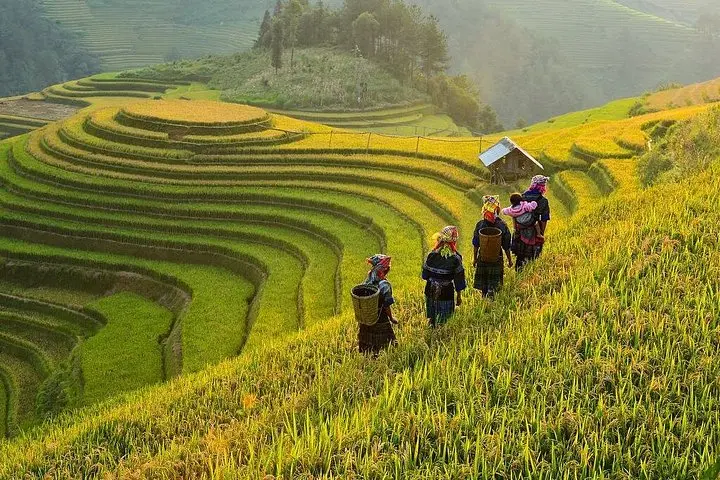
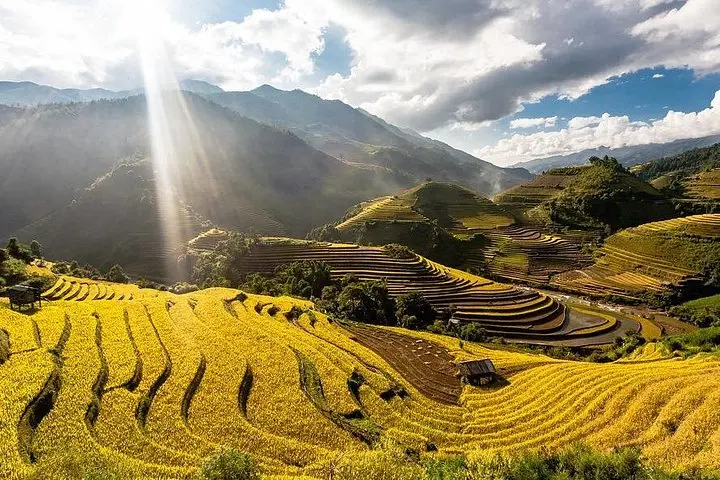
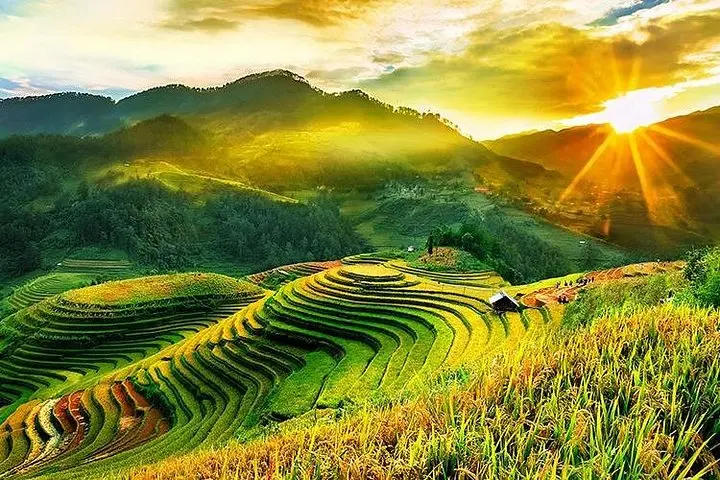
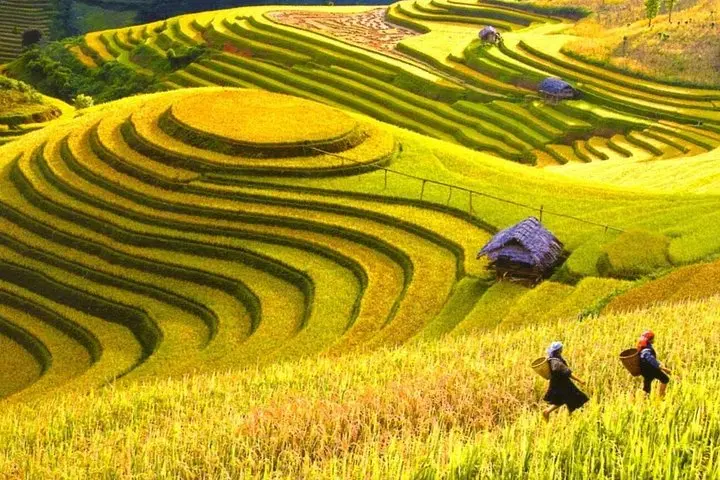
You step out of the minivan where thin mountain air cools your skin and a stair-step of green and gold climbs the slope ahead—rice terraces peeling around the contour like carved shelves. Early morning light slices the valleys near Mu Cang Chai; children wave from stilt-house lanes and the scent of wood smoke hangs low.
You step out of the minivan where thin mountain air cools your skin and a stair-step of green and gold climbs the slope ahead—rice terraces peeling around the contour like carved shelves. Early morning light slices the valleys near Mu Cang Chai; children wave from stilt-house lanes and the scent of wood smoke hangs low.
This four-day trek threads together northern Vietnam's human and geological story: uplifted limestone and metamorphic ridgelines carved by monsoon-fed rivers, shaped into broad terraces by generations of Tai and Hmong farmers. Khau Pha Pass, one of the region’s famed climbs, opens onto broad valley panoramas; La Pan Tan and Che Cu Nha are living landscapes where terrace engineering and seasonal rice cycles remain central to local culture.
Expect 16 km of single-day walking across variable trails—stone steps, muddy tracks, and compacted dirt—plus village paths that dip and climb between fields. Homestays place you in Thai and Hmong homes where simple meals and conversation replace tourist gloss. Photography windows are constant; harvest (September–October) and planting (May–June) are the dramatic seasons.
Practical edge: plan for wet footing, sudden weather swings, and at least moderate fitness—one full day covers rolling elevation and multiple river crossings. Hydrate, layer for morning chill and midday sun, and carry locally appropriate cash for snacks and small purchases. Guides manage transfers and navigation; bring respect for private family spaces and ask before photographing people. By the final day you’ll have walked terraces older than many nations, and learned how the land still demands both ingenuity and care.