THE ADVENTURE COLLECTIVE® · Independent discovery and booking for outdoor travel

A four-day luxury cruise down the Nile from Aswan to Luxor pairs temple visits and a sunrise balloon flight with calm nights on deck. This guide explains what to expect—daily distances, walking conditions, and practical tips to make the most of the trip.
A four-day luxury cruise down the Nile from Aswan to Luxor pairs temple visits and a sunrise balloon flight with calm nights on deck. This guide explains what to expect—daily distances, walking conditions, and practical tips to make the most of the trip.
You step onto the teak deck as the Nile pulls the boat away from Aswan, the river’s slow current nudging you downstream toward a living history. Palm-fringed riverbanks slide past: fishermen in feluccas, low sandstone cliffs, and bright mudbrick villages that watch ancient monuments appear over the skyline.
Verified experiences and guided adventures in the surrounding area.
You step onto the teak deck as the Nile pulls the boat away from Aswan, the river’s slow current nudging you downstream toward a living history. Palm-fringed riverbanks slide past: fishermen in feluccas, low sandstone cliffs, and bright mudbrick villages that watch ancient monuments appear over the skyline.
Over four days and three nights, the cruise threads the river between Aswan and Luxor—roughly 280 km by water—putting you within walking distance of Philae, Kom Ombo, Edfu, and Luxor’s temples and tombs. Geology here is simple and bold: the Nile’s carve through Nubian sandstone reveals linear cliffs and island oases, while the desert plateaus rise like a slow backbeat behind agricultural strips.
Culturally the journey is layered: Pharaonic temples, Ptolemaic inscriptions, and Coptic and Nubian communities that keep local crafts alive. Optional sunrise balloon flights over the West Bank offer a quiet, aerial view of the Valley of the Kings—an aerial counterpoint to the boat’s steady rhythm.
Practically, expect daily guided excursions with moderate walking on uneven stone, heat by midday, and evenings spent on deck or in small-group briefings. Bring sturdy walking shoes, broad sun protection, and lightweight layers for cooler desert mornings. Carry local currency for tips and small purchases, and follow guides’ instructions at fragile archaeological sites. If you want a quieter experience, book private-guide upgrades and plan the balloon on the earliest available morning to avoid thermal winds. The Nile keeps moving—let it carry you through Egypt’s long human story with clear-eyed comfort and curiosity.
Most nationalities require an Egyptian visa; check current entry rules before travel and carry your passport for boarding and site permits.
Many sites have uneven stone and stairs; some have ramps or assistance but accessibility varies—contact the operator in advance to arrange support.
Balloon flights are often offered as an optional upgrade; confirm inclusion at booking and reserve early due to limited daily slots.
Carry Egyptian pounds for local purchases and tips; larger hotels and some operators accept cards but small vendors and remote docks usually prefer cash.
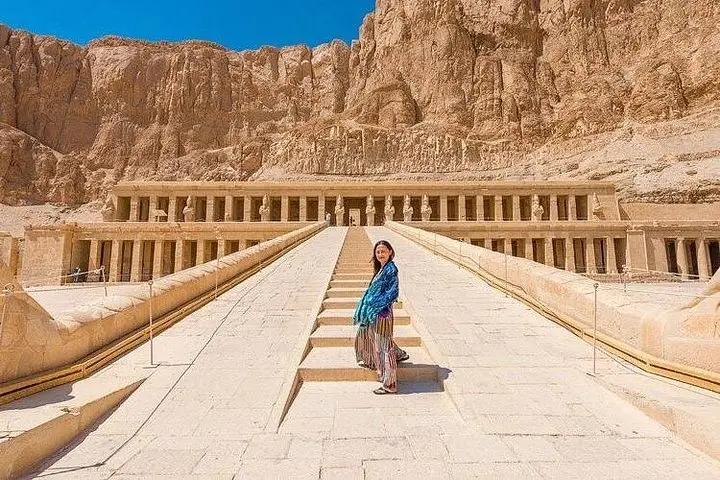
You step onto the teak deck as the Nile pulls the boat away from Aswan, the river’s slow current nudging you downstream toward a living history. Palm-fringed riverbanks slide past: fishermen in feluccas, low sandstone cliffs, and bright mudbrick villages that watch ancient monuments appear over the skyline.
You step onto the teak deck as the Nile pulls the boat away from Aswan, the river’s slow current nudging you downstream toward a living history. Palm-fringed riverbanks slide past: fishermen in feluccas, low sandstone cliffs, and bright mudbrick villages that watch ancient monuments appear over the skyline.
Over four days and three nights, the cruise threads the river between Aswan and Luxor—roughly 280 km by water—putting you within walking distance of Philae, Kom Ombo, Edfu, and Luxor’s temples and tombs. Geology here is simple and bold: the Nile’s carve through Nubian sandstone reveals linear cliffs and island oases, while the desert plateaus rise like a slow backbeat behind agricultural strips.
Culturally the journey is layered: Pharaonic temples, Ptolemaic inscriptions, and Coptic and Nubian communities that keep local crafts alive. Optional sunrise balloon flights over the West Bank offer a quiet, aerial view of the Valley of the Kings—an aerial counterpoint to the boat’s steady rhythm.
Practically, expect daily guided excursions with moderate walking on uneven stone, heat by midday, and evenings spent on deck or in small-group briefings. Bring sturdy walking shoes, broad sun protection, and lightweight layers for cooler desert mornings. Carry local currency for tips and small purchases, and follow guides’ instructions at fragile archaeological sites. If you want a quieter experience, book private-guide upgrades and plan the balloon on the earliest available morning to avoid thermal winds. The Nile keeps moving—let it carry you through Egypt’s long human story with clear-eyed comfort and curiosity.