THE ADVENTURE COLLECTIVE® · Independent discovery and booking for outdoor travel

Sail four days along the Nile from Luxor to Aswan, combining relaxed river travel with guided visits to Karnak, the Valley of the Kings, Edfu and Kom Ombo. This cruise pairs comfortable onboard life with up-close access to Egypt’s most dramatic ancient sites.
Sail four days along the Nile from Luxor to Aswan, combining relaxed river travel with guided visits to Karnak, the Valley of the Kings, Edfu and Kom Ombo. This cruise pairs comfortable onboard life with up-close access to Egypt’s most dramatic ancient sites.
You step from the dock as the ship’s hull rocks slowly against rippling Nile light; the river smells faintly of mud and date palms, wind carrying calls of fishermen and the distant hum of Luxor. Over four days you move with the current, exchanging monumental sandstone pylons for quiet river bends where village life unfolds on the banks — children playing at the waterline, feluccas tacking close to the cruise’s wake.
Verified experiences and guided adventures in the surrounding area.
Operated by Taxi Luxor · Luxor, Luxor Governorate
You step from the dock as the ship’s hull rocks slowly against rippling Nile light; the river smells faintly of mud and date palms, wind carrying calls of fishermen and the distant hum of Luxor. Over four days you move with the current, exchanging monumental sandstone pylons for quiet river bends where village life unfolds on the banks — children playing at the waterline, feluccas tacking close to the cruise’s wake.
The journey traces Egypt’s high points: Karnak’s hypostyle forest and Luxor Temple’s sunset glow on the East Bank, the burial cliffs of the Valley of the Kings, Hatshepsut’s terraced mortuary, and the near-perfect Ptolemaic geometry of Edfu and Kom Ombo. Geology here is simple and profound: a thin ribbon of fertile alluvium between desert escarpments, where millennia of Nile floods concentrated silt and made civilization possible.
Culturally the route threads Thebes’ pharaonic legacy with Nubian influences nearer Aswan; guides decode hieroglyphs, talk ritual practice, and point out medical inscriptions at Kom Ombo. Expect straightforward logistics: daily guided excursions, meals on board, and short drives to sites — but also uneven stone, exposed courtyards, and midday heat.
Practical guidance: schedule temple visits for early morning or late afternoon to avoid the worst sun; bring a wide-brim hat, sturdy closed shoes for tombs and ramps, and a reusable water bottle to refill between stops. Keep passports handy for admissions, tip guides and crew modestly in local currency, and allow an extra day in Luxor or Aswan to absorb the river pace before returning to the bustle of Cairo.
Most nationalities require an entry visa for Egypt; check current embassy guidance and obtain a visa in advance or upon arrival where eligible.
Site admission fees and guided visits listed in the itinerary are typically included — confirm specific tickets (like extra tombs) at booking.
Excursions involve moderate walking, uneven surfaces, steps in temples and tombs; they are generally suitable for most travelers but not for those with severe mobility issues.
Tipping is customary for guides, drivers and crew; budget modest daily amounts in Egyptian pounds and give directly to staff or a designated tip envelope if provided.
Taxi Luxor operates guided outdoor trips and adventures with an emphasis on safety, stewardship, and memorable experiences.

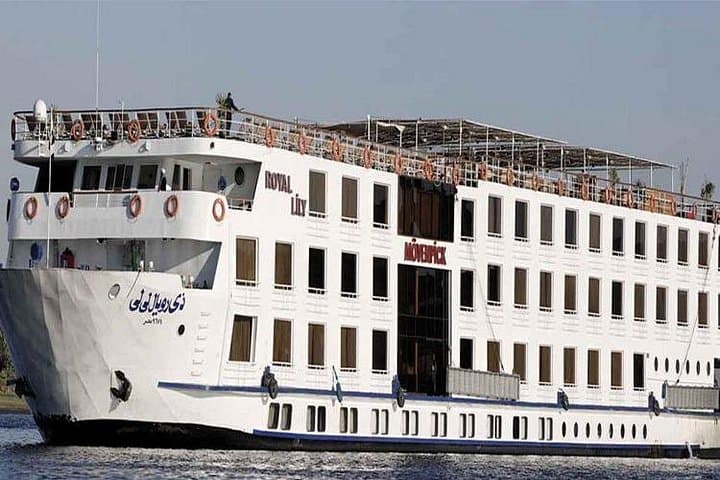


You step from the dock as the ship’s hull rocks slowly against rippling Nile light; the river smells faintly of mud and date palms, wind carrying calls of fishermen and the distant hum of Luxor. Over four days you move with the current, exchanging monumental sandstone pylons for quiet river bends where village life unfolds on the banks — children playing at the waterline, feluccas tacking close to the cruise’s wake.
You step from the dock as the ship’s hull rocks slowly against rippling Nile light; the river smells faintly of mud and date palms, wind carrying calls of fishermen and the distant hum of Luxor. Over four days you move with the current, exchanging monumental sandstone pylons for quiet river bends where village life unfolds on the banks — children playing at the waterline, feluccas tacking close to the cruise’s wake.
The journey traces Egypt’s high points: Karnak’s hypostyle forest and Luxor Temple’s sunset glow on the East Bank, the burial cliffs of the Valley of the Kings, Hatshepsut’s terraced mortuary, and the near-perfect Ptolemaic geometry of Edfu and Kom Ombo. Geology here is simple and profound: a thin ribbon of fertile alluvium between desert escarpments, where millennia of Nile floods concentrated silt and made civilization possible.
Culturally the route threads Thebes’ pharaonic legacy with Nubian influences nearer Aswan; guides decode hieroglyphs, talk ritual practice, and point out medical inscriptions at Kom Ombo. Expect straightforward logistics: daily guided excursions, meals on board, and short drives to sites — but also uneven stone, exposed courtyards, and midday heat.
Practical guidance: schedule temple visits for early morning or late afternoon to avoid the worst sun; bring a wide-brim hat, sturdy closed shoes for tombs and ramps, and a reusable water bottle to refill between stops. Keep passports handy for admissions, tip guides and crew modestly in local currency, and allow an extra day in Luxor or Aswan to absorb the river pace before returning to the bustle of Cairo.