THE ADVENTURE COLLECTIVE® · Independent discovery and booking for outdoor travel

Trade Hanoi’s bustle for rivers that slow you down and rice terraces that climb the sky. Over four days you'll meet Dao, Muong and Thai communities—through crafts, home meals and village walks—while staying in 4-star comfort.
Trade Hanoi’s bustle for rivers that slow you down and rice terraces that climb the sky. Over four days you'll meet Dao, Muong and Thai communities—through crafts, home meals and village walks—while staying in 4-star comfort.
The first light on the road out of Hanoi is a slow uncoiling. Trucks and scooters blur into the distance while limestone spires begin to puncture the horizon, rising like the ribs of an inland sea. By midmorning the city noise dissolves into the hush of Sung Village, where Dao Tien households spill colorful textiles and smoke from kitchen hearths into the lane. You walk past a family pressing beeswax-patterned cloth and feel the rhythm of a place that measures time in harvests and dye baths.
Verified experiences and guided adventures in the surrounding area.
Operated by IZITOUR.com · Hanoi, Hanoi
The first light on the road out of Hanoi is a slow uncoiling. Trucks and scooters blur into the distance while limestone spires begin to puncture the horizon, rising like the ribs of an inland sea. By midmorning the city noise dissolves into the hush of Sung Village, where Dao Tien households spill colorful textiles and smoke from kitchen hearths into the lane. You walk past a family pressing beeswax-patterned cloth and feel the rhythm of a place that measures time in harvests and dye baths.
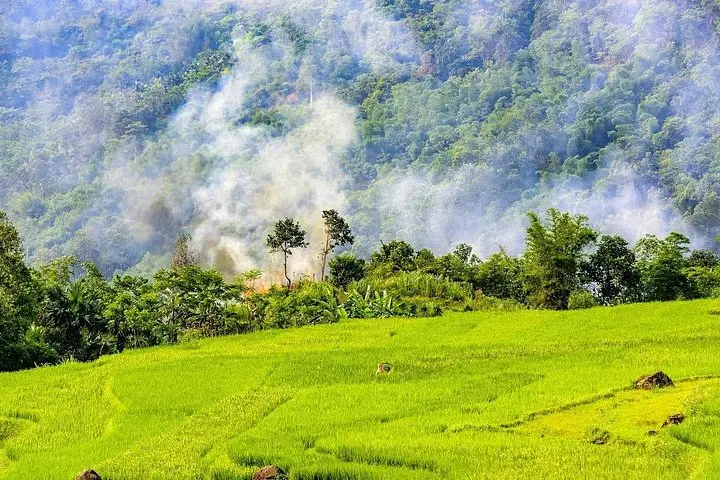
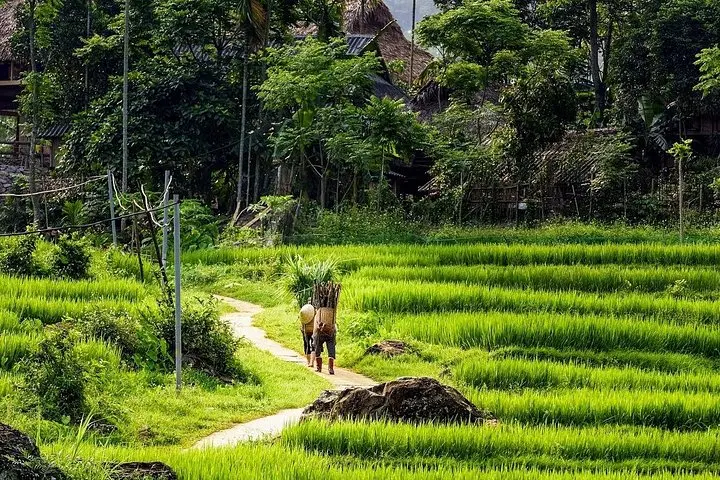
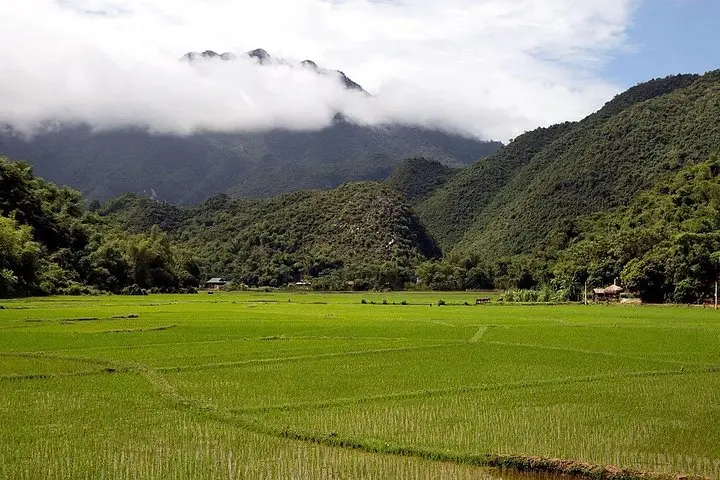
This four-day loop stitches together three distinct highland worlds. Da Bac sets the tone: a river-carved valley where karst outcrops dip into the water and the Da River dares you to slow down. Mai Chau is softer—broad valley floors and Thai stilt houses standing like punctuation marks among rice. Pu Luong, governed by steep terraces, is the grand finale: terraced paddies that climb and fold into tropical forest and limestone knuckles.
The region’s human story is layered. The Dao, Muong, and Thai communities each bring language, craft, and ritual shaped by centuries of upland life. Geologically, the karst landscape is limestone laid down in shallow seas millions of years ago, later uplifted and carved by water into cliffs and caves—Sung Cave is one local example. Culturally, community houses and indigo workshops are living archives: artisans still print motifs that carry family histories.
Practical guidance is straightforward. Expect daily walks of 3–8 km on uneven paths and small village trails, with short elevation changes—some descents and climbs of a few hundred meters on day hikes in Pu Luong. Days begin early to catch light and avoid midday heat; plan for river transfers and short vehicle stints between villages. Accommodations are comfortable 4-star lodges and homestays; meals include local breakfasts and family lunches—bring cash for small crafts and tips.
Packing and pacing: sturdy trail shoes with good tread matter more than heavy boots; a lightweight rain shell will handle sudden tropical showers; a modest daypack, water bottle and basic first-aid kit keep you mobile. Respect local customs—ask before photographing people—and come with patience: village life moves at the pace of seasons, not schedules.
For planners: pick spring or fall for clearer skies and comfortable hiking temperatures; summer brings lush terraces but heavier rain. Guides arrange transfers and local admissions; the route is private and instant-confirmed for travelers wanting a curated, off-the-beaten-track taste of northern Vietnam.
Pickup is available from hotels in Hanoi—confirm your address at booking; drivers arrive about 15 minutes before departure.
The tour is family-friendly but includes walking on uneven paths; consult the operator for mobility limitations or health concerns.
Yes—breakfasts, four lunches and three dinners are included; let the operator know dietary restrictions in advance.
Yes—small shops, certain local crafts and optional tips are cash-based; ATMs are limited outside Hanoi.
Local guides usually speak English; confirm if you need another language when booking.
The itinerary indicates admissions are arranged by the guide and included where noted; guides will purchase and deliver tickets as needed.
IZITOUR.com operates guided outdoor trips and adventures with an emphasis on safety, stewardship, and memorable experiences.

The first light on the road out of Hanoi is a slow uncoiling. Trucks and scooters blur into the distance while limestone spires begin to puncture the horizon, rising like the ribs of an inland sea. By midmorning the city noise dissolves into the hush of Sung Village, where Dao Tien households spill colorful textiles and smoke from kitchen hearths into the lane. You walk past a family pressing beeswax-patterned cloth and feel the rhythm of a place that measures time in harvests and dye baths.
The first light on the road out of Hanoi is a slow uncoiling. Trucks and scooters blur into the distance while limestone spires begin to puncture the horizon, rising like the ribs of an inland sea. By midmorning the city noise dissolves into the hush of Sung Village, where Dao Tien households spill colorful textiles and smoke from kitchen hearths into the lane. You walk past a family pressing beeswax-patterned cloth and feel the rhythm of a place that measures time in harvests and dye baths.
This four-day loop stitches together three distinct highland worlds. Da Bac sets the tone: a river-carved valley where karst outcrops dip into the water and the Da River dares you to slow down. Mai Chau is softer—broad valley floors and Thai stilt houses standing like punctuation marks among rice. Pu Luong, governed by steep terraces, is the grand finale: terraced paddies that climb and fold into tropical forest and limestone knuckles.
The region’s human story is layered. The Dao, Muong, and Thai communities each bring language, craft, and ritual shaped by centuries of upland life. Geologically, the karst landscape is limestone laid down in shallow seas millions of years ago, later uplifted and carved by water into cliffs and caves—Sung Cave is one local example. Culturally, community houses and indigo workshops are living archives: artisans still print motifs that carry family histories.
Practical guidance is straightforward. Expect daily walks of 3–8 km on uneven paths and small village trails, with short elevation changes—some descents and climbs of a few hundred meters on day hikes in Pu Luong. Days begin early to catch light and avoid midday heat; plan for river transfers and short vehicle stints between villages. Accommodations are comfortable 4-star lodges and homestays; meals include local breakfasts and family lunches—bring cash for small crafts and tips.
Packing and pacing: sturdy trail shoes with good tread matter more than heavy boots; a lightweight rain shell will handle sudden tropical showers; a modest daypack, water bottle and basic first-aid kit keep you mobile. Respect local customs—ask before photographing people—and come with patience: village life moves at the pace of seasons, not schedules.
For planners: pick spring or fall for clearer skies and comfortable hiking temperatures; summer brings lush terraces but heavier rain. Guides arrange transfers and local admissions; the route is private and instant-confirmed for travelers wanting a curated, off-the-beaten-track taste of northern Vietnam.