THE ADVENTURE COLLECTIVE® · Independent discovery and booking for outdoor travel

Drive from Ouarzazate across the Anti-Atlas to Erg Chebbi’s towering dunes on this private 4-day itinerary. Combine Todra Gorge walks, Kasbah visits, camel trekking and a luxury desert camp for an immersive Sahara experience.
Drive from Ouarzazate across the Anti-Atlas to Erg Chebbi’s towering dunes on this private 4-day itinerary. Combine Todra Gorge walks, Kasbah visits, camel trekking and a luxury desert camp for an immersive Sahara experience.
You slide into an air-conditioned 4x4 and the road unfurls: ochre kasbah walls give way to almond-colored valleys, then the ribbed silhouettes of the Anti-Atlas. By late afternoon the Tissandrine road snakes into view, and the Dades River drops away beneath hairpin turns. The next day the Todra Gorges rise like a living wall — limestone cliffs near 300 meters tall that force a cool river corridor through their base.
Verified experiences and guided adventures in the surrounding area.
Operated by Introducing Morocco · Merzouga, Errachidia Province
You slide into an air-conditioned 4x4 and the road unfurls: ochre kasbah walls give way to almond-colored valleys, then the ribbed silhouettes of the Anti-Atlas. By late afternoon the Tissandrine road snakes into view, and the Dades River drops away beneath hairpin turns. The next day the Todra Gorges rise like a living wall — limestone cliffs near 300 meters tall that force a cool river corridor through their base.
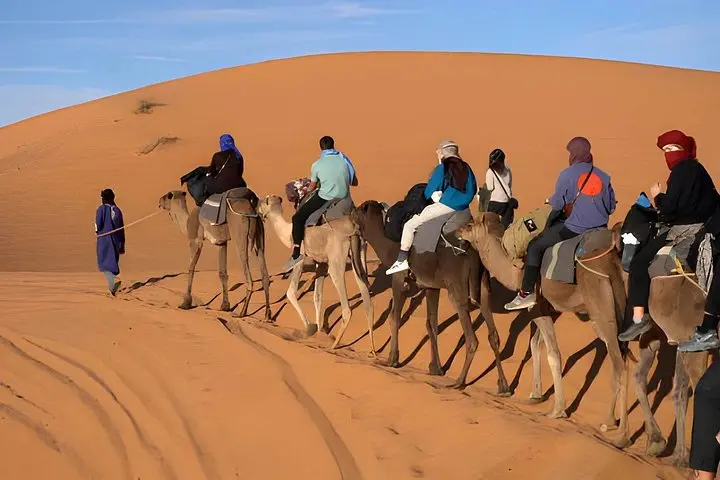
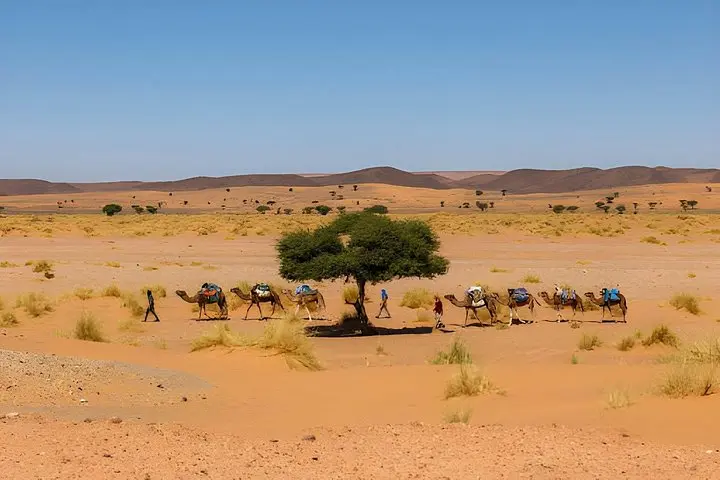
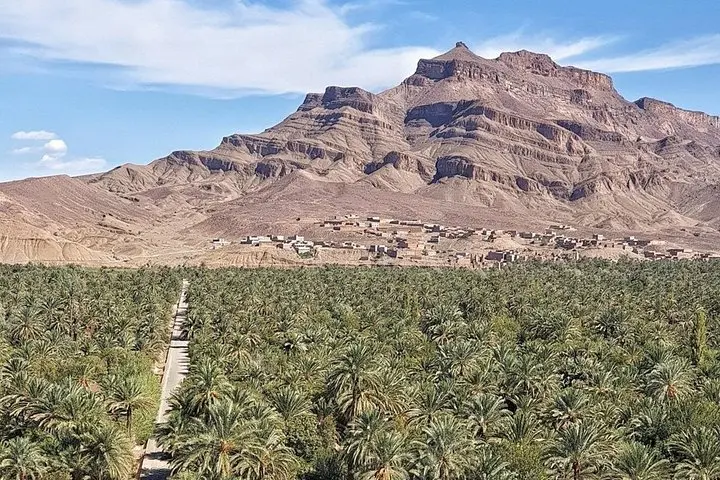
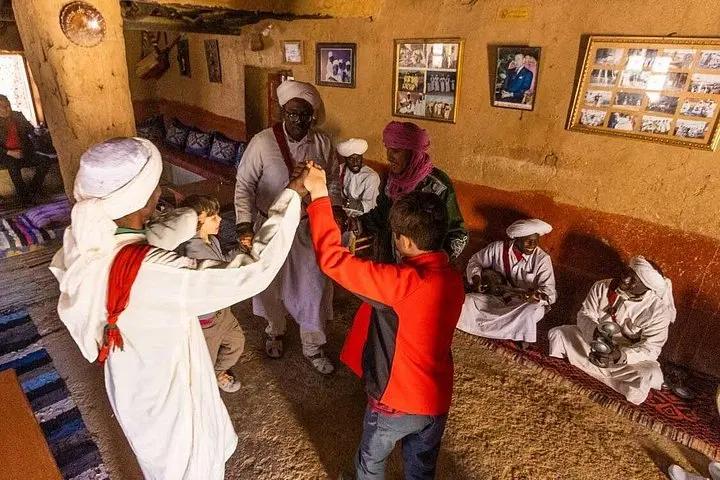
This route traces old caravan arteries and Berber settlements: fortified kasbahs built from sun-dried mud bricks, oasis irrigation systems (khattara), and market towns that once brokered trans-Saharan trade. Geologically, the landscape shifts fast — folded Anti-Atlas bedrock, narrow fluvial canyons, then the wind-sculpted sands of Erg Chebbi, dunes that can reach 100–150 meters and shift with each dry season. Culturally, expect Gnawa music in Khamlia, fragrant rosewater villages around Kelaat M'Gouna, and the communal rhythms of souk days in Rissani.
Practical guide: this private, 4-day loop covers roughly 350–420 km of driving spread across three nights in handpicked guesthouses and a luxury desert camp with ensuite tents. Short hikes and valley walks are gentle; the camel trek across dunes is low-impact but requires balance and sun protection. Pack layers for 10–20°C swings, sturdy shoes for gravel and canyon walking, plenty of water, and cash for small purchases. Time your dune climb for sunrise or sunset when temperatures and light are best. Travel steadily, respect nomad households, and leave no trace in the fragile desert environment.
Yes—it's rated easy to moderate and described as suitable for all fitness levels, but consider dune walking and camel rides; private transfers and flexible pacing help accommodate families and older travelers.
Over three nights you'll stay in selected guesthouses/riads and a luxury desert camp with private tents and ensuite bathrooms as listed in the itinerary.
Spring (March–May) and fall (September–November) offer the most pleasant temperatures; summers can be very hot, winters cool at night with possible frost.
The tour includes specified breakfasts, lunches and dinners noted in the itinerary and local fees; always confirm any optional extras or personal purchases ahead of time.
Introducing Morocco operates guided outdoor trips and adventures with an emphasis on safety, stewardship, and memorable experiences.
You slide into an air-conditioned 4x4 and the road unfurls: ochre kasbah walls give way to almond-colored valleys, then the ribbed silhouettes of the Anti-Atlas. By late afternoon the Tissandrine road snakes into view, and the Dades River drops away beneath hairpin turns. The next day the Todra Gorges rise like a living wall — limestone cliffs near 300 meters tall that force a cool river corridor through their base.
You slide into an air-conditioned 4x4 and the road unfurls: ochre kasbah walls give way to almond-colored valleys, then the ribbed silhouettes of the Anti-Atlas. By late afternoon the Tissandrine road snakes into view, and the Dades River drops away beneath hairpin turns. The next day the Todra Gorges rise like a living wall — limestone cliffs near 300 meters tall that force a cool river corridor through their base.
This route traces old caravan arteries and Berber settlements: fortified kasbahs built from sun-dried mud bricks, oasis irrigation systems (khattara), and market towns that once brokered trans-Saharan trade. Geologically, the landscape shifts fast — folded Anti-Atlas bedrock, narrow fluvial canyons, then the wind-sculpted sands of Erg Chebbi, dunes that can reach 100–150 meters and shift with each dry season. Culturally, expect Gnawa music in Khamlia, fragrant rosewater villages around Kelaat M'Gouna, and the communal rhythms of souk days in Rissani.
Practical guide: this private, 4-day loop covers roughly 350–420 km of driving spread across three nights in handpicked guesthouses and a luxury desert camp with ensuite tents. Short hikes and valley walks are gentle; the camel trek across dunes is low-impact but requires balance and sun protection. Pack layers for 10–20°C swings, sturdy shoes for gravel and canyon walking, plenty of water, and cash for small purchases. Time your dune climb for sunrise or sunset when temperatures and light are best. Travel steadily, respect nomad households, and leave no trace in the fragile desert environment.