THE ADVENTURE COLLECTIVE® · Independent discovery and booking for outdoor travel

Four days of wide skies and red earth take you from Ayers Rock Resort to Alice Springs via Uluru, Kata Tjuta and Kings Canyon. Expect sunrise rituals, a base walk around Uluru, the Walpa Gorge, and the dramatic Kings Canyon rim—plus guided cultural insight and included accommodation.
Four days of wide skies and red earth take you from Ayers Rock Resort to Alice Springs via Uluru, Kata Tjuta and Kings Canyon. Expect sunrise rituals, a base walk around Uluru, the Walpa Gorge, and the dramatic Kings Canyon rim—plus guided cultural insight and included accommodation.
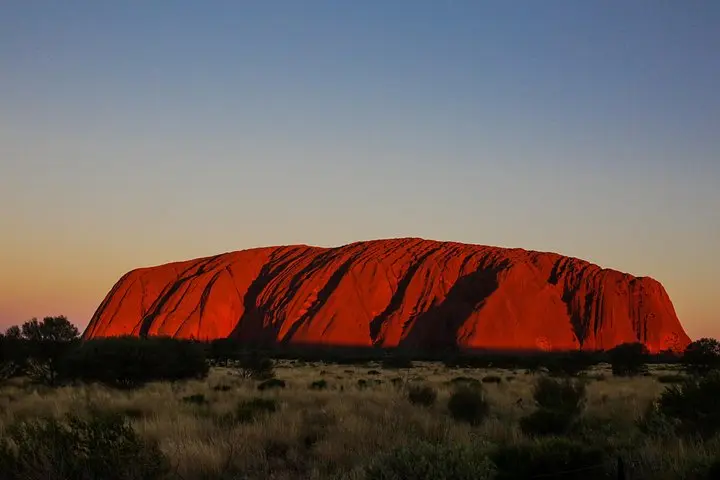
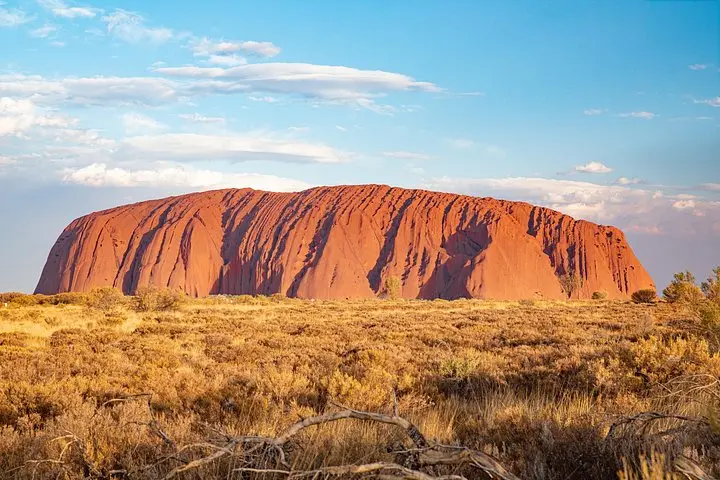
Dust on the bus seats and the dry tang of eucalyptus set the tone as the tour departs Ayers Rock Resort. By late afternoon the silhouette of Uluru rises—an immense, ochre monolith that changes color as the sun leans west—and the group settles into the ritual every visitor remembers: a quieting, a shared hush, and then the clink of glasses as a sunset barbecue begins.
Verified experiences and guided adventures in the surrounding area.
Operated by Emu Run Experience · Yulara, Northern Territory
Dust on the bus seats and the dry tang of eucalyptus set the tone as the tour departs Ayers Rock Resort. By late afternoon the silhouette of Uluru rises—an immense, ochre monolith that changes color as the sun leans west—and the group settles into the ritual every visitor remembers: a quieting, a shared hush, and then the clink of glasses as a sunset barbecue begins.
This four-day route moves clockwise through the Red Centre: a base walk around Uluru (the flat, 10.6 km circuit), an early-morning sunrise that slices the rock with cold light, Walpa Gorge at Kata Tjuta with its dome-strewn amphitheatre, and the Kings Canyon Rim Walk—an exposed 6 km loop that prizes views over sheer sandstone cliffs and the lush Garden of Eden tucked below.
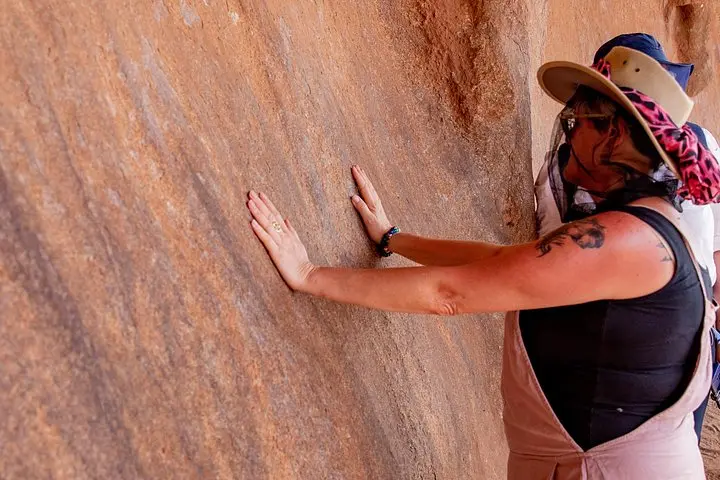
Geologically the region is ancient: Uluru is a tilted slab of arkose sandstone that has persisted through continental shifts and millennia of wind and sand. Kata Tjuta’s domes are older conglomerates, where harder fragments resisted erosion to form the clumped features seen today. Culturally, Anangu custodians hold stories tied to particular features along the base; guides here translate landscape into law and memory, and visitors are asked to approach with respect—photography and listening are welcomed, climbing is not.
Expect red dirt underfoot, open horizons, and thermal swings—scorching midday heat and crisp nights. The Kings Canyon Rim Walk begins with a steep scramble known locally as the “Heart Attack Hill” (set aside 3–4 hours for the full loop); overall elevation change can approach 300 m on exposed sandstone ridges. Walpa Gorge is a shorter, sand-and-rock walk of roughly 2–3 km return, while the Uluru base walk is largely flat but involves walking over sun-baked rock and sandy sections.
Practical edge: bring at least 2–3 liters of water daily, sun protection, and footwear with good grip—the rim walk’s sandstone can be slippery when dusty. Timings in the itinerary are deliberately early: sunrise viewings and morning hikes avoid peak heat and reward travelers with color and quiet.
Logistics are straightforward: the tour includes three nights’ accommodation (Ayers Rock Resort and Kings Canyon Resort), most meals, park entry fees, and an accredited guide. Road transfers between sites are long—plan for several hours on sealed and unsealed roads—but these stretches are part of the outback’s rhythm, offering sudden stand-alone panoramas of spinifex and lone ghost gums.
For travellers who want more, optional extras at Kings Canyon include scenic helicopter flights and evening installations. For everyone, the essential takeaway is simple: this itinerary pares distance and time into a manageable loop that foregrounds culture, geology, and the elemental clarity of the Australian interior.
Yes—Night 1 is at Ayers Rock Resort, Nights 2–3 at Kings Canyon Resort; exact properties may vary if fully booked.
The rim walk is rated moderate to challenging: ~6 km with exposed sections and an initial steep climb; allow 3–4 hours and bring water.
Climbing Uluru is not part of the itinerary; Anangu custodians request visitors do not climb and guides focus on base walks and cultural interpretation.
Hot summers with temperatures often exceeding 35°C; winters are mild to cool with cold nights—check forecasts and pack layers.
Yes, Uluru-Kata Tjuta National Park and Kings Canyon park fees are included in the tour price.
Expect multi-hour drives: Uluru to Kings Canyon ~3–4 hours (approx. 300 km), Kings Canyon to Alice Springs ~4–5 hours (approx. 330 km).
Emu Run Experience operates guided outdoor trips and adventures with an emphasis on safety, stewardship, and memorable experiences.

Dust on the bus seats and the dry tang of eucalyptus set the tone as the tour departs Ayers Rock Resort. By late afternoon the silhouette of Uluru rises—an immense, ochre monolith that changes color as the sun leans west—and the group settles into the ritual every visitor remembers: a quieting, a shared hush, and then the clink of glasses as a sunset barbecue begins.
Dust on the bus seats and the dry tang of eucalyptus set the tone as the tour departs Ayers Rock Resort. By late afternoon the silhouette of Uluru rises—an immense, ochre monolith that changes color as the sun leans west—and the group settles into the ritual every visitor remembers: a quieting, a shared hush, and then the clink of glasses as a sunset barbecue begins.
This four-day route moves clockwise through the Red Centre: a base walk around Uluru (the flat, 10.6 km circuit), an early-morning sunrise that slices the rock with cold light, Walpa Gorge at Kata Tjuta with its dome-strewn amphitheatre, and the Kings Canyon Rim Walk—an exposed 6 km loop that prizes views over sheer sandstone cliffs and the lush Garden of Eden tucked below.
Geologically the region is ancient: Uluru is a tilted slab of arkose sandstone that has persisted through continental shifts and millennia of wind and sand. Kata Tjuta’s domes are older conglomerates, where harder fragments resisted erosion to form the clumped features seen today. Culturally, Anangu custodians hold stories tied to particular features along the base; guides here translate landscape into law and memory, and visitors are asked to approach with respect—photography and listening are welcomed, climbing is not.
Expect red dirt underfoot, open horizons, and thermal swings—scorching midday heat and crisp nights. The Kings Canyon Rim Walk begins with a steep scramble known locally as the “Heart Attack Hill” (set aside 3–4 hours for the full loop); overall elevation change can approach 300 m on exposed sandstone ridges. Walpa Gorge is a shorter, sand-and-rock walk of roughly 2–3 km return, while the Uluru base walk is largely flat but involves walking over sun-baked rock and sandy sections.
Practical edge: bring at least 2–3 liters of water daily, sun protection, and footwear with good grip—the rim walk’s sandstone can be slippery when dusty. Timings in the itinerary are deliberately early: sunrise viewings and morning hikes avoid peak heat and reward travelers with color and quiet.
Logistics are straightforward: the tour includes three nights’ accommodation (Ayers Rock Resort and Kings Canyon Resort), most meals, park entry fees, and an accredited guide. Road transfers between sites are long—plan for several hours on sealed and unsealed roads—but these stretches are part of the outback’s rhythm, offering sudden stand-alone panoramas of spinifex and lone ghost gums.
For travellers who want more, optional extras at Kings Canyon include scenic helicopter flights and evening installations. For everyone, the essential takeaway is simple: this itinerary pares distance and time into a manageable loop that foregrounds culture, geology, and the elemental clarity of the Australian interior.