THE ADVENTURE COLLECTIVE® · Independent discovery and booking for outdoor travel

Climb ancient stone steps through rhododendron forest to Poon Hill for a dawn panorama of the Annapurna massif. This four-day trek from Pokhara combines village culture, manageable alpine terrain, and sunrise views that reward early mornings.
Climb ancient stone steps through rhododendron forest to Poon Hill for a dawn panorama of the Annapurna massif. This four-day trek from Pokhara combines village culture, manageable alpine terrain, and sunrise views that reward early mornings.
Dawn pulls at the ridge above Ghorepani and the crowd of headlamps becomes a string of quiet constellations, each step carrying you up toward Poon Hill’s panoramic lip. The cold bites at first breath, then melts as the sun peels light across Annapurna’s snow faces—Machapuchare jutting like a prow against a sky that brightens with each minute.
Verified experiences and guided adventures in the surrounding area.
Operated by Swami Narayan Travels Pvt Ltd · Pokhara, Gandaki Province
Dawn pulls at the ridge above Ghorepani and the crowd of headlamps becomes a string of quiet constellations, each step carrying you up toward Poon Hill’s panoramic lip. The cold bites at first breath, then melts as the sun peels light across Annapurna’s snow faces—Machapuchare jutting like a prow against a sky that brightens with each minute.
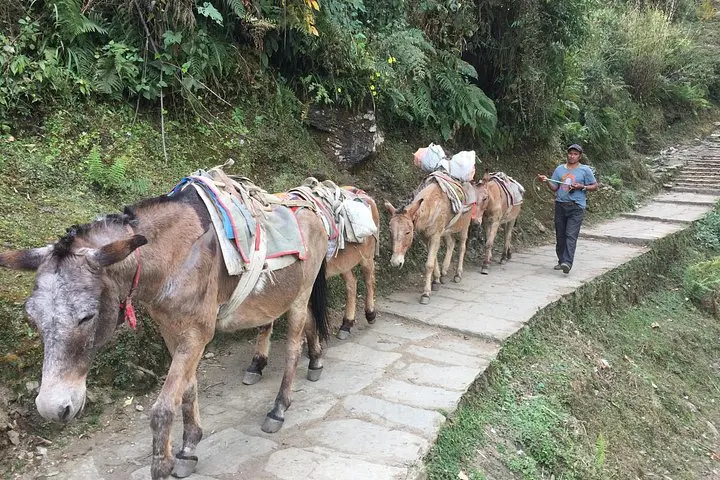
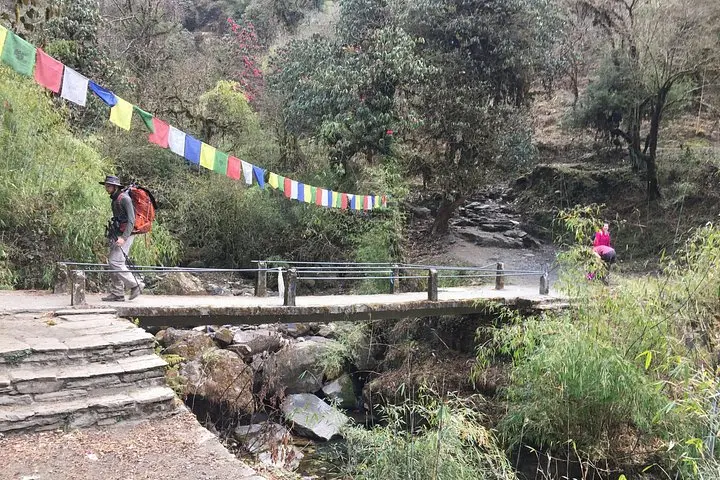
This four-day route follows traditional trade tracks that have carried Gurung and Magar communities between terraced villages for centuries. The trail cuts through thick rhododendron forests, carved from ancient metamorphic rock uplifted by the collision of the Indian and Eurasian plates. Villages such as Ulleri and Ghandruk showcase stone houses, prayer flags, and warm teahouses that reflect local mountain culture.
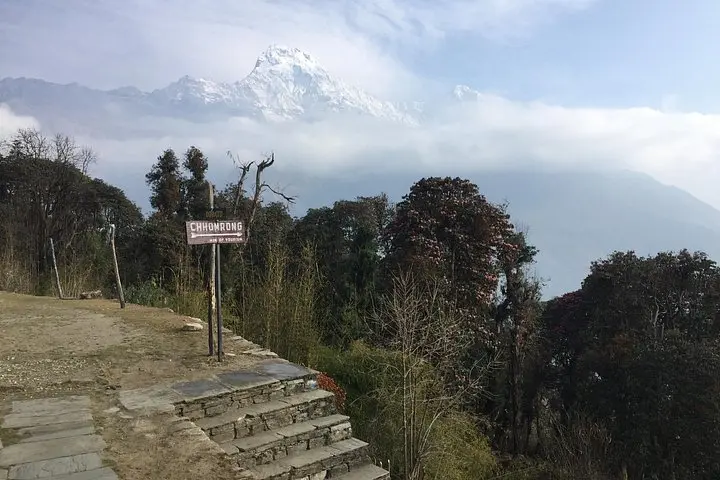
Expect steady climbs, long stone stair sections, and narrow ridgelines with broad viewpoints. The reward is a sunrise panorama of Annapurna I, Dhaulagiri in the distance on clear days, and the folded valleys below. Wildlife is quiet but present: Himalayan birds and shy langur sightings are possible in morning and evening.
Practical guidance: plan for early starts and cold mornings at 3,200 m; pace your ascent to minimize altitude strain and carry water and layers. Guesthouse accommodations are basic but comfortable—book through a guide or operator for permits (TIMS and ACAP) and local luggage transfers. Footwear with good ankle support and trekking poles make the stone stair sections significantly easier. Aim for spring or autumn for the clearest views; winter is cold and summer brings monsoon. Leave no trace: pack out waste, respect local customs, and tip guides and porters fairly.
Yes—ACAP and TIMS permits are required for the Annapurna region; operators typically arrange these before the trek.
Pre-dawn temperatures can drop below freezing at 3,200 m, especially from late autumn through winter—bring warm layers and a hat.
A licensed guide is strongly recommended for navigation, permits, and cultural context; porters are optional but common for comfort and local support.
Yes for active beginners with good fitness—however, steady climbs and stone steps require endurance and acclimatization over the four days.
Swami Narayan Travels Pvt Ltd operates guided outdoor trips and adventures with an emphasis on safety, stewardship, and memorable experiences.
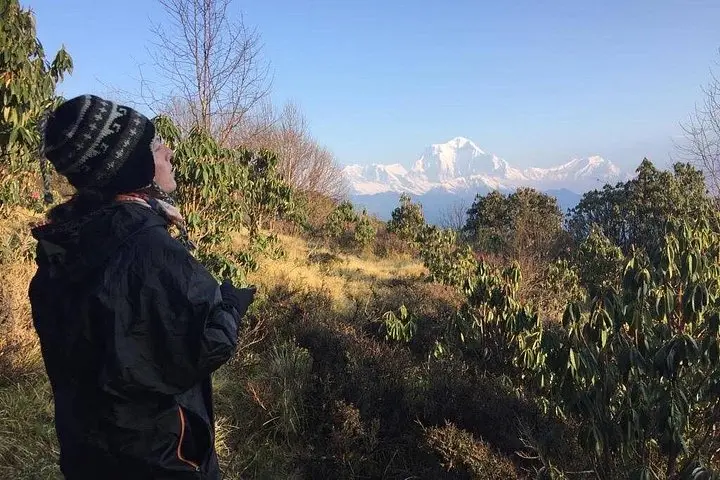
Dawn pulls at the ridge above Ghorepani and the crowd of headlamps becomes a string of quiet constellations, each step carrying you up toward Poon Hill’s panoramic lip. The cold bites at first breath, then melts as the sun peels light across Annapurna’s snow faces—Machapuchare jutting like a prow against a sky that brightens with each minute.
Dawn pulls at the ridge above Ghorepani and the crowd of headlamps becomes a string of quiet constellations, each step carrying you up toward Poon Hill’s panoramic lip. The cold bites at first breath, then melts as the sun peels light across Annapurna’s snow faces—Machapuchare jutting like a prow against a sky that brightens with each minute.
This four-day route follows traditional trade tracks that have carried Gurung and Magar communities between terraced villages for centuries. The trail cuts through thick rhododendron forests, carved from ancient metamorphic rock uplifted by the collision of the Indian and Eurasian plates. Villages such as Ulleri and Ghandruk showcase stone houses, prayer flags, and warm teahouses that reflect local mountain culture.
Expect steady climbs, long stone stair sections, and narrow ridgelines with broad viewpoints. The reward is a sunrise panorama of Annapurna I, Dhaulagiri in the distance on clear days, and the folded valleys below. Wildlife is quiet but present: Himalayan birds and shy langur sightings are possible in morning and evening.
Practical guidance: plan for early starts and cold mornings at 3,200 m; pace your ascent to minimize altitude strain and carry water and layers. Guesthouse accommodations are basic but comfortable—book through a guide or operator for permits (TIMS and ACAP) and local luggage transfers. Footwear with good ankle support and trekking poles make the stone stair sections significantly easier. Aim for spring or autumn for the clearest views; winter is cold and summer brings monsoon. Leave no trace: pack out waste, respect local customs, and tip guides and porters fairly.