THE ADVENTURE COLLECTIVE® · Independent discovery and booking for outdoor travel

A compact, four‑day trek from Nayapul to Poon Hill and Ghandruk that delivers sunrise panoramas of the Annapurna range, rhododendron forests, and authentic Gurung village life. Ideal for hikers with moderate fitness who want big-mountain views without a long expedition.
A compact, four‑day trek from Nayapul to Poon Hill and Ghandruk that delivers sunrise panoramas of the Annapurna range, rhododendron forests, and authentic Gurung village life. Ideal for hikers with moderate fitness who want big-mountain views without a long expedition.
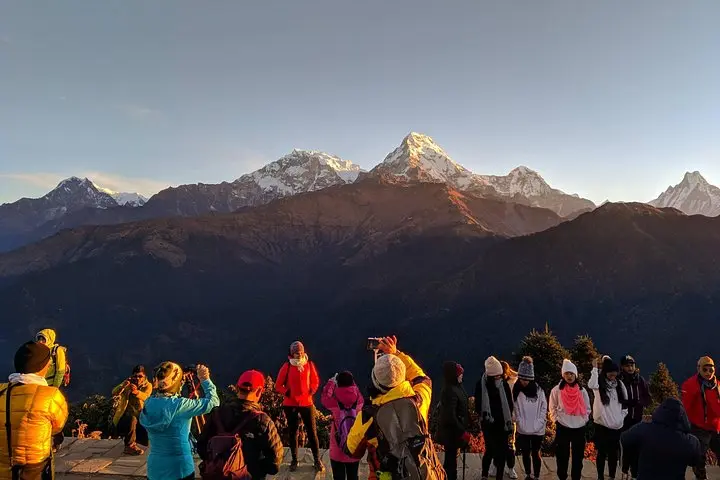
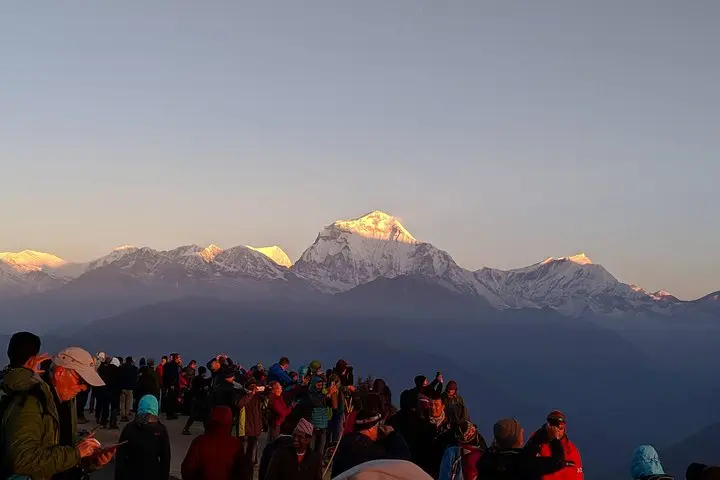
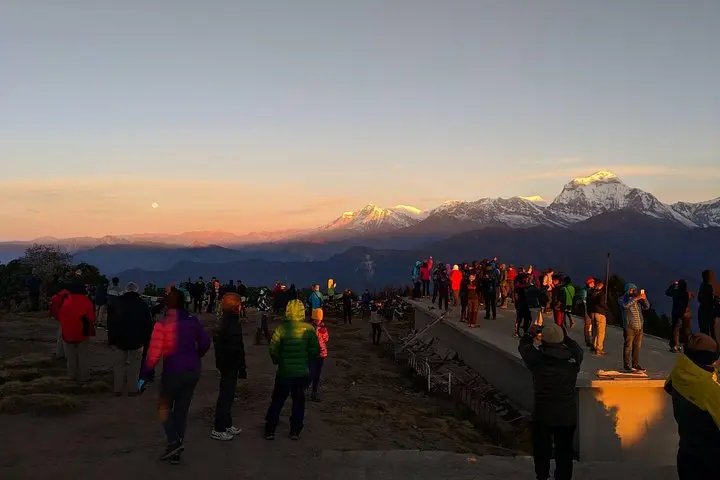
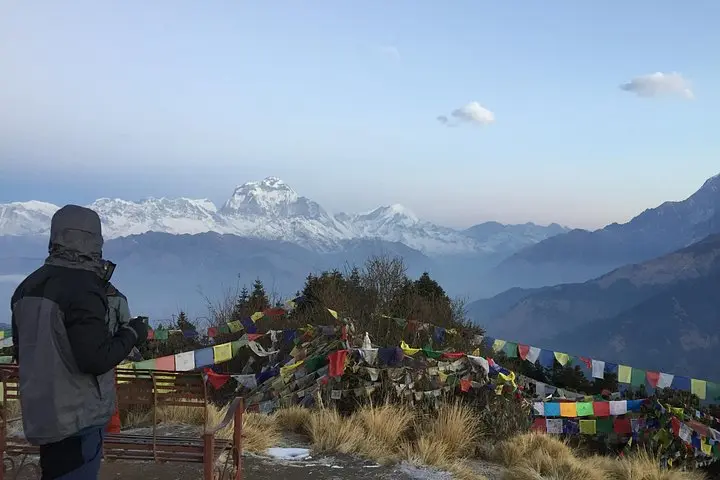
You wake before dawn, headlamp humming, and walk the stone stairs toward Poon Hill as a cold wind pushes across the ridge. The first light slices the Annapurna massif into sharp profiles — Annapurna I, Dhaulagiri and Machhapuchhre — and the valley below fills with mist that seems to be rolling downhill on purpose.
Verified experiences and guided adventures in the surrounding area.
Operated by Nepal Mountain Club Pvt Ltd · Pokhara, Gandaki Province
You wake before dawn, headlamp humming, and walk the stone stairs toward Poon Hill as a cold wind pushes across the ridge. The first light slices the Annapurna massif into sharp profiles — Annapurna I, Dhaulagiri and Machhapuchhre — and the valley below fills with mist that seems to be rolling downhill on purpose.
This four‑day circuit follows traditional trade trails used by Gurung and Magar communities for centuries. Geology here is folded Himalayan rock; deep river gorges carved by the Modi Khola feed the terraced fields and rhododendron forests that color the slopes each spring. Ghorepani and Ghandruk are working villages—tea houses and lodges perched at 2,800–3,200 m where local culture and hospitality shape the trek as much as the trail.
Expect mixed terrain: long stone staircases, short steep climbs (Ulleri to 2,070 m), forested tracks, and exposed viewpoints on the Poon Hill ridgeline at 3,210 m. Daily hiking is moderate—typically 3–6 hours—and altitude comes quickly on day three when you gain roughly 1,200 m from lower Ghorepani to Poon Hill and descend to Ghandruk.
Practical tips: start the Poon Hill climb before sunrise, carry cash for remote lodges, and plan layered clothing for large day/night temperature swings. Hydrate and monitor for mild altitude symptoms; guides included on organized departures help manage pace. The route is ideal for hikers with basic stamina and a taste for village life, offering dramatic mountain panoramas, cultural contact in Gurung homestays, and straightforward logistics back to Pokhara at the end of day four.
Yes—trekkers generally need the Annapurna Conservation Area Project (ACAP) permit and a TIMS card; guides or operators typically arrange these.
The final climb is steep but short—about 45–90 minutes from Ghorepani depending on pace; overall trek difficulty is moderate.
Basic tea houses and lodges provide simple private rooms and set meals (dal bhat, soups); quality improves in larger villages like Ghandruk.
Children and older adults in good health can complete it with a steady pace, but those with heart or spine issues should avoid high-elevation exertion.
Nepal Mountain Club Pvt Ltd operates guided outdoor trips and adventures with an emphasis on safety, stewardship, and memorable experiences.
You wake before dawn, headlamp humming, and walk the stone stairs toward Poon Hill as a cold wind pushes across the ridge. The first light slices the Annapurna massif into sharp profiles — Annapurna I, Dhaulagiri and Machhapuchhre — and the valley below fills with mist that seems to be rolling downhill on purpose.
You wake before dawn, headlamp humming, and walk the stone stairs toward Poon Hill as a cold wind pushes across the ridge. The first light slices the Annapurna massif into sharp profiles — Annapurna I, Dhaulagiri and Machhapuchhre — and the valley below fills with mist that seems to be rolling downhill on purpose.
This four‑day circuit follows traditional trade trails used by Gurung and Magar communities for centuries. Geology here is folded Himalayan rock; deep river gorges carved by the Modi Khola feed the terraced fields and rhododendron forests that color the slopes each spring. Ghorepani and Ghandruk are working villages—tea houses and lodges perched at 2,800–3,200 m where local culture and hospitality shape the trek as much as the trail.
Expect mixed terrain: long stone staircases, short steep climbs (Ulleri to 2,070 m), forested tracks, and exposed viewpoints on the Poon Hill ridgeline at 3,210 m. Daily hiking is moderate—typically 3–6 hours—and altitude comes quickly on day three when you gain roughly 1,200 m from lower Ghorepani to Poon Hill and descend to Ghandruk.
Practical tips: start the Poon Hill climb before sunrise, carry cash for remote lodges, and plan layered clothing for large day/night temperature swings. Hydrate and monitor for mild altitude symptoms; guides included on organized departures help manage pace. The route is ideal for hikers with basic stamina and a taste for village life, offering dramatic mountain panoramas, cultural contact in Gurung homestays, and straightforward logistics back to Pokhara at the end of day four.