THE ADVENTURE COLLECTIVE® · Independent discovery and booking for outdoor travel

Travelers trade Asmara’s cool, modernist avenues for Keren’s bustling camel market and the coral streets of Massawa on this four-day private tour. Expect a compact cultural itinerary with long scenic drives, historic sites, and essential local context.
Travelers trade Asmara’s cool, modernist avenues for Keren’s bustling camel market and the coral streets of Massawa on this four-day private tour. Expect a compact cultural itinerary with long scenic drives, historic sites, and essential local context.
The morning light in Asmara sharpens concrete and stucco into clean, geometric lines; Italian-era balconies cast narrow shadows as the city hums awake. Over four days, travelers move from highland cool to Red Sea glare—an itinerary built around architecture, markets and coastal history that feels equal parts road trip and cultural primer.
Verified experiences and guided adventures in the surrounding area.
Operated by Eritrea Visit · Asmara, Maekel
The morning light in Asmara sharpens concrete and stucco into clean, geometric lines; Italian-era balconies cast narrow shadows as the city hums awake. Over four days, travelers move from highland cool to Red Sea glare—an itinerary built around architecture, markets and coastal history that feels equal parts road trip and cultural primer.
Asmara’s broad avenues and modernist landmarks—Cathedral of Our Lady of the Rosary, Fiat Tagliero, the Opera House—tell a 20th-century story of Italian ambition and local adaptation. Heading west, the escarpment descends toward Keren, where a lively camel market still runs on traditional rhythms and the Keren War Cemetery marks a pivotal World War II chapter. Further east, the coastal city of Massawa offers coral-built houses, Ottoman and Italian layers, and access to the Red Sea’s marine life.
Geology is evident in the change of tone: volcanic highlands give way to arid plains and then to the coral substrata of the coastline. Culturally, expect a mix of Orthodox Christian, Muslim, and tribal traditions—occasional festivals such as the Blieni ceremony offer rare windows into local custom.
Practical guidance: pack for temperature swings (cool in Asmara, hot and humid on the coast), plan for long drives (Asmera–Keren ~91 km; Keren–Massawa ~120 km), and carry cash—ATM access is limited outside major centers. Respect local dress norms at religious sites, and allow flexibility for festival dates. The trip is a low-impact introduction to Eritrea’s diverse landscapes and layered history, best enjoyed with a local guide who can navigate logistics and cultural context.
Most travelers need a visa—check Eritrean diplomatic sources for current requirements and obtain any necessary paperwork before arrival.
The itinerary involves walking over uneven surfaces and climbing steps at some sites; contact the operator about specific accessibility needs and vehicle access.
The Blieni festival occurs on specific dates and may not align with every departure—confirm festival timing with the operator when booking to ensure attendance.
Cards are limited outside major hotels and some Asmara businesses—carry cash (nakfa) for markets, tips, and local purchases.
Eritrea Visit operates guided outdoor trips and adventures with an emphasis on safety, stewardship, and memorable experiences.
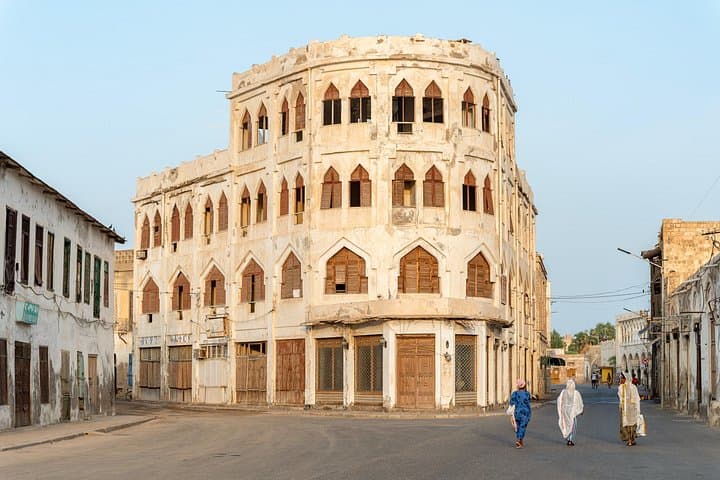


The morning light in Asmara sharpens concrete and stucco into clean, geometric lines; Italian-era balconies cast narrow shadows as the city hums awake. Over four days, travelers move from highland cool to Red Sea glare—an itinerary built around architecture, markets and coastal history that feels equal parts road trip and cultural primer.
The morning light in Asmara sharpens concrete and stucco into clean, geometric lines; Italian-era balconies cast narrow shadows as the city hums awake. Over four days, travelers move from highland cool to Red Sea glare—an itinerary built around architecture, markets and coastal history that feels equal parts road trip and cultural primer.
Asmara’s broad avenues and modernist landmarks—Cathedral of Our Lady of the Rosary, Fiat Tagliero, the Opera House—tell a 20th-century story of Italian ambition and local adaptation. Heading west, the escarpment descends toward Keren, where a lively camel market still runs on traditional rhythms and the Keren War Cemetery marks a pivotal World War II chapter. Further east, the coastal city of Massawa offers coral-built houses, Ottoman and Italian layers, and access to the Red Sea’s marine life.
Geology is evident in the change of tone: volcanic highlands give way to arid plains and then to the coral substrata of the coastline. Culturally, expect a mix of Orthodox Christian, Muslim, and tribal traditions—occasional festivals such as the Blieni ceremony offer rare windows into local custom.
Practical guidance: pack for temperature swings (cool in Asmara, hot and humid on the coast), plan for long drives (Asmera–Keren ~91 km; Keren–Massawa ~120 km), and carry cash—ATM access is limited outside major centers. Respect local dress norms at religious sites, and allow flexibility for festival dates. The trip is a low-impact introduction to Eritrea’s diverse landscapes and layered history, best enjoyed with a local guide who can navigate logistics and cultural context.