THE ADVENTURE COLLECTIVE® · Independent discovery and booking for outdoor travel

A private four‑day loop through Jordan’s essentials—Jerash, the Dead Sea, Petra, and Wadi Rum—delivered with private transfers, handpicked stays, and flexible pacing. Ideal for travelers who want depth and comfort without the crowds.
A private four‑day loop through Jordan’s essentials—Jerash, the Dead Sea, Petra, and Wadi Rum—delivered with private transfers, handpicked stays, and flexible pacing. Ideal for travelers who want depth and comfort without the crowds.
You arrive at Queen Alia as the late afternoon light softens Amman’s concrete edges. A driver waits with a nameboard, and the highway opens into a landscape that shifts from olive groves to ochre desert. By evening you’re floating at the Dead Sea, weightless and absurdly buoyant, the horizon low and blue; by the next day you press through the Siq and feel Petra’s Treasury reveal itself like an impossible façade cut from living stone.
Verified experiences and guided adventures in the surrounding area.
Operated by Elegant Limo Jordan · Wadi Musa, Ma'an Governorate
You arrive at Queen Alia as the late afternoon light softens Amman’s concrete edges. A driver waits with a nameboard, and the highway opens into a landscape that shifts from olive groves to ochre desert. By evening you’re floating at the Dead Sea, weightless and absurdly buoyant, the horizon low and blue; by the next day you press through the Siq and feel Petra’s Treasury reveal itself like an impossible façade cut from living stone.
This private four-day loop stitches together Jordan’s high notes: Jerash’s Greco‑Roman colonnades, the therapeutic slosh of Dead Sea saline, Petra’s Nabataean stonework carved into rose-hued cliffs, and Wadi Rum’s lunar canyons and towering sandstone domes. Geology runs like a plotline here—limestone terraces at Jerash, the evaporitic basin of the Dead Sea sitting roughly 430 meters below sea level, and the Cambrian to Cretaceous sandstones of Wadi Rum weathered into arches and honeycombs by relentless wind.
Culture is immediate and present; Bedouin guides share mint tea and stories under open sky, hotel hosts arrange mud and spa services on the Dead Sea, and in Petra the layers of Nabataean ingenuity and later Roman occupation can be read in facades, tombs, and amphitheaters. A practical detail matters: bring a Jordan Pass in advance to streamline entry and save on combined site fees.
The itinerary is intentionally paced—private transfers in air-conditioned vehicles, priority entry and optional local guides—so you see each site without being rushed. Expect drives of roughly an hour to Jerash from Amman, two hours from Jerash to the Dead Sea area, three-and-a-half to four hours from the Dead Sea to Petra, and about two hours from Petra to Wadi Rum; the return to Amman is approximately four hours from the desert camp. Petra’s guided walk covers narrow canyons and several kilometers of uneven stone and staircases; plan at least 2–3 hours for the core circuit and longer if you want the monasteries or high viewpoints.
Practical tips: set your visits early to avoid midday heat in summer, use sturdy shoes for Siq and Petra staircases, carry a refillable water bottle for long stretches between amenities, and keep any skin cuts covered before entering the Dead Sea. Respect local customs—modest dress is appreciated at archaeological sites—and support Bedouin‑run camp experiences when possible.
This private tour balances comfort and discovery: modern transport, handpicked hotels or desert camps, and the flexibility to linger where the landscape demands it. Whether you come for history, geology, or that surreal Dead Sea float, Jordan’s contrasts—the hospitable present against millennia of human imprint—leave a clear, durable impression.
Visa requirements vary by nationality; many travelers can obtain a visa on arrival, but if you buy the Jordan Pass it includes visa fees for qualifying nationalities—check jordanpass.jo before travel.
The tour provider lists wheelchair accessibility for transfers, but sites like Petra and Wadi Rum have uneven terrain; full access is limited—check specific hotel and site accessibility ahead of booking.
Yes—these are available as optional activities at extra cost and can be arranged through your driver or local operator in Petra/Wadi Rum.
Jordanian dinar is the local currency; cards are widely accepted in hotels and larger shops but carry cash for remote sites and tips.
Expect 3–6 km of walking over uneven stone and stairs for the main highlights in a typical 2–3 hour visit; add more time if you climb to the Monastery or viewpoints.
The tour includes overnight stays at chosen hotels or desert camps and meals as specified by the chosen accommodation level; check your booking for exact meal inclusions.
Elegant Limo Jordan operates guided outdoor trips and adventures with an emphasis on safety, stewardship, and memorable experiences.
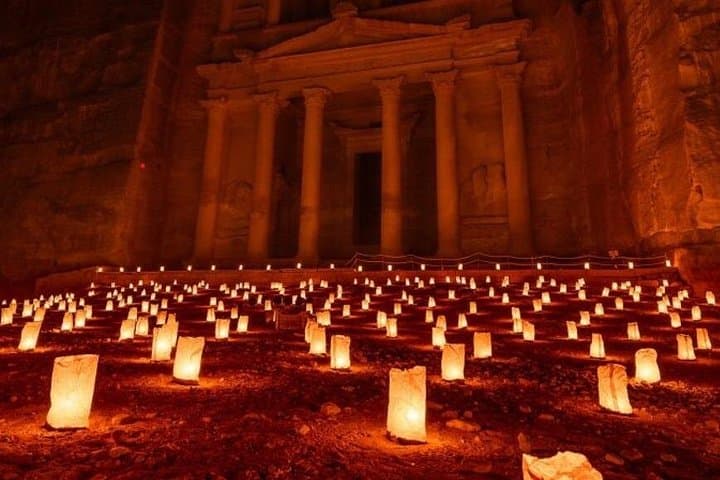


You arrive at Queen Alia as the late afternoon light softens Amman’s concrete edges. A driver waits with a nameboard, and the highway opens into a landscape that shifts from olive groves to ochre desert. By evening you’re floating at the Dead Sea, weightless and absurdly buoyant, the horizon low and blue; by the next day you press through the Siq and feel Petra’s Treasury reveal itself like an impossible façade cut from living stone.
You arrive at Queen Alia as the late afternoon light softens Amman’s concrete edges. A driver waits with a nameboard, and the highway opens into a landscape that shifts from olive groves to ochre desert. By evening you’re floating at the Dead Sea, weightless and absurdly buoyant, the horizon low and blue; by the next day you press through the Siq and feel Petra’s Treasury reveal itself like an impossible façade cut from living stone.
This private four-day loop stitches together Jordan’s high notes: Jerash’s Greco‑Roman colonnades, the therapeutic slosh of Dead Sea saline, Petra’s Nabataean stonework carved into rose-hued cliffs, and Wadi Rum’s lunar canyons and towering sandstone domes. Geology runs like a plotline here—limestone terraces at Jerash, the evaporitic basin of the Dead Sea sitting roughly 430 meters below sea level, and the Cambrian to Cretaceous sandstones of Wadi Rum weathered into arches and honeycombs by relentless wind.
Culture is immediate and present; Bedouin guides share mint tea and stories under open sky, hotel hosts arrange mud and spa services on the Dead Sea, and in Petra the layers of Nabataean ingenuity and later Roman occupation can be read in facades, tombs, and amphitheaters. A practical detail matters: bring a Jordan Pass in advance to streamline entry and save on combined site fees.
The itinerary is intentionally paced—private transfers in air-conditioned vehicles, priority entry and optional local guides—so you see each site without being rushed. Expect drives of roughly an hour to Jerash from Amman, two hours from Jerash to the Dead Sea area, three-and-a-half to four hours from the Dead Sea to Petra, and about two hours from Petra to Wadi Rum; the return to Amman is approximately four hours from the desert camp. Petra’s guided walk covers narrow canyons and several kilometers of uneven stone and staircases; plan at least 2–3 hours for the core circuit and longer if you want the monasteries or high viewpoints.
Practical tips: set your visits early to avoid midday heat in summer, use sturdy shoes for Siq and Petra staircases, carry a refillable water bottle for long stretches between amenities, and keep any skin cuts covered before entering the Dead Sea. Respect local customs—modest dress is appreciated at archaeological sites—and support Bedouin‑run camp experiences when possible.
This private tour balances comfort and discovery: modern transport, handpicked hotels or desert camps, and the flexibility to linger where the landscape demands it. Whether you come for history, geology, or that surreal Dead Sea float, Jordan’s contrasts—the hospitable present against millennia of human imprint—leave a clear, durable impression.