THE ADVENTURE COLLECTIVE® · Independent discovery and booking for outdoor travel

Spend four days in Kruger National Park on a private, all-inclusive safari that covers multiple camps and daily game drives. Early mornings, long light, and expert guides put you close to Africa’s iconic species while luxury lodges offer comfortable downtime between drives.
Spend four days in Kruger National Park on a private, all-inclusive safari that covers multiple camps and daily game drives. Early mornings, long light, and expert guides put you close to Africa’s iconic species while luxury lodges offer comfortable downtime between drives.
Dust lifts off the gravel road as the 4x4 eases toward the morning waterhole; giraffes silhouette against a pink horizon while the guide loosens the radio and scans the long grass. Over four days inside Kruger National Park you trade city rhythm for the slow, deliberate pace of the Lowveld, where game drives punctuate dawn and dusk and the bush decides when you move.
Verified experiences and guided adventures in the surrounding area.
Dust lifts off the gravel road as the 4x4 eases toward the morning waterhole; giraffes silhouette against a pink horizon while the guide loosens the radio and scans the long grass. Over four days inside Kruger National Park you trade city rhythm for the slow, deliberate pace of the Lowveld, where game drives punctuate dawn and dusk and the bush decides when you move.
Kruger, created in 1898 and one of Africa’s oldest national parks, sits on ancient granite and basalt soils that shape broad river systems and seasonal pans. Cultural histories thread through the landscape — Tsonga and Swazi peoples have maintained ties to these plains for generations, and colonial conservation policies transformed the area into the modern reserve known today.
Expect open savanna, riverine woodland, and mopane scrub that frame sightings of elephants, buffalo, lion, and a wide bird list. Guides read spoor and sound the environment like a living map; the park’s ecosystems feel active, sometimes coy, sometimes aggressive — the sun dares you to linger at midday and the night calls you back with hyena laughter.
Practically: four days means early starts, long game-drive windows and transfers between camps. Pack neutral layers, bring binoculars and a camera with long lens, and carry malaria precautions depending on the season. Respect park rules, keep distance from wildlife, and plan for dusty roads — vehicles are the primary rhythm of travel here. With planning you’ll leave with wildlife encounters, landscape breadth, and a clear sense of why Kruger remains a pillar of African safari.
You can expect elephants, buffalo, lion, leopard (less commonly), many antelope species, and a large variety of birds depending on season and location within the park.
Parts of Kruger are malaria risk zones; consult a travel clinic before departure for prophylaxis recommendations and use insect repellent and nets where appropriate.
Game drives are typically early-morning and late-afternoon sessions led by a qualified guide; drives can last several hours and include stops at hides, waterholes, and viewpoints.
Most lodges allow children but age restrictions and safety rules vary; check with the operator about family-friendly accommodations and vehicle seating limits.
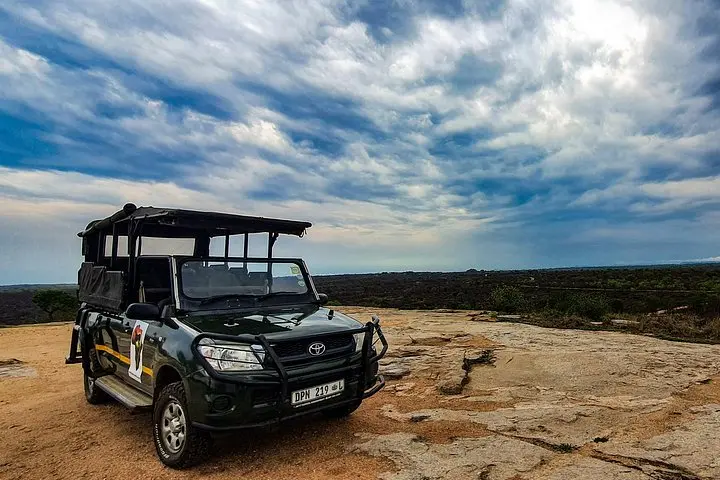
Dust lifts off the gravel road as the 4x4 eases toward the morning waterhole; giraffes silhouette against a pink horizon while the guide loosens the radio and scans the long grass. Over four days inside Kruger National Park you trade city rhythm for the slow, deliberate pace of the Lowveld, where game drives punctuate dawn and dusk and the bush decides when you move.
Dust lifts off the gravel road as the 4x4 eases toward the morning waterhole; giraffes silhouette against a pink horizon while the guide loosens the radio and scans the long grass. Over four days inside Kruger National Park you trade city rhythm for the slow, deliberate pace of the Lowveld, where game drives punctuate dawn and dusk and the bush decides when you move.
Kruger, created in 1898 and one of Africa’s oldest national parks, sits on ancient granite and basalt soils that shape broad river systems and seasonal pans. Cultural histories thread through the landscape — Tsonga and Swazi peoples have maintained ties to these plains for generations, and colonial conservation policies transformed the area into the modern reserve known today.
Expect open savanna, riverine woodland, and mopane scrub that frame sightings of elephants, buffalo, lion, and a wide bird list. Guides read spoor and sound the environment like a living map; the park’s ecosystems feel active, sometimes coy, sometimes aggressive — the sun dares you to linger at midday and the night calls you back with hyena laughter.
Practically: four days means early starts, long game-drive windows and transfers between camps. Pack neutral layers, bring binoculars and a camera with long lens, and carry malaria precautions depending on the season. Respect park rules, keep distance from wildlife, and plan for dusty roads — vehicles are the primary rhythm of travel here. With planning you’ll leave with wildlife encounters, landscape breadth, and a clear sense of why Kruger remains a pillar of African safari.