THE ADVENTURE COLLECTIVE® · Independent discovery and booking for outdoor travel

A four-day private circuit from Luxor to Abu Simbel that pairs valley tombs and Karnak's columned halls with village walks, Nubian culture and the relocated Abu Simbel temples. Ideal for travelers who want curated archaeology, island walks and authentic meals with locals.
A four-day private circuit from Luxor to Abu Simbel that pairs valley tombs and Karnak's columned halls with village walks, Nubian culture and the relocated Abu Simbel temples. Ideal for travelers who want curated archaeology, island walks and authentic meals with locals.
Morning light slices the Nile as your private vehicle slips out of Luxor toward sandstone colossi and quiet village streets. You step from the car into heat, stone and the low hum of a river that has shaped lives for millennia — the river dares you to slow down and pay attention.
Verified experiences and guided adventures in the surrounding area.
Operated by Egyptethique · Luxor, Luxor Governorate
Morning light slices the Nile as your private vehicle slips out of Luxor toward sandstone colossi and quiet village streets. You step from the car into heat, stone and the low hum of a river that has shaped lives for millennia — the river dares you to slow down and pay attention.
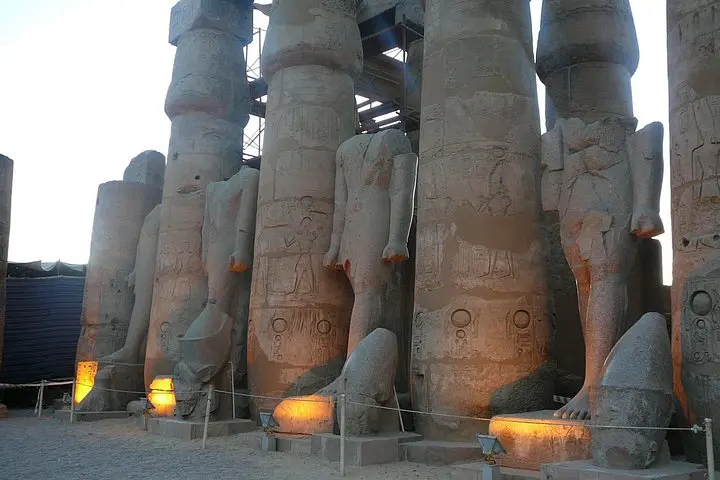
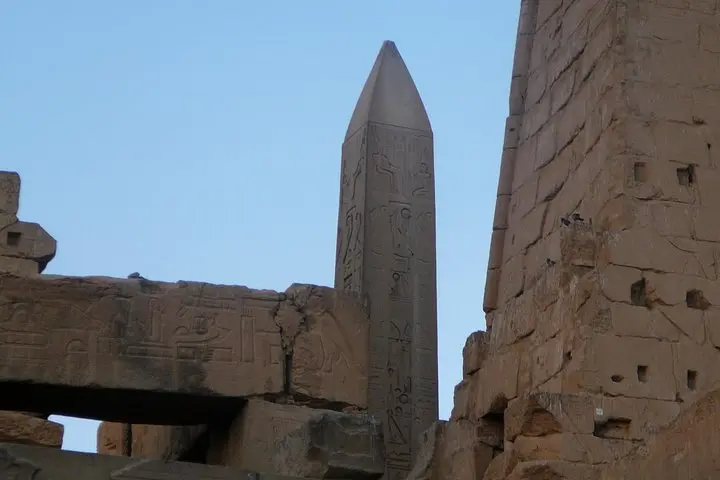
This four-day private circuit pairs the West Bank necropolises and Karnak's hypostyle halls with river islands, Nubian culture in Aswan and the monumental temples of Abu Simbel. Geology is plain: wind-sculpted sandstone and alluvial plains cradle tombs and temples whose walls record pharaonic politics and religious life from the 18th Dynasty through the Ptolemaic era. The Abu Simbel temples themselves carry a modern engineering story — dismantled and rebuilt higher when Lake Nasser rose.
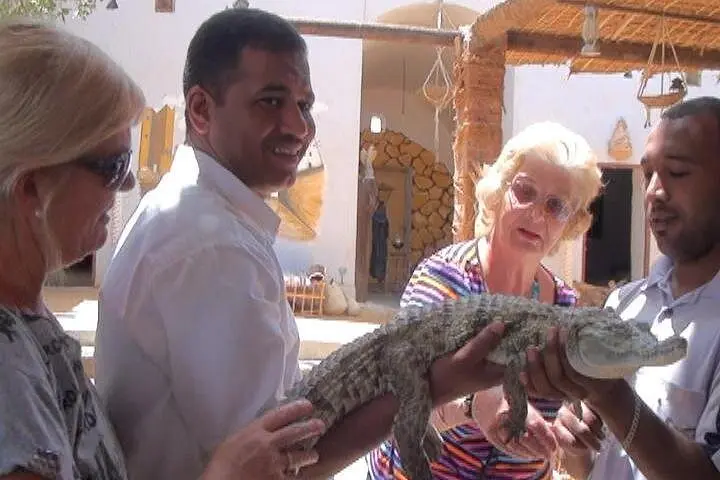
Culturally the trip moves between grand state religion and everyday farm life. You will walk through El Hegz and Bassaw island, where farmers grow mango, banana and sugar cane, and dine in family homes. An Egyptologist guide decodes hieroglyphs and points out construction techniques while bringing local stories to life.
Practically: expect long but manageable days with mostly flat walking, sandy paths and uneven stone steps inside tombs; elevation gain is negligible but there are many stairs. Start early to beat the heat, carry 2–3 liters of water, sun protection and a small daypack. Bring local currency for optional tomb entrances (King Tutankhamun's tomb has a separate fee) and wear sturdy shoes for packed sand and flagstone. With a private vehicle and guide, logistics are simple — the experience is about timing, comfort and paying attention to the details carved in stone.
No; entry to King Tutankhamun’s tomb in the Valley of the Kings requires an extra ticket purchased on site.
Expect roughly 3 to 3.5 hours each way by road; most tours depart early to maximize time at the temples.
Yes; bring Egyptian pounds for optional entrance fees, local crafts, tips and small purchases in villages.
Yes; the itinerary is offered as a private tour and can be paced for families, though there are long drives and heat to consider.
Egyptethique operates guided outdoor trips and adventures with an emphasis on safety, stewardship, and memorable experiences.
Morning light slices the Nile as your private vehicle slips out of Luxor toward sandstone colossi and quiet village streets. You step from the car into heat, stone and the low hum of a river that has shaped lives for millennia — the river dares you to slow down and pay attention.
Morning light slices the Nile as your private vehicle slips out of Luxor toward sandstone colossi and quiet village streets. You step from the car into heat, stone and the low hum of a river that has shaped lives for millennia — the river dares you to slow down and pay attention.
This four-day private circuit pairs the West Bank necropolises and Karnak's hypostyle halls with river islands, Nubian culture in Aswan and the monumental temples of Abu Simbel. Geology is plain: wind-sculpted sandstone and alluvial plains cradle tombs and temples whose walls record pharaonic politics and religious life from the 18th Dynasty through the Ptolemaic era. The Abu Simbel temples themselves carry a modern engineering story — dismantled and rebuilt higher when Lake Nasser rose.
Culturally the trip moves between grand state religion and everyday farm life. You will walk through El Hegz and Bassaw island, where farmers grow mango, banana and sugar cane, and dine in family homes. An Egyptologist guide decodes hieroglyphs and points out construction techniques while bringing local stories to life.
Practically: expect long but manageable days with mostly flat walking, sandy paths and uneven stone steps inside tombs; elevation gain is negligible but there are many stairs. Start early to beat the heat, carry 2–3 liters of water, sun protection and a small daypack. Bring local currency for optional tomb entrances (King Tutankhamun's tomb has a separate fee) and wear sturdy shoes for packed sand and flagstone. With a private vehicle and guide, logistics are simple — the experience is about timing, comfort and paying attention to the details carved in stone.