THE ADVENTURE COLLECTIVE® · Independent discovery and booking for outdoor travel

Cross the High Atlas, visit UNESCO-listed Ait Ben Haddou and sleep under the stars on Erg Chebbi. This private 4-day loop blends cinematic kasbahs, canyon hikes, and a desert camp experience.
Cross the High Atlas, visit UNESCO-listed Ait Ben Haddou and sleep under the stars on Erg Chebbi. This private 4-day loop blends cinematic kasbahs, canyon hikes, and a desert camp experience.
A low sun slants across a field of red sand as a single camel train threads a skyline of rippling dunes. On this four-day private route from Marrakech to Merzouga, the desert announces itself slowly — through serrated High Atlas passes, mud-brick kasbahs, and finally to the soaring humps of Erg Chebbi where sand and sky compete for scale.
Verified experiences and guided adventures in the surrounding area.
Operated by Safari Desert Tours · Merzouga, Drâa-Tafilalet
A low sun slants across a field of red sand as a single camel train threads a skyline of rippling dunes. On this four-day private route from Marrakech to Merzouga, the desert announces itself slowly — through serrated High Atlas passes, mud-brick kasbahs, and finally to the soaring humps of Erg Chebbi where sand and sky compete for scale.
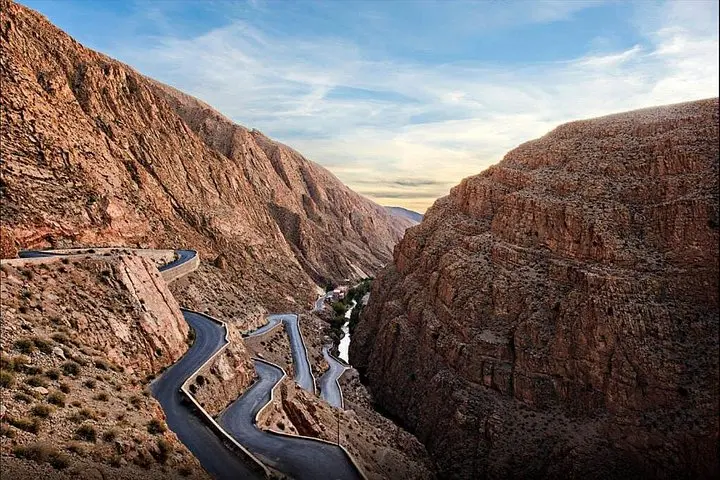
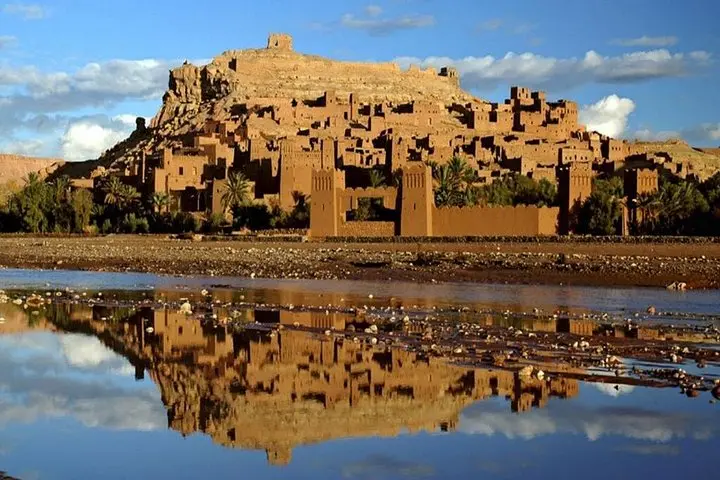
The route follows ancient caravan arteries: Ait Ben Haddou’s fortified earthen towers recall trans-Saharan trade, while Telouet and the Dades valley reveal Glaoui-era power and the agricultural lifelines carved from mountain runoff. Geologically, the trip traces a transition from weathered volcanic and limestone ranges to Sahara sands that were wind-scoured into linear dunes over millennia; near Erfoud, fossil-rich strata betray a Devonian seabed.
Cultural notes: Berber villages, rose-growing valleys, and the Gnaoua musicians of Khamlia offer living threads of local life. Overnight stays alternate between restored riads, hotels in Dades/Ouarzazate, and a private luxury camp in Merzouga — camping here is simple, with tents, dinner, and a sky so dark the Milky Way seems close enough to touch.
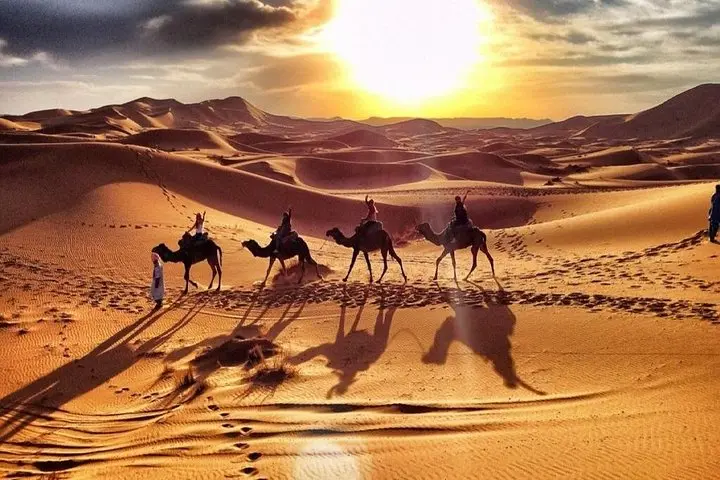
Practical guidance: expect long driving legs (mornings and afternoons), a 1½-hour camel ride at sunset, and very different day/night temperatures — hot sun, chilly nights. Wear closed-toe shoes for rocky gorges and sand gaiters for dunes; bring sunscreen, 1.5–2 L water per day, and layers for pre-dawn/after-sunset chills. Book transfers that include pickup in Marrakech; check vehicle comfort for full-day drives. Timing your dune visit for sunrise or sunset maximizes light and minimizes daytime heat.
Yes — the itinerary is offered as a private tour with door-to-door pickup from Marrakech and a dedicated English-speaking driver-guide.
Accommodations typically include riads or hotels in Dades and Ouarzazate and a luxury tented camp in Merzouga; three breakfasts and three dinners are provided as listed.
The standard camel excursion is about 1–1.5 hours at sunset; alternatives such as a 4x4 transfer may be available upon request.
The trip is rated physically easy to moderate but involves uneven terrain and camel mounts; it’s not recommended for travelers with serious cardiovascular issues or severe mobility limitations.
Safari Desert Tours operates guided outdoor trips and adventures with an emphasis on safety, stewardship, and memorable experiences.
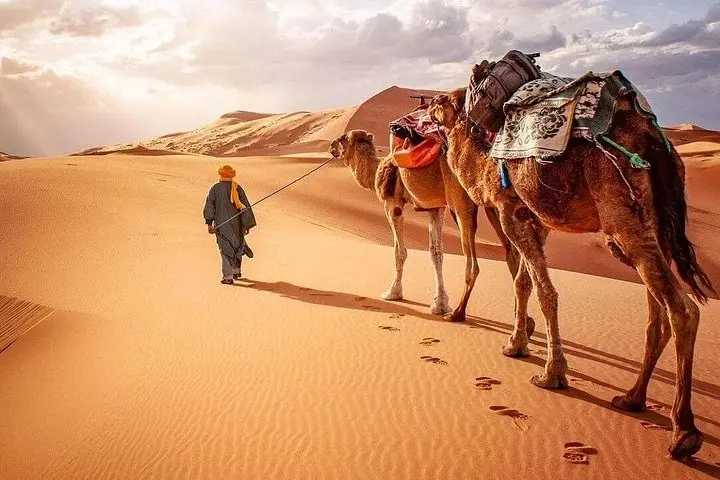
A low sun slants across a field of red sand as a single camel train threads a skyline of rippling dunes. On this four-day private route from Marrakech to Merzouga, the desert announces itself slowly — through serrated High Atlas passes, mud-brick kasbahs, and finally to the soaring humps of Erg Chebbi where sand and sky compete for scale.
A low sun slants across a field of red sand as a single camel train threads a skyline of rippling dunes. On this four-day private route from Marrakech to Merzouga, the desert announces itself slowly — through serrated High Atlas passes, mud-brick kasbahs, and finally to the soaring humps of Erg Chebbi where sand and sky compete for scale.
The route follows ancient caravan arteries: Ait Ben Haddou’s fortified earthen towers recall trans-Saharan trade, while Telouet and the Dades valley reveal Glaoui-era power and the agricultural lifelines carved from mountain runoff. Geologically, the trip traces a transition from weathered volcanic and limestone ranges to Sahara sands that were wind-scoured into linear dunes over millennia; near Erfoud, fossil-rich strata betray a Devonian seabed.
Cultural notes: Berber villages, rose-growing valleys, and the Gnaoua musicians of Khamlia offer living threads of local life. Overnight stays alternate between restored riads, hotels in Dades/Ouarzazate, and a private luxury camp in Merzouga — camping here is simple, with tents, dinner, and a sky so dark the Milky Way seems close enough to touch.
Practical guidance: expect long driving legs (mornings and afternoons), a 1½-hour camel ride at sunset, and very different day/night temperatures — hot sun, chilly nights. Wear closed-toe shoes for rocky gorges and sand gaiters for dunes; bring sunscreen, 1.5–2 L water per day, and layers for pre-dawn/after-sunset chills. Book transfers that include pickup in Marrakech; check vehicle comfort for full-day drives. Timing your dune visit for sunrise or sunset maximizes light and minimizes daytime heat.