THE ADVENTURE COLLECTIVE® · Independent discovery and booking for outdoor travel

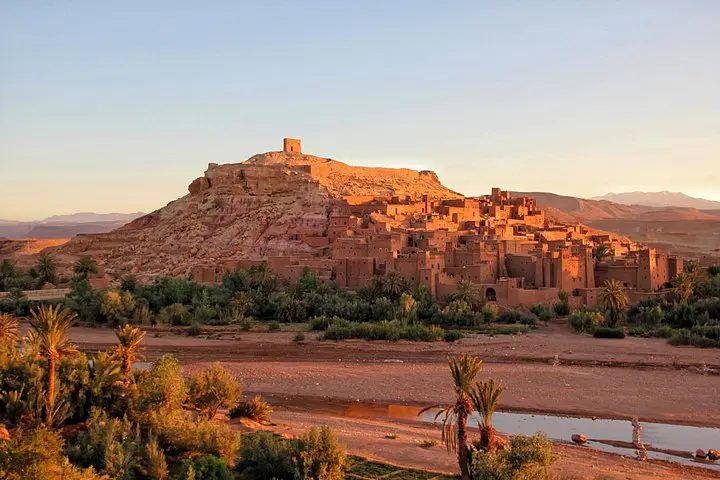
Follow the High Atlas from Marrakech, cross UNESCO-listed Ait Ben Haddou, and spend a night under the stars in Merzouga’s dunes. This private 4-day route combines dramatic drives, cultural stops, and a camelback camp in the Sahara.
Follow the High Atlas from Marrakech, cross UNESCO-listed Ait Ben Haddou, and spend a night under the stars in Merzouga’s dunes. This private 4-day route combines dramatic drives, cultural stops, and a camelback camp in the Sahara.
An early pickup in Marrakech and the road to the High Atlas open like a page of geology: switchbacks climb to the Tizi n’Tichka pass (2,260m), where wind-brushed rock and sudden views demand a pause. The route carries travelers from crimson kasbahs and the cinematic façades of Ait Ben Haddou toward the palm-lined oases and enormous sand seas around Merzouga.
Verified experiences and guided adventures in the surrounding area.
Operated by Omegatour · Marrakech, Marrakech-Safi
An early pickup in Marrakech and the road to the High Atlas open like a page of geology: switchbacks climb to the Tizi n’Tichka pass (2,260m), where wind-brushed rock and sudden views demand a pause. The route carries travelers from crimson kasbahs and the cinematic façades of Ait Ben Haddou toward the palm-lined oases and enormous sand seas around Merzouga.
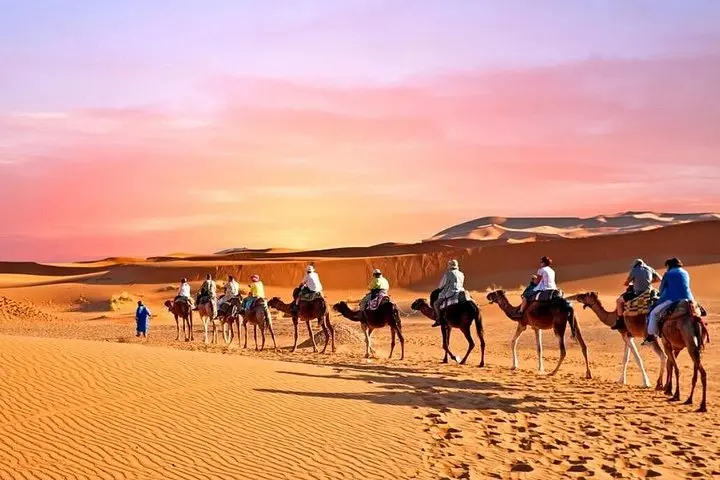
The itinerary threads history and landscape: fortified kasbahs built of sunbaked mud, the volcanic basins that scarp the anti-Atlas, and the living culture of Amazigh towns and Gnawa villages. Merzouga’s Erg Chebbi dunes—formed by persistent Sahara winds—rise like living waves; nights here are clear and cold, days stark and luminous. On the return the Middle Atlas’s cedar forests and the Barbary ape habitat near Azrou contrast sharply with the desert’s openness.
Practical guidance: expect long driving days (4–8 hours between stops) and a mix of paved roads, minor passes, and gravel approaches. Camel treks into the dunes typically cover a few kilometers and finish at a private Berber camp where tents, dinner, and a fire are standard. Bring layered clothing for 20–30°C daytime heat and desert nights that can drop below 5°C in winter; sunscreen, wide-brim hats, and sturdy shoes are non-negotiable. Carry cash for rural restaurants, tips, and small purchases; some villages accept only cash. Plan early starts to beat heat and to allow time for short hikes in Todra Gorge or studio visits in Ouarzazate. This tour suits travelers with moderate fitness who can handle uneven sand and several hours on the road each day.
Typical camel treks to the camp are 45–90 minutes on soft sand—enough to reach a remote camp but not an extended caravan crossing.
Berber camps generally offer private or shared tents with basic mattresses and blankets; some include simple wash facilities and communal dining by a fire.
Yes, private tours allow modifications—guide can add or shorten stops, arrange studio visits in Ouarzazate, or adjust camel and 4x4 activities subject to schedule.
Moderate fitness; you should be comfortable walking 1–2 hours on uneven terrain and standing for several hours during sightseeing and transfers.
Omegatour operates guided outdoor trips and adventures with an emphasis on safety, stewardship, and memorable experiences.
An early pickup in Marrakech and the road to the High Atlas open like a page of geology: switchbacks climb to the Tizi n’Tichka pass (2,260m), where wind-brushed rock and sudden views demand a pause. The route carries travelers from crimson kasbahs and the cinematic façades of Ait Ben Haddou toward the palm-lined oases and enormous sand seas around Merzouga.
An early pickup in Marrakech and the road to the High Atlas open like a page of geology: switchbacks climb to the Tizi n’Tichka pass (2,260m), where wind-brushed rock and sudden views demand a pause. The route carries travelers from crimson kasbahs and the cinematic façades of Ait Ben Haddou toward the palm-lined oases and enormous sand seas around Merzouga.
The itinerary threads history and landscape: fortified kasbahs built of sunbaked mud, the volcanic basins that scarp the anti-Atlas, and the living culture of Amazigh towns and Gnawa villages. Merzouga’s Erg Chebbi dunes—formed by persistent Sahara winds—rise like living waves; nights here are clear and cold, days stark and luminous. On the return the Middle Atlas’s cedar forests and the Barbary ape habitat near Azrou contrast sharply with the desert’s openness.
Practical guidance: expect long driving days (4–8 hours between stops) and a mix of paved roads, minor passes, and gravel approaches. Camel treks into the dunes typically cover a few kilometers and finish at a private Berber camp where tents, dinner, and a fire are standard. Bring layered clothing for 20–30°C daytime heat and desert nights that can drop below 5°C in winter; sunscreen, wide-brim hats, and sturdy shoes are non-negotiable. Carry cash for rural restaurants, tips, and small purchases; some villages accept only cash. Plan early starts to beat heat and to allow time for short hikes in Todra Gorge or studio visits in Ouarzazate. This tour suits travelers with moderate fitness who can handle uneven sand and several hours on the road each day.