THE ADVENTURE COLLECTIVE® · Independent discovery and booking for outdoor travel

A compact four-day loop from Casablanca takes you over the High Atlas to Ait Ben Haddou, through Dades and Todra gorges and into the towering dunes of Erg Chebbi. Expect long scenic drives, short hikes, a camel trek at sunset and a night in a desert camp under the stars.
A compact four-day loop from Casablanca takes you over the High Atlas to Ait Ben Haddou, through Dades and Todra gorges and into the towering dunes of Erg Chebbi. Expect long scenic drives, short hikes, a camel trek at sunset and a night in a desert camp under the stars.
The first light hits the ochre roofs of Marrakech as the convoy pulls away toward the High Atlas; by afternoon, the road climbs and the air thins, revealing terraces, kasbahs and villages clinging to the mountainside. Over Tizi n'Tichka the landscape opens into plateaus where the wind sculpts rock and sand, and the dunes of Erg Chebbi appear like a moving ridge on the horizon, daring you to walk them.
Verified experiences and guided adventures in the surrounding area.
Operated by Safari Desert Tours · Merzouga, Drâa-Tafilalet
The first light hits the ochre roofs of Marrakech as the convoy pulls away toward the High Atlas; by afternoon, the road climbs and the air thins, revealing terraces, kasbahs and villages clinging to the mountainside. Over Tizi n'Tichka the landscape opens into plateaus where the wind sculpts rock and sand, and the dunes of Erg Chebbi appear like a moving ridge on the horizon, daring you to walk them.
This route follows old caravan arteries—Ait Ben Haddou stands as a fortified waypoint with stonework that dates back centuries and a film history that has rewritten its fortunes. Geologically, the journey crosses Jurassic limestone and red sandstone canyons, then the wind-swept Miocene sands of the Sahara; valleys such as Dades and Todra carve the massif into dramatic gorges. Berber communities still maintain agricultural oases and rose-growing valleys where local crafts and cuisine reflect a mixed Amazigh and Arabic heritage.
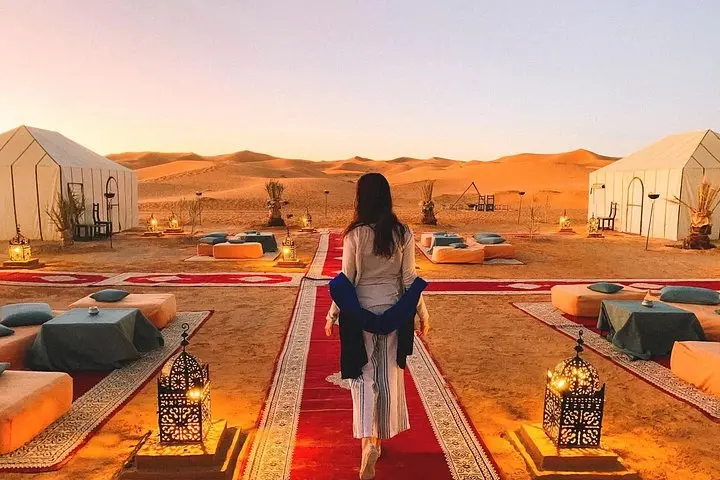
Expect long but scenic driving days punctuated by guided visits: UNESCO-listed Ait Ben Haddou, high mountain passes, Todra Gorge hikes, fossil workshops in Erfoud, and a late-afternoon camel trek into Merzouga for sunset. Nights alternate between comfortable riads and a desert camp under a wide sky—sunrise and sunset are the highlights.
Practical notes: pack layered clothing for large diurnal temperature swings, bring at least 2 liters of water per day, wear closed shoes for dune climbs, and carry sun protection. Aim to travel light on the camel trek and arrive early to photograph shifting light; local guides handle logistics and provide cultural context throughout the four-day loop.
The typical camel trek is about 60–90 minutes each way for sunset and/or sunrise transfers between the camp and village.
Yes—vehicles are air-conditioned and the itinerary notes the trip is suitable for all fitness levels, but camel rides and dune walks can be tiring for very young children or those with limited mobility.
Tipping is customary—roughly €5–€10 per person per day for guides/drivers and a small additional amount for camp staff; adjust based on service quality.
Luxury desert camps typically provide sleeping tents with sanitary facilities, bedding and hot meals; verify specific camp standards with the operator if you have particular needs.
Safari Desert Tours operates guided outdoor trips and adventures with an emphasis on safety, stewardship, and memorable experiences.
The first light hits the ochre roofs of Marrakech as the convoy pulls away toward the High Atlas; by afternoon, the road climbs and the air thins, revealing terraces, kasbahs and villages clinging to the mountainside. Over Tizi n'Tichka the landscape opens into plateaus where the wind sculpts rock and sand, and the dunes of Erg Chebbi appear like a moving ridge on the horizon, daring you to walk them.
The first light hits the ochre roofs of Marrakech as the convoy pulls away toward the High Atlas; by afternoon, the road climbs and the air thins, revealing terraces, kasbahs and villages clinging to the mountainside. Over Tizi n'Tichka the landscape opens into plateaus where the wind sculpts rock and sand, and the dunes of Erg Chebbi appear like a moving ridge on the horizon, daring you to walk them.
This route follows old caravan arteries—Ait Ben Haddou stands as a fortified waypoint with stonework that dates back centuries and a film history that has rewritten its fortunes. Geologically, the journey crosses Jurassic limestone and red sandstone canyons, then the wind-swept Miocene sands of the Sahara; valleys such as Dades and Todra carve the massif into dramatic gorges. Berber communities still maintain agricultural oases and rose-growing valleys where local crafts and cuisine reflect a mixed Amazigh and Arabic heritage.
Expect long but scenic driving days punctuated by guided visits: UNESCO-listed Ait Ben Haddou, high mountain passes, Todra Gorge hikes, fossil workshops in Erfoud, and a late-afternoon camel trek into Merzouga for sunset. Nights alternate between comfortable riads and a desert camp under a wide sky—sunrise and sunset are the highlights.
Practical notes: pack layered clothing for large diurnal temperature swings, bring at least 2 liters of water per day, wear closed shoes for dune climbs, and carry sun protection. Aim to travel light on the camel trek and arrive early to photograph shifting light; local guides handle logistics and provide cultural context throughout the four-day loop.