THE ADVENTURE COLLECTIVE® · Independent discovery and booking for outdoor travel

Explore Angkor’s major temples and lesser-known Khmer sites on a four-day private tour from Siem Reap. Expect carved sandstone, floating-village life on Tonle Sap, a moderate hill walk at Kbal Spean and remote views from Koh Ker.
Explore Angkor’s major temples and lesser-known Khmer sites on a four-day private tour from Siem Reap. Expect carved sandstone, floating-village life on Tonle Sap, a moderate hill walk at Kbal Spean and remote views from Koh Ker.
Morning light slices through the forest around Angkor Wat as you step from the car into warm, humid air and the patient stone smiles of centuries-old faces. You move through carved corridors where bas-reliefs record gods, kings and rice-field life; roots thread over lintels at Ta Prohm, and at dusk Pre Rup’s terraces throw long shadows over red laterite.
Verified experiences and guided adventures in the surrounding area.
Operated by Tour Guide-Siem Reap · Siem Reap, Siem Reap Province
Morning light slices through the forest around Angkor Wat as you step from the car into warm, humid air and the patient stone smiles of centuries-old faces. You move through carved corridors where bas-reliefs record gods, kings and rice-field life; roots thread over lintels at Ta Prohm, and at dusk Pre Rup’s terraces throw long shadows over red laterite.
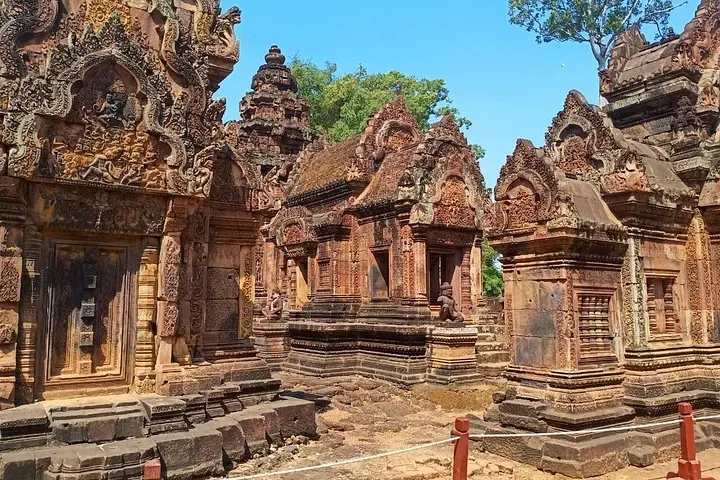
This four-day private itinerary threads cultural history and landscape: Angkor’s 12th-century Khmer empire architecture, the river-carved lingas at Kbal Spean, the pink-sandstone finesse of Banteay Srei, and the remote pyramid of Koh Ker some 150 km northeast. Geology matters here — laterite foundations, sandstone blocks transported and dressed by ancient quarrying, and the seasonal pulse of Tonle Sap that makes floating villages possible. Local culture is immediate: silk weaving at a farm, markets in Puok, and fishing communities living with the lake’s rise and fall.
Practical guidance: start early to avoid heat and crowds, and plan long but manageable days — expect several hours of walking on uneven, sometimes slippery stone and short uphill sections (Kbal Spean’s 45-minute climb). Dress respectfully — knees and shoulders covered at temples — and bring sunscreen, reliable water, mosquito repellent and sturdy shoes. Your private English-speaking guide handles logistics and parking fees; you’ll travel in A/C vehicles between sites. For photographers, golden hour at Pre Rup or the quiet moat-side at Angkor Wat rewards patience. Hydrate often, move deliberately between ruins, and leave minimal trace to protect these fragile monuments.
Angkor park admission is not listed as included — purchase a pass at the Angkor Park ticket center; your guide can advise which pass fits your itinerary.
Dry season (November–February) offers cooler temperatures and easier access; the wet season swells Tonle Sap and can make flooded-forest sections more impressive.
Many temples have uneven stone, steps and wooden boardwalks; accessibility is limited — check specific sites with your operator in advance.
The itinerary notes it’s physically easy and infant seats are available, but it’s not recommended for pregnant travelers — consult your provider and healthcare advisor.
Tour Guide-Siem Reap operates guided outdoor trips and adventures with an emphasis on safety, stewardship, and memorable experiences.
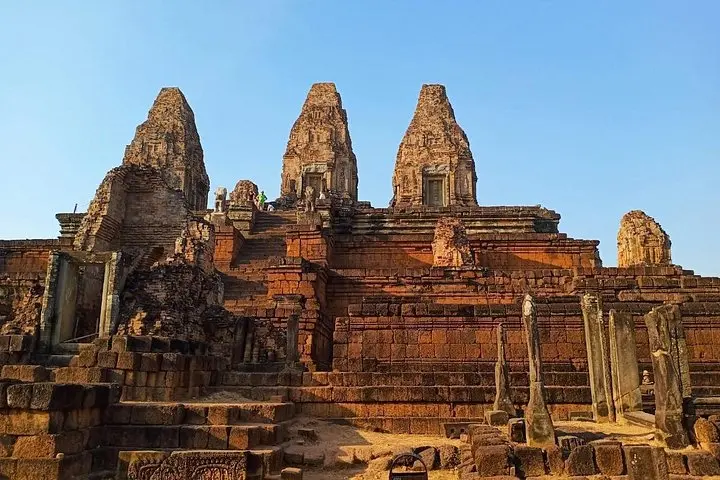
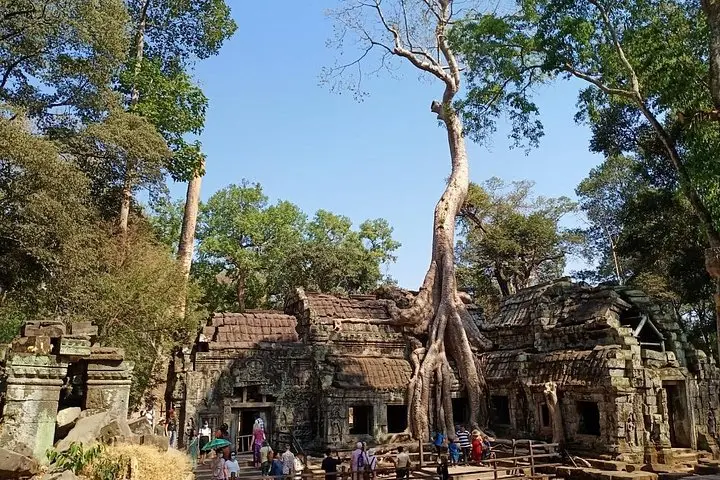
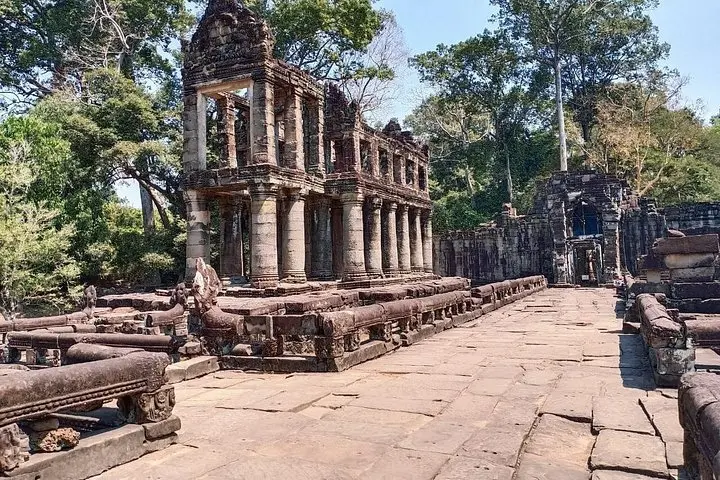
Morning light slices through the forest around Angkor Wat as you step from the car into warm, humid air and the patient stone smiles of centuries-old faces. You move through carved corridors where bas-reliefs record gods, kings and rice-field life; roots thread over lintels at Ta Prohm, and at dusk Pre Rup’s terraces throw long shadows over red laterite.
Morning light slices through the forest around Angkor Wat as you step from the car into warm, humid air and the patient stone smiles of centuries-old faces. You move through carved corridors where bas-reliefs record gods, kings and rice-field life; roots thread over lintels at Ta Prohm, and at dusk Pre Rup’s terraces throw long shadows over red laterite.
This four-day private itinerary threads cultural history and landscape: Angkor’s 12th-century Khmer empire architecture, the river-carved lingas at Kbal Spean, the pink-sandstone finesse of Banteay Srei, and the remote pyramid of Koh Ker some 150 km northeast. Geology matters here — laterite foundations, sandstone blocks transported and dressed by ancient quarrying, and the seasonal pulse of Tonle Sap that makes floating villages possible. Local culture is immediate: silk weaving at a farm, markets in Puok, and fishing communities living with the lake’s rise and fall.
Practical guidance: start early to avoid heat and crowds, and plan long but manageable days — expect several hours of walking on uneven, sometimes slippery stone and short uphill sections (Kbal Spean’s 45-minute climb). Dress respectfully — knees and shoulders covered at temples — and bring sunscreen, reliable water, mosquito repellent and sturdy shoes. Your private English-speaking guide handles logistics and parking fees; you’ll travel in A/C vehicles between sites. For photographers, golden hour at Pre Rup or the quiet moat-side at Angkor Wat rewards patience. Hydrate often, move deliberately between ruins, and leave minimal trace to protect these fragile monuments.