THE ADVENTURE COLLECTIVE® · Independent discovery and booking for outdoor travel

Four days from Bucharest trace Transylvania’s castles, fortified Saxon villages and high mountain roads. This private tour blends royal palaces, medieval citadels and dramatic drives with practical logistics and on‑road comforts.
Four days from Bucharest trace Transylvania’s castles, fortified Saxon villages and high mountain roads. This private tour blends royal palaces, medieval citadels and dramatic drives with practical logistics and on‑road comforts.
A pre-dawn drive out of Bucharest peels the city behind you and pushes into a green flank of the Carpathians. The road tightens, spruce and beech press close, and by late morning the turrets of Peleș appear against a granite shoulder — an ornate German‑Renaissance palace that tells of Romania’s 19th‑century monarchy.
Verified experiences and guided adventures in the surrounding area.
Operated by Day Trip Romania · Bucharest, Bucharest
A pre-dawn drive out of Bucharest peels the city behind you and pushes into a green flank of the Carpathians. The road tightens, spruce and beech press close, and by late morning the turrets of Peleș appear against a granite shoulder — an ornate German‑Renaissance palace that tells of Romania’s 19th‑century monarchy.
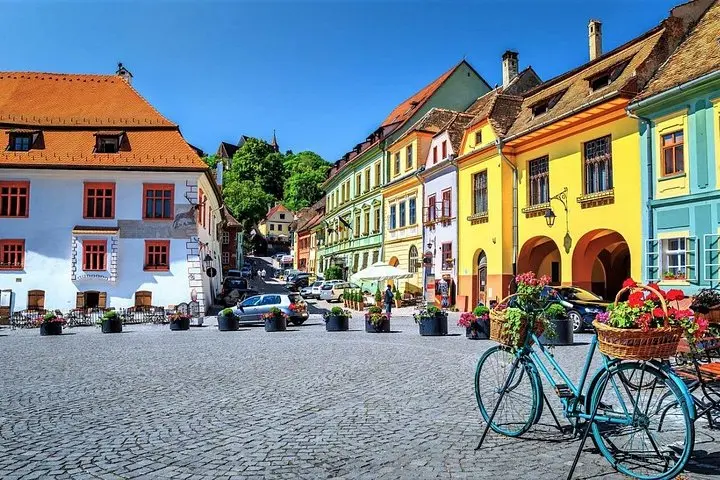
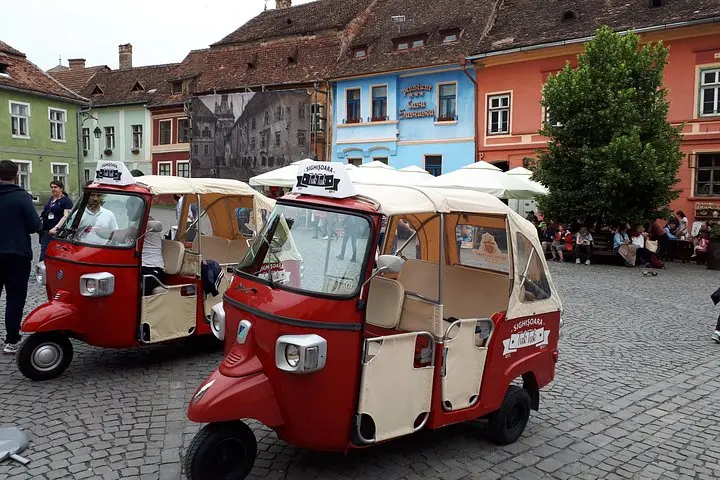
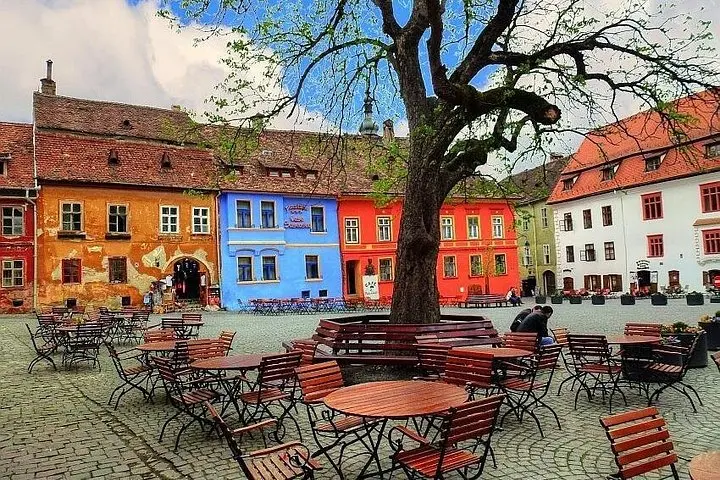
This four‑day private circuit stitches together Transylvania’s layered past: fortified Saxon churches in Viscri and Biertan, the medieval citadel of Sighişoara with its 175‑step covered stairway, and Bran’s dramatic rock‑perched keep linked to Dracula lore. Geologically the region is carved by the Southern Carpathians; the drive over the Transfăgărășan (open seasonally to about 2,042 m) crosses high pastures, glacial lakes, and switchbacks that reveal how ice and tectonics shaped these valleys.
Culture here reads in building fabric and language—Germanic guild facades in Sibiu, Orthodox monasteries, and Saxon villages where fortified churches served both prayer and defense. Local life centers on markets, cured cheeses, and slow mornings in town squares.
Practically: plan for varied walking surfaces—cobblestones, timber stairs, short steep climbs—and weather that shifts quickly with altitude. Most admissions are paid locally and are not always included; breakfasts and private transport are provided. Bring layered clothing, sturdy footwear, local currency for small vendors, and a camera with spare batteries. Time mornings for castles to beat the crowds, and reserve July–October for Transfăgărășan access. This itinerary suits travelers who want concentrated cultural history, mountain panoramas, and manageable daily walks rather than long alpine routes.
Most admissions (Peleș, Bran, some fortified churches) are typically paid locally and are not included unless specified; bring cash or card.
Yes—the itinerary includes hotel pickup and drop‑off in central Bucharest for the group booking.
The Transfăgărășan is included when open (usually July–October); in winter the drive follows Valea Oltului instead.
A professional English‑speaking guide is provided for the private tour.
Day Trip Romania operates guided outdoor trips and adventures with an emphasis on safety, stewardship, and memorable experiences.
A pre-dawn drive out of Bucharest peels the city behind you and pushes into a green flank of the Carpathians. The road tightens, spruce and beech press close, and by late morning the turrets of Peleș appear against a granite shoulder — an ornate German‑Renaissance palace that tells of Romania’s 19th‑century monarchy.
A pre-dawn drive out of Bucharest peels the city behind you and pushes into a green flank of the Carpathians. The road tightens, spruce and beech press close, and by late morning the turrets of Peleș appear against a granite shoulder — an ornate German‑Renaissance palace that tells of Romania’s 19th‑century monarchy.
This four‑day private circuit stitches together Transylvania’s layered past: fortified Saxon churches in Viscri and Biertan, the medieval citadel of Sighişoara with its 175‑step covered stairway, and Bran’s dramatic rock‑perched keep linked to Dracula lore. Geologically the region is carved by the Southern Carpathians; the drive over the Transfăgărășan (open seasonally to about 2,042 m) crosses high pastures, glacial lakes, and switchbacks that reveal how ice and tectonics shaped these valleys.
Culture here reads in building fabric and language—Germanic guild facades in Sibiu, Orthodox monasteries, and Saxon villages where fortified churches served both prayer and defense. Local life centers on markets, cured cheeses, and slow mornings in town squares.
Practically: plan for varied walking surfaces—cobblestones, timber stairs, short steep climbs—and weather that shifts quickly with altitude. Most admissions are paid locally and are not always included; breakfasts and private transport are provided. Bring layered clothing, sturdy footwear, local currency for small vendors, and a camera with spare batteries. Time mornings for castles to beat the crowds, and reserve July–October for Transfăgărășan access. This itinerary suits travelers who want concentrated cultural history, mountain panoramas, and manageable daily walks rather than long alpine routes.