THE ADVENTURE COLLECTIVE® · Independent discovery and booking for outdoor travel

A four-day circuit from Alice Springs to Uluru, Kata Tjuta, Kings Canyon and the West MacDonnell Ranges that blends cultural insight, rim walks and wild waterholes. Expect dusty roads, long horizons and camping under some of Australia’s darkest skies.
A four-day circuit from Alice Springs to Uluru, Kata Tjuta, Kings Canyon and the West MacDonnell Ranges that blends cultural insight, rim walks and wild waterholes. Expect dusty roads, long horizons and camping under some of Australia’s darkest skies.
An early red light washes over the scrub as the bus pulls out of Alice Springs and the road becomes a ribbon cutting through iron-red country. Dust hangs like a slow breath; the horizon is flat until a single, enormous curve of rock — Uluru — rises up and seems to question whether you belong here. Over four days you move from that cathedral-like monolith to the domes of Kata Tjuta, across the rim of Kings Canyon and into the cool clefts of the West MacDonnell Ranges, each landscape with its own pace and personality.
Verified experiences and guided adventures in the surrounding area.
Operated by Autopia Tours · Alice Springs, Northern Territory
An early red light washes over the scrub as the bus pulls out of Alice Springs and the road becomes a ribbon cutting through iron-red country. Dust hangs like a slow breath; the horizon is flat until a single, enormous curve of rock — Uluru — rises up and seems to question whether you belong here. Over four days you move from that cathedral-like monolith to the domes of Kata Tjuta, across the rim of Kings Canyon and into the cool clefts of the West MacDonnell Ranges, each landscape with its own pace and personality.
This is the Red Centre’s classroom: geology written in layers of sandstone, feldspar and ancient sediment. Uluru and Kata Tjuta were recognized as UNESCO World Heritage in 1987 not only for their geological rarity but for the living cultural landscape of the Anangu people. Along the way guides add context — pointing out rock art, telling creation stories, and explaining how waterholes like Mutitjulu and Ellery Creek kept human and animal life alive for millennia.
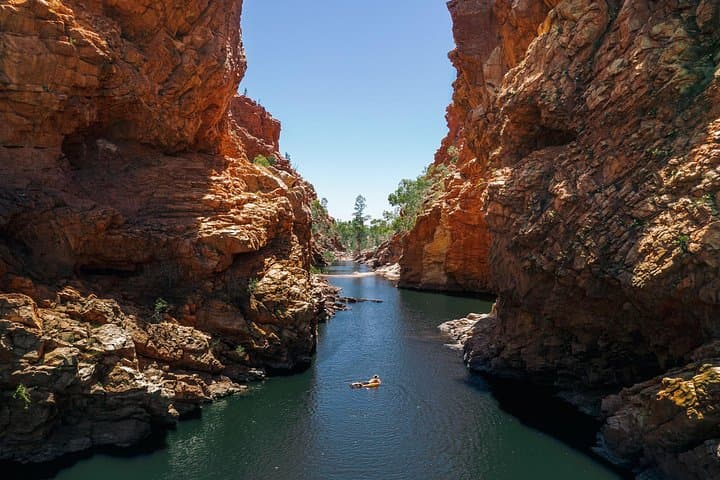
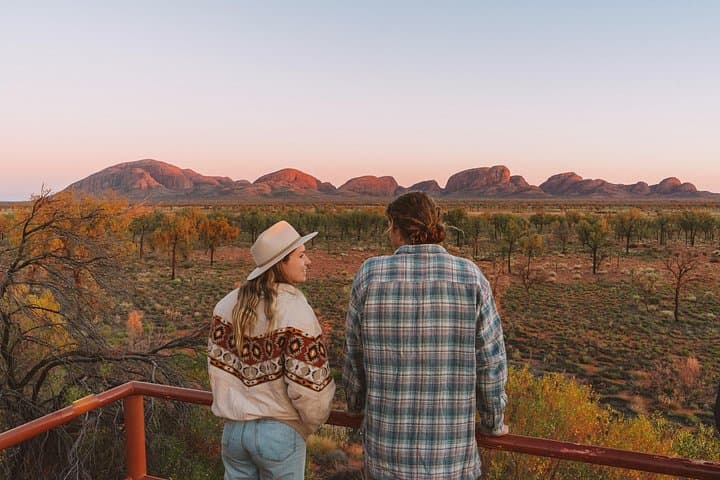
Walks are the core of the trip. Expect daily walks of 2–6 km over rocky, sometimes uneven ground; one longer outing stretches to 12–15 km (moderate to challenging terrain, some short steep sections on Kings Canyon’s rim). The Valley of the Winds at Kata Tjuta offers exposed, wind-sheared tracks while Kings Canyon’s rim walk rewards effort with sheer sandstone cliffs and panoramic drop-offs. In the West MacDonnells, Ormiston Gorge and Ellery Creek Big Hole provide dramatic cliff-lined pools where the desert finally gives you water.
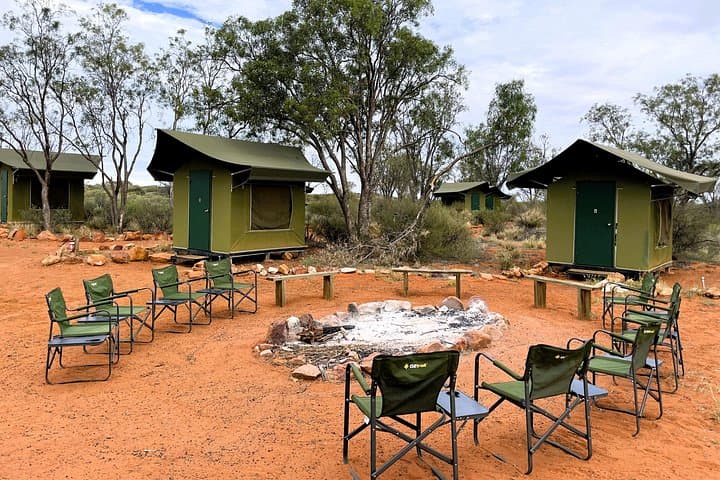
Practical details matter here. The tour departs and finishes in Alice Springs, runs in an air-conditioned 4x4 coach that can go off-road, and camps at three permanent outback sites with the choice of twin-share safari tents or a traditional swag. Group size is intimate (up to 21). Bring at least 3 liters of water per day, sturdy hiking boots with good grip, sun protection and layered clothing for big diurnal swings — daytime heat and cool nights. Respect cultural guidelines: certain rock faces and caves are sacred and off-limits; follow your guide’s instructions.
Timing is everything: dawn and dusk give you the best light and cooler hiking conditions, while mid-summer temperatures can exceed comfortable limits. Travel insurance and a moderate-to-high fitness baseline make the trip more enjoyable; guests participate in camp chores, which helps forge the camaraderie that turns a long road into shared memories.
By the last night, the Milky Way spills like a river over your swag. The landscapes have been insistent companions—sometimes harsh, sometimes generous—but always honest. You come home with sand in your shoes, a new sense of scale, and stories that are unmistakably of Australia’s interior.
This tour starts and ends in Alice Springs; guests are asked to be ready outside their accommodation at the designated pickup point.
You can choose twin-share safari tents with mattresses, linen and pillows, or a traditional swag (canvas bedroll); bedding hire may be available on request.
Daily walks range 2–6 km on average with one longer 12–15 km hike; expect rocky, uneven ground and some steep sections—moderate to high fitness is required.
Children aged 8–17 must be accompanied by an adult; the trip is not suitable for children under 8 due to safety and fitness requirements.
Meals listed are included; advise dietary requirements when booking because remote travel limits last-minute changes.
It runs year-round but routes and specific walks may change for safety or cultural reasons; extreme heat in summer can alter the schedule.
Autopia Tours operates guided outdoor trips and adventures with an emphasis on safety, stewardship, and memorable experiences.
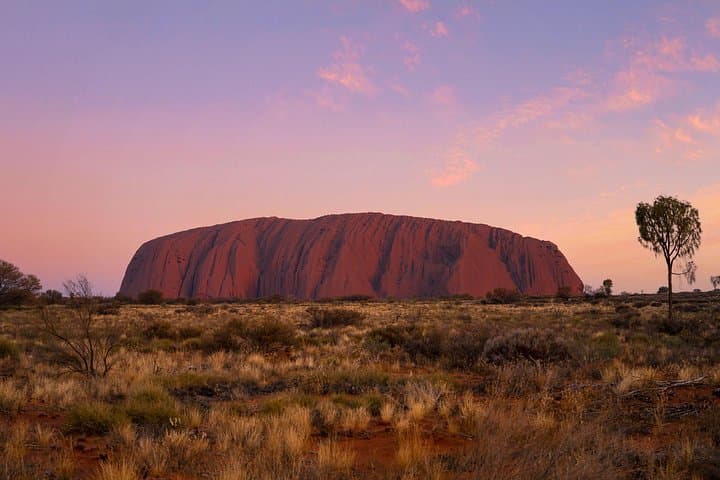
An early red light washes over the scrub as the bus pulls out of Alice Springs and the road becomes a ribbon cutting through iron-red country. Dust hangs like a slow breath; the horizon is flat until a single, enormous curve of rock — Uluru — rises up and seems to question whether you belong here. Over four days you move from that cathedral-like monolith to the domes of Kata Tjuta, across the rim of Kings Canyon and into the cool clefts of the West MacDonnell Ranges, each landscape with its own pace and personality.
An early red light washes over the scrub as the bus pulls out of Alice Springs and the road becomes a ribbon cutting through iron-red country. Dust hangs like a slow breath; the horizon is flat until a single, enormous curve of rock — Uluru — rises up and seems to question whether you belong here. Over four days you move from that cathedral-like monolith to the domes of Kata Tjuta, across the rim of Kings Canyon and into the cool clefts of the West MacDonnell Ranges, each landscape with its own pace and personality.
This is the Red Centre’s classroom: geology written in layers of sandstone, feldspar and ancient sediment. Uluru and Kata Tjuta were recognized as UNESCO World Heritage in 1987 not only for their geological rarity but for the living cultural landscape of the Anangu people. Along the way guides add context — pointing out rock art, telling creation stories, and explaining how waterholes like Mutitjulu and Ellery Creek kept human and animal life alive for millennia.
Walks are the core of the trip. Expect daily walks of 2–6 km over rocky, sometimes uneven ground; one longer outing stretches to 12–15 km (moderate to challenging terrain, some short steep sections on Kings Canyon’s rim). The Valley of the Winds at Kata Tjuta offers exposed, wind-sheared tracks while Kings Canyon’s rim walk rewards effort with sheer sandstone cliffs and panoramic drop-offs. In the West MacDonnells, Ormiston Gorge and Ellery Creek Big Hole provide dramatic cliff-lined pools where the desert finally gives you water.
Practical details matter here. The tour departs and finishes in Alice Springs, runs in an air-conditioned 4x4 coach that can go off-road, and camps at three permanent outback sites with the choice of twin-share safari tents or a traditional swag. Group size is intimate (up to 21). Bring at least 3 liters of water per day, sturdy hiking boots with good grip, sun protection and layered clothing for big diurnal swings — daytime heat and cool nights. Respect cultural guidelines: certain rock faces and caves are sacred and off-limits; follow your guide’s instructions.
Timing is everything: dawn and dusk give you the best light and cooler hiking conditions, while mid-summer temperatures can exceed comfortable limits. Travel insurance and a moderate-to-high fitness baseline make the trip more enjoyable; guests participate in camp chores, which helps forge the camaraderie that turns a long road into shared memories.
By the last night, the Milky Way spills like a river over your swag. The landscapes have been insistent companions—sometimes harsh, sometimes generous—but always honest. You come home with sand in your shoes, a new sense of scale, and stories that are unmistakably of Australia’s interior.