THE ADVENTURE COLLECTIVE® · Independent discovery and booking for outdoor travel

Spend four days between Kigali and Volcanoes National Park to track mountain gorillas, explore Dian Fossey’s research legacy, and experience Rwandan highland culture. This practical guide outlines what to expect on the trails, permits, terrain, and packing essentials.
Spend four days between Kigali and Volcanoes National Park to track mountain gorillas, explore Dian Fossey’s research legacy, and experience Rwandan highland culture. This practical guide outlines what to expect on the trails, permits, terrain, and packing essentials.
Mist hangs low over the terraced hills as a minivan slips out of Kigali and the road climbs toward the volcanic spine of northern Rwanda. By the time guests reach the foothills of Volcanoes National Park, the air is thinner, the farms give way to bamboo and montane forest, and the forest seems to watch—curious, deliberate, alive.
Verified experiences and guided adventures in the surrounding area.
Operated by Wilderness · Musanze, Northern Province
Mist hangs low over the terraced hills as a minivan slips out of Kigali and the road climbs toward the volcanic spine of northern Rwanda. By the time guests reach the foothills of Volcanoes National Park, the air is thinner, the farms give way to bamboo and montane forest, and the forest seems to watch—curious, deliberate, alive.
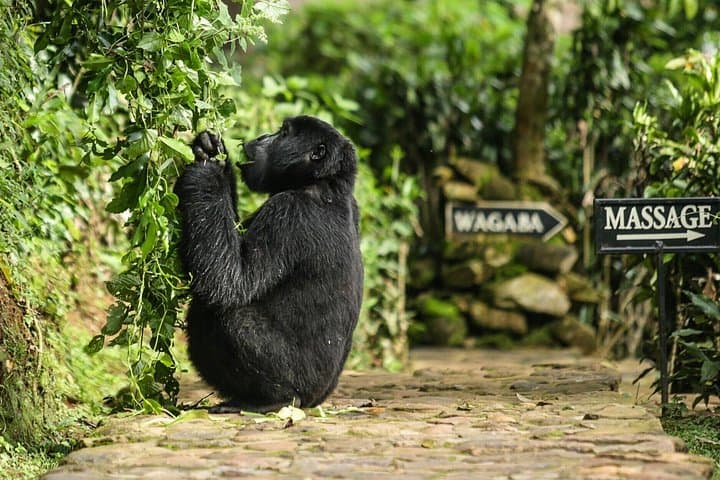
Volcanoes National Park sits along the Albertine Rift, where ancient volcanic peaks like Bisoke and Sabyinyo rise to roughly 3,700 and 3,600 meters. This is gorilla country: mountain gorillas that inspired Dian Fossey’s conservation work live here in habituated groups. The cultural landscape is equally powerful—nearby Karisoke and the Iby’iwacu cultural village narrate local history, conservation struggles, and community-led tourism.
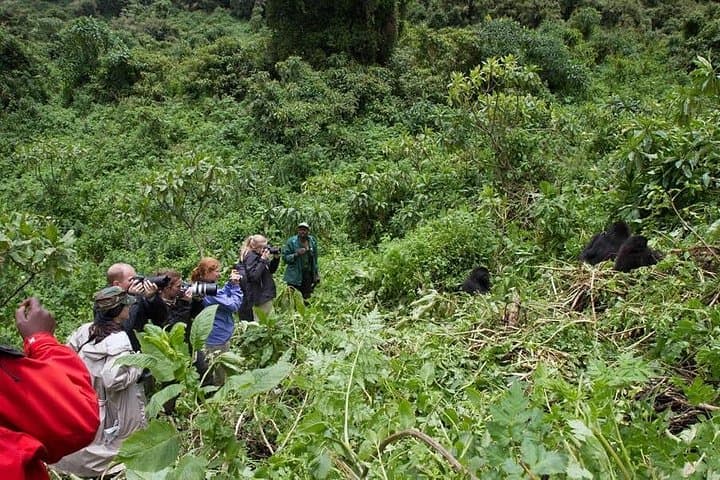
The itinerary moves at a pragmatic pace: a half-day transfer from Kigali (≈3 hours), lodge nights near Kinigi, a dawn briefing, then the trek itself—expect anywhere from a one- to six-hour hike through mixed trail, steep gullies and bamboo tangles to reach the gorillas; once found, visitors spend up to one hour observing. Terrain ranges from muddy, root-strewn slopes to clearer paths on higher ridgelines; elevations commonly sit between 1,800–2,800 m.
Practical guidance: secure your trekking permit in advance, plan sturdy waterproof boots and gaiters, and layer for quick weather swings. Move quietly, follow the guide’s briefings, and let the forest take the lead—the gorillas decide the pace. With modest fitness and sensible gear, this four-day loop balances cultural context, meaningful wildlife encounter, and realistic travel logistics.
No; gorilla permits are typically purchased separately through the Rwanda Development Board portal and must be obtained before travel.
Park rules require maintaining a respectful distance (generally around 7 meters) and visitors may spend up to one hour with habituated groups unless guides advise otherwise.
Trekking is not recommended for pregnant travelers and participants should be able to walk on uneven terrain; specific age limits vary by park policy and permit conditions.
June–September and December–February offer the driest conditions and easiest trekking, while rainy months have fewer visitors but wetter trails.
Wilderness operates guided outdoor trips and adventures with an emphasis on safety, stewardship, and memorable experiences.


Mist hangs low over the terraced hills as a minivan slips out of Kigali and the road climbs toward the volcanic spine of northern Rwanda. By the time guests reach the foothills of Volcanoes National Park, the air is thinner, the farms give way to bamboo and montane forest, and the forest seems to watch—curious, deliberate, alive.
Mist hangs low over the terraced hills as a minivan slips out of Kigali and the road climbs toward the volcanic spine of northern Rwanda. By the time guests reach the foothills of Volcanoes National Park, the air is thinner, the farms give way to bamboo and montane forest, and the forest seems to watch—curious, deliberate, alive.
Volcanoes National Park sits along the Albertine Rift, where ancient volcanic peaks like Bisoke and Sabyinyo rise to roughly 3,700 and 3,600 meters. This is gorilla country: mountain gorillas that inspired Dian Fossey’s conservation work live here in habituated groups. The cultural landscape is equally powerful—nearby Karisoke and the Iby’iwacu cultural village narrate local history, conservation struggles, and community-led tourism.
The itinerary moves at a pragmatic pace: a half-day transfer from Kigali (≈3 hours), lodge nights near Kinigi, a dawn briefing, then the trek itself—expect anywhere from a one- to six-hour hike through mixed trail, steep gullies and bamboo tangles to reach the gorillas; once found, visitors spend up to one hour observing. Terrain ranges from muddy, root-strewn slopes to clearer paths on higher ridgelines; elevations commonly sit between 1,800–2,800 m.
Practical guidance: secure your trekking permit in advance, plan sturdy waterproof boots and gaiters, and layer for quick weather swings. Move quietly, follow the guide’s briefings, and let the forest take the lead—the gorillas decide the pace. With modest fitness and sensible gear, this four-day loop balances cultural context, meaningful wildlife encounter, and realistic travel logistics.