THE ADVENTURE COLLECTIVE® · Independent discovery and booking for outdoor travel

Four days of concentrated safari across Lake Manyara, the Serengeti plains and Ngorongoro Crater — a compact loop that pairs dense wildlife viewing with accessible logistics. Expect early starts, long but scenic drives, and close encounters from a pop-up roof 4x4.
Four days of concentrated safari across Lake Manyara, the Serengeti plains and Ngorongoro Crater — a compact loop that pairs dense wildlife viewing with accessible logistics. Expect early starts, long but scenic drives, and close encounters from a pop-up roof 4x4.
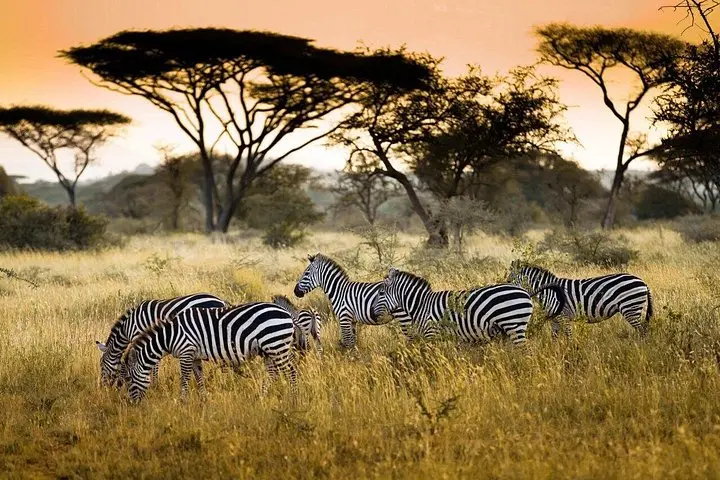
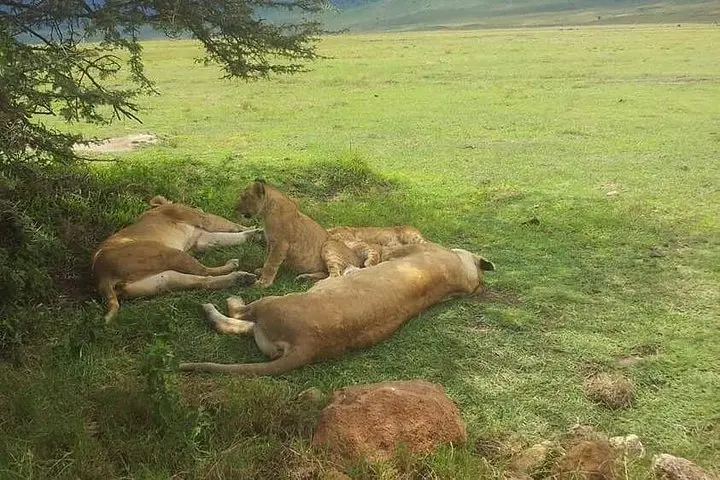
Dawn breaks over acacia silhouettes as your 4x4 eases onto a track, the horizon a grassland knife-edge where wildebeest and zebra move like a living river. Dust rises and settles; a distant pride yawns in the shade. This is northern Tanzania on a compact, vehicle-led safari that threads Lake Manyara, the endless plains of the Serengeti and the green bowl of Ngorongoro.
Verified experiences and guided adventures in the surrounding area.
Operated by Cubs Expeditions Limited · Arusha, Arusha Region
Dawn breaks over acacia silhouettes as your 4x4 eases onto a track, the horizon a grassland knife-edge where wildebeest and zebra move like a living river. Dust rises and settles; a distant pride yawns in the shade. This is northern Tanzania on a compact, vehicle-led safari that threads Lake Manyara, the endless plains of the Serengeti and the green bowl of Ngorongoro.
Geology and human history meet on this route: the Ngorongoro Crater is a collapsed volcanic caldera plunging roughly 600 meters from rim to floor, its wet center supporting year-round herds. Olduvai Gorge interrupts the savannah with exposed layers of sediment that helped Mary and Louis Leakey rewrite human origins. Lake Manyara’s shallow, alkaline margins feed flocks of flamingos and, unusually, lions that climb fig trees.
Culturally, the route crosses Maasai grazing lands and highland farms around Karatu — expect to see grass-roofed bomas and livestock along dusty service roads. Wildlife density varies by area: Seronera’s riverine pockets concentrate predators and browsers, while the crater’s closed basin creates compact viewing.
Practical guidance: travel is vehicle-centric with long driving legs (Serengeti transfers are ~145 km with 3–4 hours non-game time). Early mornings and late afternoons are prime for sightings; keep binoculars and a camera with 200mm+ zoom ready. Malaria prophylaxis and vaccinations are recommended; bring layered clothing for cool mornings and strong sun protection for midday. Lodging ranges from tented camps to lodges; pop-top 4x4s improve visibility but be prepared for bumpy roads. Respect park rules, carry drinking water, and time departures to avoid the midday heat—this loop delivers concentrated wildlife viewing with manageable logistics for first-time safari travelers.
Typical inclusions are park fees, game drives in a 4x4 with pop-up roof, accommodations specified by the operator, meals listed per itinerary, bottled water and transfers as noted — confirm specifics at booking.
The dry season (June–October) concentrates animals around water and is best for big-game viewing; calving peaks in the short rains (January–February) can also produce predators-in-action sightings.
Children are generally allowed, but infants may be required to sit on an adult’s lap during transfer; check operator age policies and accommodation suitability for families.
Vaccination recommendations change; yellow fever vaccination may be required for some travelers, and malaria prophylaxis is commonly advised — consult a travel clinic well before departure.
Cubs Expeditions Limited operates guided outdoor trips and adventures with an emphasis on safety, stewardship, and memorable experiences.
Dawn breaks over acacia silhouettes as your 4x4 eases onto a track, the horizon a grassland knife-edge where wildebeest and zebra move like a living river. Dust rises and settles; a distant pride yawns in the shade. This is northern Tanzania on a compact, vehicle-led safari that threads Lake Manyara, the endless plains of the Serengeti and the green bowl of Ngorongoro.
Dawn breaks over acacia silhouettes as your 4x4 eases onto a track, the horizon a grassland knife-edge where wildebeest and zebra move like a living river. Dust rises and settles; a distant pride yawns in the shade. This is northern Tanzania on a compact, vehicle-led safari that threads Lake Manyara, the endless plains of the Serengeti and the green bowl of Ngorongoro.
Geology and human history meet on this route: the Ngorongoro Crater is a collapsed volcanic caldera plunging roughly 600 meters from rim to floor, its wet center supporting year-round herds. Olduvai Gorge interrupts the savannah with exposed layers of sediment that helped Mary and Louis Leakey rewrite human origins. Lake Manyara’s shallow, alkaline margins feed flocks of flamingos and, unusually, lions that climb fig trees.
Culturally, the route crosses Maasai grazing lands and highland farms around Karatu — expect to see grass-roofed bomas and livestock along dusty service roads. Wildlife density varies by area: Seronera’s riverine pockets concentrate predators and browsers, while the crater’s closed basin creates compact viewing.
Practical guidance: travel is vehicle-centric with long driving legs (Serengeti transfers are ~145 km with 3–4 hours non-game time). Early mornings and late afternoons are prime for sightings; keep binoculars and a camera with 200mm+ zoom ready. Malaria prophylaxis and vaccinations are recommended; bring layered clothing for cool mornings and strong sun protection for midday. Lodging ranges from tented camps to lodges; pop-top 4x4s improve visibility but be prepared for bumpy roads. Respect park rules, carry drinking water, and time departures to avoid the midday heat—this loop delivers concentrated wildlife viewing with manageable logistics for first-time safari travelers.