THE ADVENTURE COLLECTIVE® · Independent discovery and booking for outdoor travel

Four days from Arusha takes you through Tarangire’s baobabs, the Serengeti’s endless plains, and the sunken world of Ngorongoro Crater. This small-group safari pairs intense wildlife viewing with early mornings and long, scenic drives.
Four days from Arusha takes you through Tarangire’s baobabs, the Serengeti’s endless plains, and the sunken world of Ngorongoro Crater. This small-group safari pairs intense wildlife viewing with early mornings and long, scenic drives.
You step out of Arusha before dawn and the land greets you in stages: baobabs outlined against an orange sky in Tarangire, endless grassy plains that flatten distance in the Serengeti, and the sheer rim of Ngorongoro dropping away like a carved bowl. The first day’s game drive moves among high concentrations of elephants and hulking baobabs, the trees seeming to lean in and watch.
Verified experiences and guided adventures in the surrounding area.
Operated by Safari G.O.A.T.S · Arusha, Arusha Region
You step out of Arusha before dawn and the land greets you in stages: baobabs outlined against an orange sky in Tarangire, endless grassy plains that flatten distance in the Serengeti, and the sheer rim of Ngorongoro dropping away like a carved bowl. The first day’s game drive moves among high concentrations of elephants and hulking baobabs, the trees seeming to lean in and watch.
These parks are layered with history and geology — the Serengeti’s sweeping plains are Pleistocene savannah shaped by volcanic soils and seasonal rains, while Ngorongoro is a collapsed volcano whose 2,000-foot walls cradle marshes, forest, and a soda lake. Culture is part of the route; Maasai herders still graze cattle around park edges, their presence a living link to the landscape’s human story.
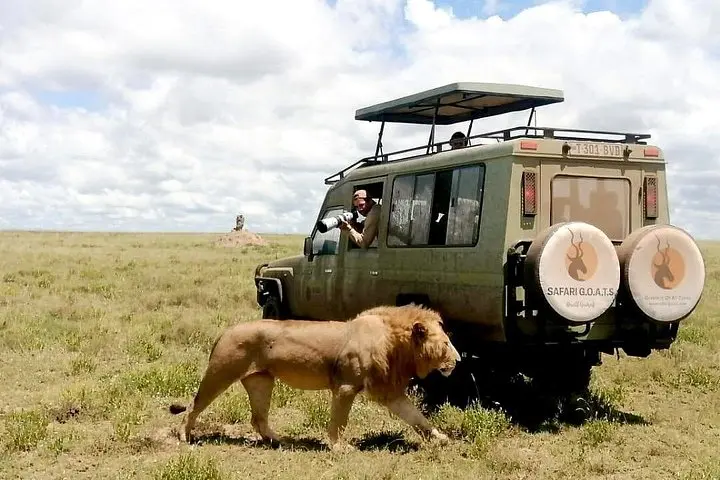
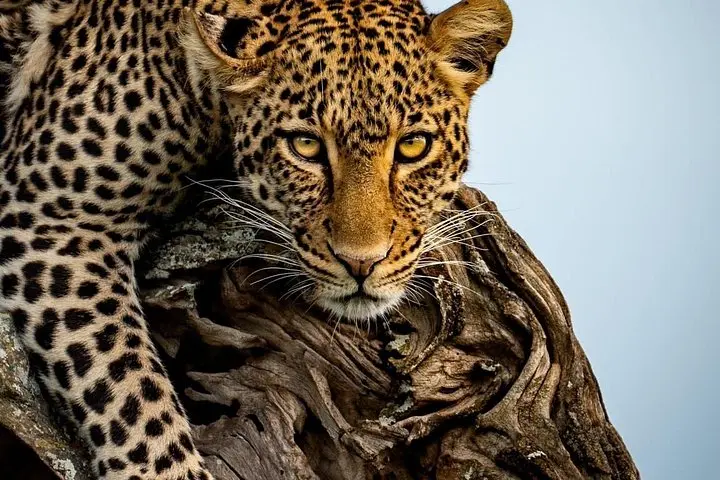
Expect classic East African wildlife viewing: elephant herds and large tuskers in Tarangire, the Great Migration and predators across the Serengeti’s 18,000 sq km, and the concentrated diversity of Ngorongoro where black rhino can be found. Mornings are prime—animals move and light sharpens the crater’s contours.
Practically: this is a small-group, camping-style safari with long transfers between parks and early starts. Park fees and most meals are included, and pickup is from Arusha. Bring a warm layer for pre-dawn crater descents, sun protection for daytime drives, a good zoom lens and binoculars, and patience for long but spectacular drives. The rhythm is slow: long sits in the vehicle reward you with scenes that unfold rather than race by.
Yes; the tour states that all park fees and entrances are included in the itinerary.
This is a camping-style, small-group safari staying at lodges and campsites specified in the itinerary.
The operator marks it suitable for all fitness levels, but it involves vehicle transfers and some uneven terrain—check specific mobility needs with the provider.
Dry season (June–October) concentrates animals and often produces dramatic river crossings, though wildlife viewing is strong year-round for different reasons.
Safari G.O.A.T.S operates guided outdoor trips and adventures with an emphasis on safety, stewardship, and memorable experiences.


You step out of Arusha before dawn and the land greets you in stages: baobabs outlined against an orange sky in Tarangire, endless grassy plains that flatten distance in the Serengeti, and the sheer rim of Ngorongoro dropping away like a carved bowl. The first day’s game drive moves among high concentrations of elephants and hulking baobabs, the trees seeming to lean in and watch.
You step out of Arusha before dawn and the land greets you in stages: baobabs outlined against an orange sky in Tarangire, endless grassy plains that flatten distance in the Serengeti, and the sheer rim of Ngorongoro dropping away like a carved bowl. The first day’s game drive moves among high concentrations of elephants and hulking baobabs, the trees seeming to lean in and watch.
These parks are layered with history and geology — the Serengeti’s sweeping plains are Pleistocene savannah shaped by volcanic soils and seasonal rains, while Ngorongoro is a collapsed volcano whose 2,000-foot walls cradle marshes, forest, and a soda lake. Culture is part of the route; Maasai herders still graze cattle around park edges, their presence a living link to the landscape’s human story.
Expect classic East African wildlife viewing: elephant herds and large tuskers in Tarangire, the Great Migration and predators across the Serengeti’s 18,000 sq km, and the concentrated diversity of Ngorongoro where black rhino can be found. Mornings are prime—animals move and light sharpens the crater’s contours.
Practically: this is a small-group, camping-style safari with long transfers between parks and early starts. Park fees and most meals are included, and pickup is from Arusha. Bring a warm layer for pre-dawn crater descents, sun protection for daytime drives, a good zoom lens and binoculars, and patience for long but spectacular drives. The rhythm is slow: long sits in the vehicle reward you with scenes that unfold rather than race by.