THE ADVENTURE COLLECTIVE® · Independent discovery and booking for outdoor travel

A four-day caravan from Marrakech into the southern Sahara, this trek combines camel travel, dune hiking and overnight camps under big desert skies. Expect 4–6 hours of daily travel across shifting sand, traditional Berber hospitality, and dramatic sunrise and sunset views.
A four-day caravan from Marrakech into the southern Sahara, this trek combines camel travel, dune hiking and overnight camps under big desert skies. Expect 4–6 hours of daily travel across shifting sand, traditional Berber hospitality, and dramatic sunrise and sunset views.
You step out of the van as the last tangerine light drains from the Atlas foothills and the air takes on a dry, cool clarity. Sand rises and falls around you like a slow tide; camels stand patient, waiting to carry the caravan deeper into silence. Over the next four days the route moves from the roadside palms of M’Hamid to the broad sweeps of Erg Z’Mila and Erg Ait Ounir, where dunes curve into long ridgelines and the sky enlarges.
Verified experiences and guided adventures in the surrounding area.
Operated by MAROC TREK · Marrakech, Marrakech-Safi
You step out of the van as the last tangerine light drains from the Atlas foothills and the air takes on a dry, cool clarity. Sand rises and falls around you like a slow tide; camels stand patient, waiting to carry the caravan deeper into silence. Over the next four days the route moves from the roadside palms of M’Hamid to the broad sweeps of Erg Z’Mila and Erg Ait Ounir, where dunes curve into long ridgelines and the sky enlarges.
Geology here is straightforward and vast: wind-sculpted quartz sand laid down over millennia into linear and crescent dunes, punctuated by stony plateaus and occasional oases fed from underground water. The human story runs alongside — Berber and nomadic cultures have guided caravans and harvested desert resources for centuries; expect traditional mint tea ceremonies and evening tagines that reflect that heritage.
Practically, the tour runs four days with daily travel or trekking blocks of about 4–6 hours (camel pace or walking), covering roughly 8–15 km across soft sand each day with minimal elevation gain (usually under 200 m). Nights are in desert camps or tents; temperatures swing dramatically from hot daytime sun to cold, clear nights. Bring sun protection, layered clothing for nights, and a sturdy pair of closed-toe shoes for walking on soft sand.
Pace yourself, hydrate frequently, and arrive prepared to move slowly — the desert asks for patience and rewards observation: sunrise on a dune crest, the hush around a campfire, and a sky that insists you look up.
Camel riding is low-impact but can be tiring; daily travel typically lasts 4–6 hours including breaks. Moderate fitness is recommended for walking short sections and mounting/dismounting.
You’ll sleep in desert camps—either shared tents or simple camp beds under the stars—depending on the night; most camps provide blankets and basic facilities.
Not ideal for people with significant mobility challenges or serious back problems; infants may travel but must sit on a lap and carers should prepare for limited facilities.
Respectful, modest clothing is appreciated in rural areas; learn a few phrases of Arabic or Tamazight and accept invitations to tea—these small gestures go a long way.
MAROC TREK operates guided outdoor trips and adventures with an emphasis on safety, stewardship, and memorable experiences.

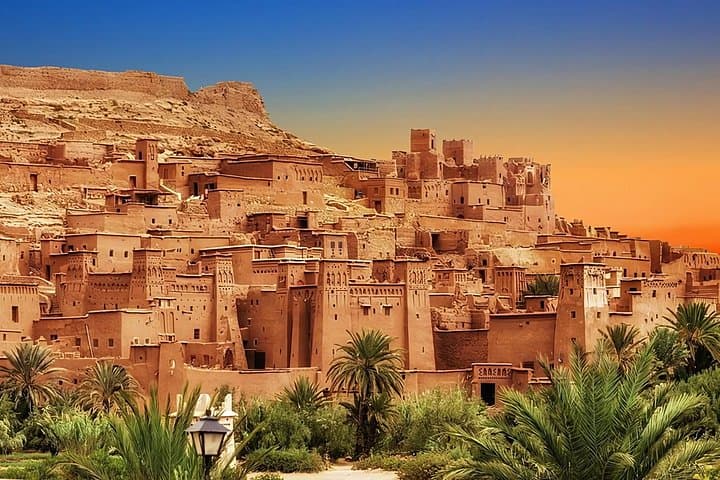
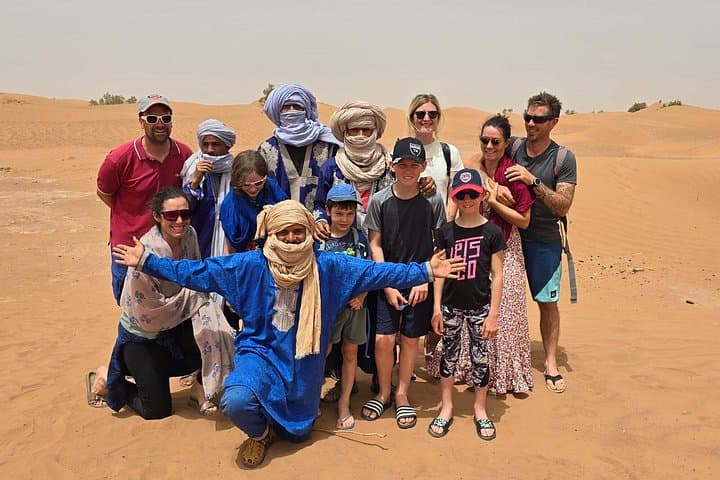
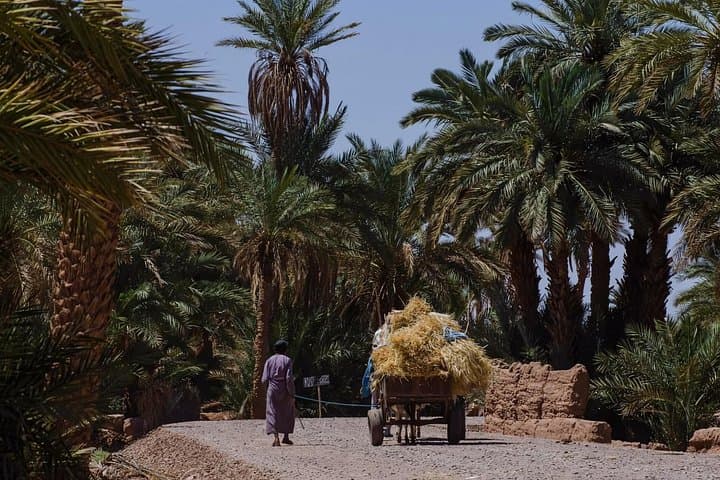
You step out of the van as the last tangerine light drains from the Atlas foothills and the air takes on a dry, cool clarity. Sand rises and falls around you like a slow tide; camels stand patient, waiting to carry the caravan deeper into silence. Over the next four days the route moves from the roadside palms of M’Hamid to the broad sweeps of Erg Z’Mila and Erg Ait Ounir, where dunes curve into long ridgelines and the sky enlarges.
You step out of the van as the last tangerine light drains from the Atlas foothills and the air takes on a dry, cool clarity. Sand rises and falls around you like a slow tide; camels stand patient, waiting to carry the caravan deeper into silence. Over the next four days the route moves from the roadside palms of M’Hamid to the broad sweeps of Erg Z’Mila and Erg Ait Ounir, where dunes curve into long ridgelines and the sky enlarges.
Geology here is straightforward and vast: wind-sculpted quartz sand laid down over millennia into linear and crescent dunes, punctuated by stony plateaus and occasional oases fed from underground water. The human story runs alongside — Berber and nomadic cultures have guided caravans and harvested desert resources for centuries; expect traditional mint tea ceremonies and evening tagines that reflect that heritage.
Practically, the tour runs four days with daily travel or trekking blocks of about 4–6 hours (camel pace or walking), covering roughly 8–15 km across soft sand each day with minimal elevation gain (usually under 200 m). Nights are in desert camps or tents; temperatures swing dramatically from hot daytime sun to cold, clear nights. Bring sun protection, layered clothing for nights, and a sturdy pair of closed-toe shoes for walking on soft sand.
Pace yourself, hydrate frequently, and arrive prepared to move slowly — the desert asks for patience and rewards observation: sunrise on a dune crest, the hush around a campfire, and a sky that insists you look up.