THE ADVENTURE COLLECTIVE® · Independent discovery and booking for outdoor travel

Cross the High Atlas, ride a camel into Erg Chebbi, sleep under desert stars and return via the Draa Valley. This private 4‑day escape blends cultural stops, dune time, and authentic Berber hospitality for an achievable Sahara introduction.
Cross the High Atlas, ride a camel into Erg Chebbi, sleep under desert stars and return via the Draa Valley. This private 4‑day escape blends cultural stops, dune time, and authentic Berber hospitality for an achievable Sahara introduction.
You arrive at dawn: the Landcruiser drops you where road becomes sand and the Erg Chebbi dunes rise like a shifting wall. Wind tugs at the scarf, camels blink in the light, and the desert—wide, quiet, relentless—begins to move you forward.
Verified experiences and guided adventures in the surrounding area.
Operated by Amnzou holidays · Merzouga, Drâa-Tafilalet
You arrive at dawn: the Landcruiser drops you where road becomes sand and the Erg Chebbi dunes rise like a shifting wall. Wind tugs at the scarf, camels blink in the light, and the desert—wide, quiet, relentless—begins to move you forward.
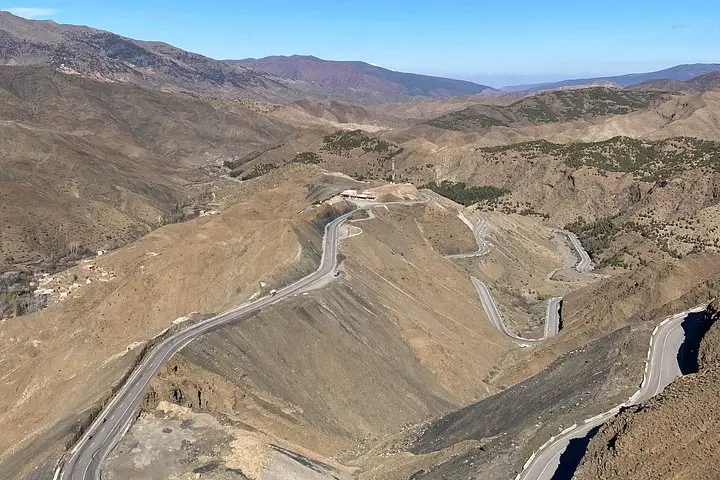
This four-day, private route threads the High Atlas via Tizi n’Tichka, passes the ksar of Ait Ben Haddou, and runs along the Dades and Draa valleys toward Merzouga’s dunes. Geologically, Erg Chebbi is a giant sea of wind-made sand, its ridges and slipfaces shaped by seasonal sirocco and cold winter drafts. Culturally the track is shaped by Berber life: kasbah architecture of rammed earth, date-palm oases, and market towns such as Rissani where camel and leather trade remain living practices.
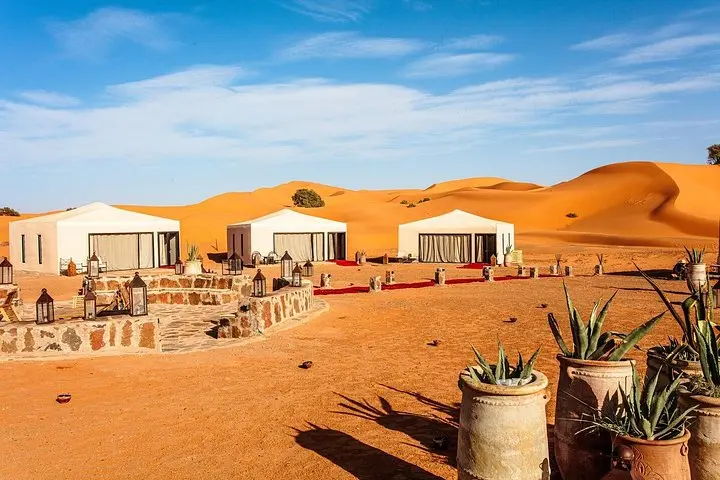
Expect layered landscapes—rocky passes, rose valleys, narrow gorges, then open sand. Guides here are local and multilingual; most nights are in simple comfort with one luxury desert-camp night combining traditional cooking, a sunset camel ride, and a star-strewn silence that defines the Sahara.
Practical guidance: plan for long driving days and early starts, carry sun protection and a reusable water bottle, and prepare for temperature swings—hot afternoons and cool nights. Footwear should handle sand and short rocky walks. If you value photography, schedule dune time at sunrise or sunset when shadows carve the sand for the best contrast.
This trip balances cultural stops with real desert travel—an accessible but committed introduction to the Moroccan Sahara.
The tour requires moderate fitness—most movement is short walks on sand or in towns; long stretches are by vehicle and camel rides are seated.
Accommodations range from standard hotels in valley towns to a luxury tent night in the desert; amenities vary but basic comforts are provided.
Yes—guides and camp staff can generally handle common dietary requests if noted at booking; always confirm specifics before travel.
Children can ride but safety depends on age and ability to sit steadily; mention children at booking so appropriate camels and guidance are arranged.
Amnzou holidays operates guided outdoor trips and adventures with an emphasis on safety, stewardship, and memorable experiences.
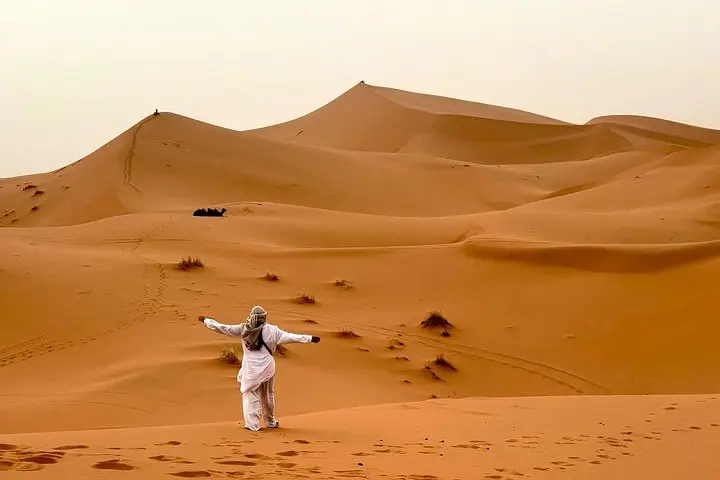
You arrive at dawn: the Landcruiser drops you where road becomes sand and the Erg Chebbi dunes rise like a shifting wall. Wind tugs at the scarf, camels blink in the light, and the desert—wide, quiet, relentless—begins to move you forward.
You arrive at dawn: the Landcruiser drops you where road becomes sand and the Erg Chebbi dunes rise like a shifting wall. Wind tugs at the scarf, camels blink in the light, and the desert—wide, quiet, relentless—begins to move you forward.
This four-day, private route threads the High Atlas via Tizi n’Tichka, passes the ksar of Ait Ben Haddou, and runs along the Dades and Draa valleys toward Merzouga’s dunes. Geologically, Erg Chebbi is a giant sea of wind-made sand, its ridges and slipfaces shaped by seasonal sirocco and cold winter drafts. Culturally the track is shaped by Berber life: kasbah architecture of rammed earth, date-palm oases, and market towns such as Rissani where camel and leather trade remain living practices.
Expect layered landscapes—rocky passes, rose valleys, narrow gorges, then open sand. Guides here are local and multilingual; most nights are in simple comfort with one luxury desert-camp night combining traditional cooking, a sunset camel ride, and a star-strewn silence that defines the Sahara.
Practical guidance: plan for long driving days and early starts, carry sun protection and a reusable water bottle, and prepare for temperature swings—hot afternoons and cool nights. Footwear should handle sand and short rocky walks. If you value photography, schedule dune time at sunrise or sunset when shadows carve the sand for the best contrast.
This trip balances cultural stops with real desert travel—an accessible but committed introduction to the Moroccan Sahara.