THE ADVENTURE COLLECTIVE® · Independent discovery and booking for outdoor travel

Swim with sharks and sea turtles at the towering Kicker Rock, watch blue-footed boobies on lava outcrops, and meet giant tortoises in a highland reserve on this four-day San Cristóbal adventure. Practical, guided, and rich in wildlife, it’s a compact introduction to Darwin’s Galápagos.
Swim with sharks and sea turtles at the towering Kicker Rock, watch blue-footed boobies on lava outcrops, and meet giant tortoises in a highland reserve on this four-day San Cristóbal adventure. Practical, guided, and rich in wildlife, it’s a compact introduction to Darwin’s Galápagos.
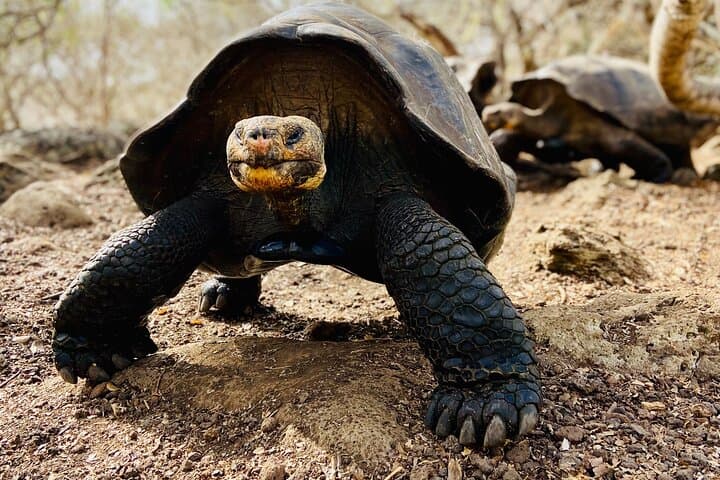
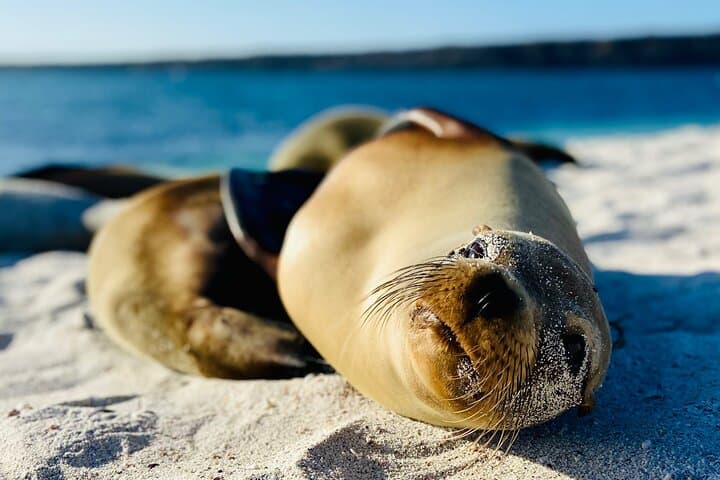
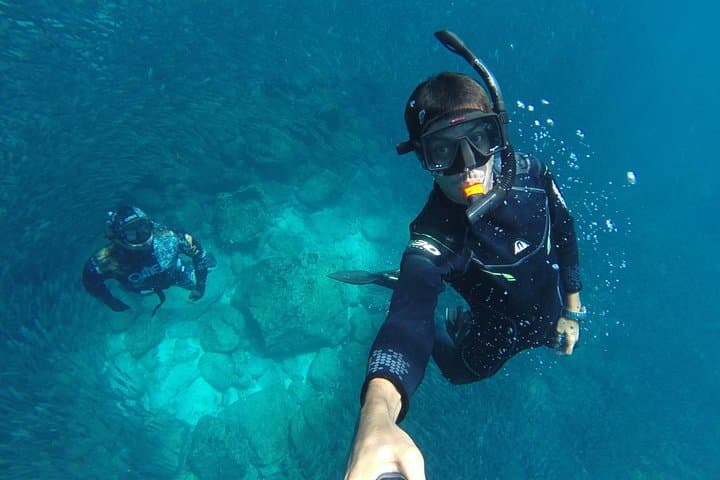
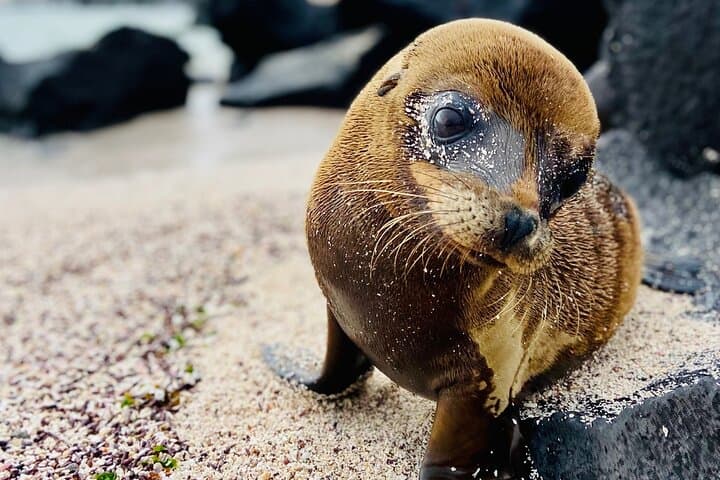
The first breath on San Cristóbal tastes of salt and sun—wind pushing across the Malecón, pelicans gliding low over the harbor, and the constant chorus of sea lions warming themselves on black volcanic rocks. From the moment a local guide whisks you through Puerto Baquerizo Moreno and onto Playa Mann, the island announces itself as a place where land and sea keep a constant conversation. Over four days you move through that conversation: snorkeling under sheer basalt cliffs at Kicker Rock, tracking giant tortoises up into the highlands, and watching blue-footed boobies perform their clumsy courtship on exposed lava fields.
Verified experiences and guided adventures in the surrounding area.
Operated by Galapagos Outdoors CL · Puerto Baquerizo Moreno, Galápagos
The first breath on San Cristóbal tastes of salt and sun—wind pushing across the Malecón, pelicans gliding low over the harbor, and the constant chorus of sea lions warming themselves on black volcanic rocks. From the moment a local guide whisks you through Puerto Baquerizo Moreno and onto Playa Mann, the island announces itself as a place where land and sea keep a constant conversation. Over four days you move through that conversation: snorkeling under sheer basalt cliffs at Kicker Rock, tracking giant tortoises up into the highlands, and watching blue-footed boobies perform their clumsy courtship on exposed lava fields.
Geology here reads like a primer in ocean-born land. San Cristóbal is one of the easternmost islands of the Galápagos, formed by submarine eruptions that piled pahoehoe and a’a onto the seafloor. Kicker Rock (León Dormido) is the visible spine of an old volcanic cone eroded into two dramatic pillars—an underwater canyon that funnels currents and concentrates marine life. El Junco, the island’s freshwater lake, sits in a collapsed crater high above the sea, its rim offering far-reaching views and a cool counterpoint to the salt-washed coast.
History and science overlap on every trail. Charles Darwin stepped foot on these shores in 1835; the observations made here helped reframe natural history. Today you’ll see the legacy in active conservation: the Galápaguera breeding centers where staff tend juvenile tortoises, and park regulations that keep visitor impact low. Local culture is a practical, sea-oriented one—fishing families, small cafés serving the day’s catch, and guides who double as naturalists and storytellers.
Practically speaking, expect moderate activity: short coastal walks, boat transfers, and multiple snorkel sessions (swimming ability required). Snorkeling at Kicker Rock is often done from a 3–4 hour boat excursion; visibility can exceed 15 meters in the dry season. Inland, hikes to El Junco and the tortoise reserve are short but can climb to roughly 400–600 meters in elevation—bring layers for wind and fog.
Timing matters: mornings offer calmer seas and better underwater visibility; late afternoon is prime for shorebird photography. Pack reef-safe sunscreen, a lightweight shell, and dry bags for electronics. Respect the rules—no touching wildlife, and stay on sanctioned trails—to keep this living laboratory healthy for the next visitor.
In four days the islands reveal themselves with steady rhythms—fast, bright marine life beneath the waves; slower, dignified tortoises in the highlands. The result is not a checklist of wildlife but an immersion into an ecosystem that still rewards attention and patience.
Yes — basic swimming competency is required for snorkeling excursions, and guides will assess abilities before leaving shore.
Yes — tours include snorkeling masks and snorkels; many guests prefer to bring their own fins for a better fit.
Flights from mainland Ecuador are not included; you’ll fly into San Cristóbal Airport separately and meet the group on arrival.
You’ll visit the Galapaguera breeding center where tortoises roam semi-wild in managed habitat; truly wild, free-roaming encounters are rarer but possible in highland areas.
Expect sea turtles, rays, Galápagos sharks, and large schools of reef fish where currents concentrate food.
Yes — the Galápagos National Park enforces strict rules: no touching animals, staying on marked paths, and biosecurity checks to prevent invasive species.
Galapagos Outdoors CL operates guided outdoor trips and adventures with an emphasis on safety, stewardship, and memorable experiences.
The first breath on San Cristóbal tastes of salt and sun—wind pushing across the Malecón, pelicans gliding low over the harbor, and the constant chorus of sea lions warming themselves on black volcanic rocks. From the moment a local guide whisks you through Puerto Baquerizo Moreno and onto Playa Mann, the island announces itself as a place where land and sea keep a constant conversation. Over four days you move through that conversation: snorkeling under sheer basalt cliffs at Kicker Rock, tracking giant tortoises up into the highlands, and watching blue-footed boobies perform their clumsy courtship on exposed lava fields.
The first breath on San Cristóbal tastes of salt and sun—wind pushing across the Malecón, pelicans gliding low over the harbor, and the constant chorus of sea lions warming themselves on black volcanic rocks. From the moment a local guide whisks you through Puerto Baquerizo Moreno and onto Playa Mann, the island announces itself as a place where land and sea keep a constant conversation. Over four days you move through that conversation: snorkeling under sheer basalt cliffs at Kicker Rock, tracking giant tortoises up into the highlands, and watching blue-footed boobies perform their clumsy courtship on exposed lava fields.
Geology here reads like a primer in ocean-born land. San Cristóbal is one of the easternmost islands of the Galápagos, formed by submarine eruptions that piled pahoehoe and a’a onto the seafloor. Kicker Rock (León Dormido) is the visible spine of an old volcanic cone eroded into two dramatic pillars—an underwater canyon that funnels currents and concentrates marine life. El Junco, the island’s freshwater lake, sits in a collapsed crater high above the sea, its rim offering far-reaching views and a cool counterpoint to the salt-washed coast.
History and science overlap on every trail. Charles Darwin stepped foot on these shores in 1835; the observations made here helped reframe natural history. Today you’ll see the legacy in active conservation: the Galápaguera breeding centers where staff tend juvenile tortoises, and park regulations that keep visitor impact low. Local culture is a practical, sea-oriented one—fishing families, small cafés serving the day’s catch, and guides who double as naturalists and storytellers.
Practically speaking, expect moderate activity: short coastal walks, boat transfers, and multiple snorkel sessions (swimming ability required). Snorkeling at Kicker Rock is often done from a 3–4 hour boat excursion; visibility can exceed 15 meters in the dry season. Inland, hikes to El Junco and the tortoise reserve are short but can climb to roughly 400–600 meters in elevation—bring layers for wind and fog.
Timing matters: mornings offer calmer seas and better underwater visibility; late afternoon is prime for shorebird photography. Pack reef-safe sunscreen, a lightweight shell, and dry bags for electronics. Respect the rules—no touching wildlife, and stay on sanctioned trails—to keep this living laboratory healthy for the next visitor.
In four days the islands reveal themselves with steady rhythms—fast, bright marine life beneath the waves; slower, dignified tortoises in the highlands. The result is not a checklist of wildlife but an immersion into an ecosystem that still rewards attention and patience.