THE ADVENTURE COLLECTIVE® · Independent discovery and booking for outdoor travel

Four days of open-roof game drives take you from Tarangire’s elephant herds to Serengeti plains and down into Ngorongoro Crater’s concentrated wildlife. Expect long game days, basic camps or lodges, and excellent chances at the Big Five.
Four days of open-roof game drives take you from Tarangire’s elephant herds to Serengeti plains and down into Ngorongoro Crater’s concentrated wildlife. Expect long game days, basic camps or lodges, and excellent chances at the Big Five.
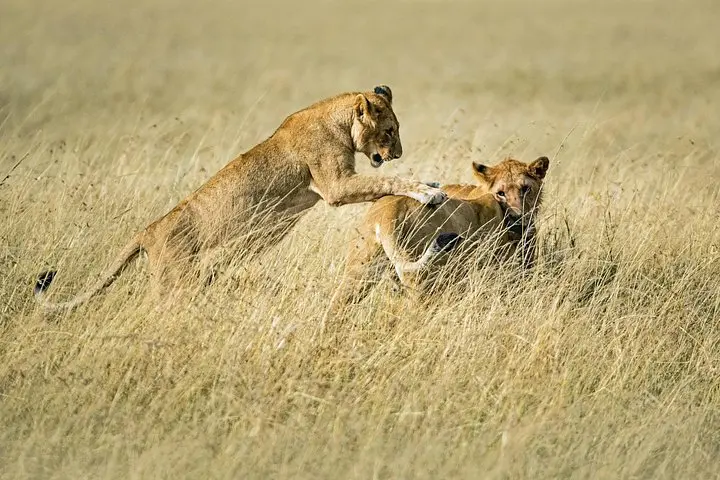
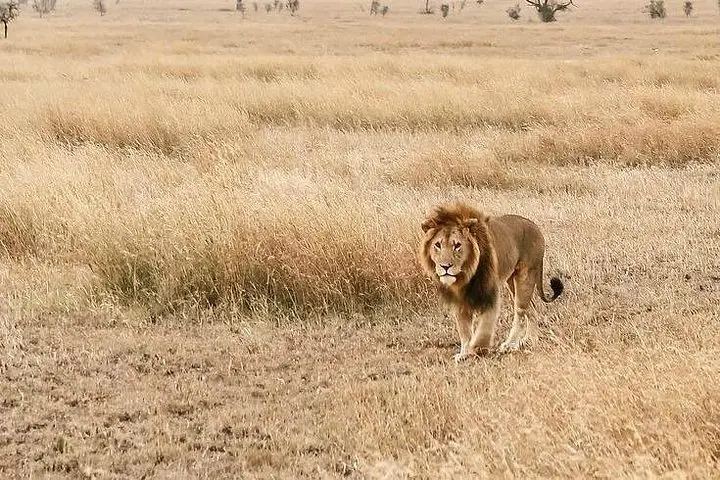
Dawn breaks over the rift-valley road as an open-roof 4x4 hums out of Arusha, the city’s bustle receding into acacia-dotted horizons. By midmorning the truck crests a ridge and Tarangire opens: elephants gravitate to the river, baobabs stand like weathered giants, and the guide’s voice tightens as a pride slips into view.
Verified experiences and guided adventures in the surrounding area.
Operated by Tanzania Dreams · Arusha, Arusha Region
Dawn breaks over the rift-valley road as an open-roof 4x4 hums out of Arusha, the city’s bustle receding into acacia-dotted horizons. By midmorning the truck crests a ridge and Tarangire opens: elephants gravitate to the river, baobabs stand like weathered giants, and the guide’s voice tightens as a pride slips into view.
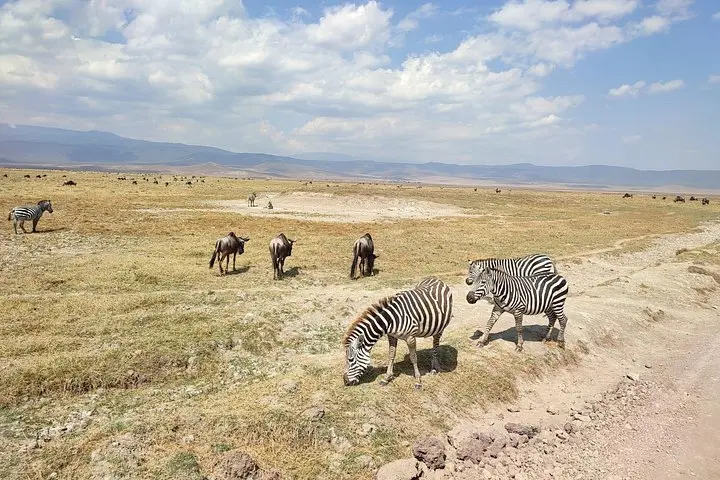
This four-day loop threads three of Tanzania’s best-known ecosystems. Tarangire (≈115 km from Arusha) is a dry-season elephant magnet and a good primer for spotting large mammals. The Serengeti’s endless plains—part of a larger ecosystem covering roughly 15,000 km²—host seasonal wildebeest movements and wide-open light for evening drives. Ngorongoro Crater is a collapsed volcano whose steep walls drop about 600 m to an enclosed caldera floor that concentrates the “big five” and lush grazing grounds.
Culturally, routes cross Maasai grazing lands; interactions are often brief but respectful, and many camps source food locally. Geology and hydrology shape everything here—river corridors set animal routes, and volcanic soils feed fertile crater meadows.
Practical guidance: expect long days of game drives (4–8 hours), dusty tracks, and basic camp or lodge accommodation. Bring binoculars, layered clothing for hot days and cool mornings, sun protection, and at least 3 liters of water per day. Motion on rough roads can be tiring—pack light, secure your camera, and keep valuables in a daypack. Timing matters: dry months concentrate wildlife; shoulder seasons offer fewer crowds and vibrant birdlife. With moderate fitness and patience, travelers will see close-range wildlife, dramatic landscapes, and a rhythm of nature that shapes life across northern Tanzania.
Expect several hours on rough roads daily—game drives typically run 4–8 hours with transit between parks on day 2.
The tour includes fees, three meals per day (except last day), camping fees, mineral water, and transport in a 4×4 open-roof vehicle as listed.
Accommodations are listed as standard hotels or campsites and vary by night; expect basic lodge or campsite facilities depending on the night.
Not recommended for travelers with serious medical conditions or pregnancy; infants must sit on an adult lap and children should be able to tolerate long drives.
Tanzania Dreams operates guided outdoor trips and adventures with an emphasis on safety, stewardship, and memorable experiences.

Dawn breaks over the rift-valley road as an open-roof 4x4 hums out of Arusha, the city’s bustle receding into acacia-dotted horizons. By midmorning the truck crests a ridge and Tarangire opens: elephants gravitate to the river, baobabs stand like weathered giants, and the guide’s voice tightens as a pride slips into view.
Dawn breaks over the rift-valley road as an open-roof 4x4 hums out of Arusha, the city’s bustle receding into acacia-dotted horizons. By midmorning the truck crests a ridge and Tarangire opens: elephants gravitate to the river, baobabs stand like weathered giants, and the guide’s voice tightens as a pride slips into view.
This four-day loop threads three of Tanzania’s best-known ecosystems. Tarangire (≈115 km from Arusha) is a dry-season elephant magnet and a good primer for spotting large mammals. The Serengeti’s endless plains—part of a larger ecosystem covering roughly 15,000 km²—host seasonal wildebeest movements and wide-open light for evening drives. Ngorongoro Crater is a collapsed volcano whose steep walls drop about 600 m to an enclosed caldera floor that concentrates the “big five” and lush grazing grounds.
Culturally, routes cross Maasai grazing lands; interactions are often brief but respectful, and many camps source food locally. Geology and hydrology shape everything here—river corridors set animal routes, and volcanic soils feed fertile crater meadows.
Practical guidance: expect long days of game drives (4–8 hours), dusty tracks, and basic camp or lodge accommodation. Bring binoculars, layered clothing for hot days and cool mornings, sun protection, and at least 3 liters of water per day. Motion on rough roads can be tiring—pack light, secure your camera, and keep valuables in a daypack. Timing matters: dry months concentrate wildlife; shoulder seasons offer fewer crowds and vibrant birdlife. With moderate fitness and patience, travelers will see close-range wildlife, dramatic landscapes, and a rhythm of nature that shapes life across northern Tanzania.