THE ADVENTURE COLLECTIVE® · Independent discovery and booking for outdoor travel

Cross the High Atlas, walk the alleys of Ait Ben Haddou and ride camels into the orange waves of Erg Chebbi. This four-day shared tour blends storied kasbahs, river gorges and a night under Sahara stars.
Cross the High Atlas, walk the alleys of Ait Ben Haddou and ride camels into the orange waves of Erg Chebbi. This four-day shared tour blends storied kasbahs, river gorges and a night under Sahara stars.
Morning light peels over Marrakech as the minibus eases east into the High Atlas, windows filling with serrated ridgelines and terraced fields. By afternoon the red earth yields to ochre gorges and then the long hush of the Sahara; dunes appear like waves frozen mid-roll, daring you to climb.
Verified experiences and guided adventures in the surrounding area.
Operated by Time Out travel · Merzouga, Errachidia Province
Morning light peels over Marrakech as the minibus eases east into the High Atlas, windows filling with serrated ridgelines and terraced fields. By afternoon the red earth yields to ochre gorges and then the long hush of the Sahara; dunes appear like waves frozen mid-roll, daring you to climb.
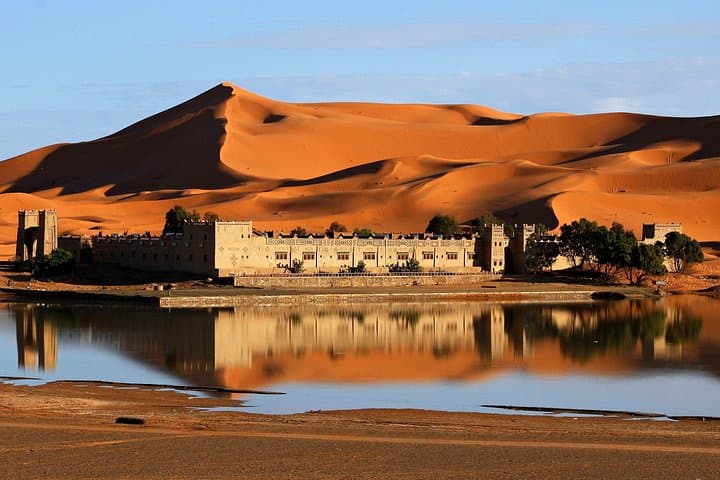
This four-day shared tour follows a classic Saharan route: High Atlas passes, the UNESCO ksar of Ait Ben Haddou, the rose-scented plains of Skoura and Dades Valley, then the palm-shadowed Todgha Gorges before arriving at Erg Chebbi near Merzouga. Geologically the dunes are wind-sculpted sand seas atop ancient river deposits; culturally this corridor was part of caravan networks linking sub-Saharan trade to Moroccan towns, and many villages still practice age-old crafts and date farming.
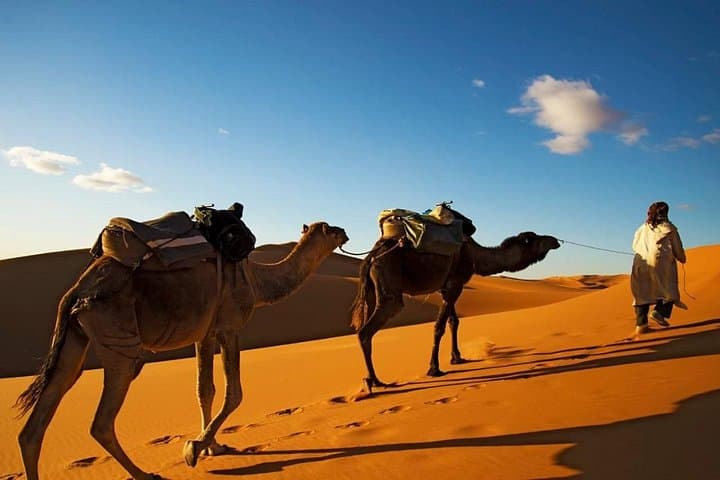
Expect long driving stretches interleaved with short hikes, photo stops, and a two-hour camel caravan that carries you into a shared nomad-style bivouac. Nights in the camp are raw and star-heavy; mornings bring a hush broken by shifting light on the ridgelines. Practicalities: bring layered clothing (hot days, cold nights), a headlamp, and trousers for camel rides. Wear sturdy shoes for rocky gorges and loose, sun-protective clothing for open dunes.
The tour is gear-light but demands moderate fitness and tolerance for long drives. Plan for early starts, bring cash for small local purchases, and allow an extra day in Marrakech if you want a gentler return. The reward is immediate—open desert and the simple, expansive rhythms of Sahara travel.
Pickup point options are typically available—confirm your pickup during booking; shared tours often use centralized meeting points in Marrakech.
The included camel caravan is about two hours at sunset and an optional short ride at sunrise, both over sand dunes to the camp and back.
Overnight is in a shared nomad-style tent (bivouac); tents usually have basic bedding—bring a warm layer in winter.
Basic facilities exist at the desert camp operator's lodge for showers before/after camp; expect simple, not luxury, amenities.
Time Out travel operates guided outdoor trips and adventures with an emphasis on safety, stewardship, and memorable experiences.


Morning light peels over Marrakech as the minibus eases east into the High Atlas, windows filling with serrated ridgelines and terraced fields. By afternoon the red earth yields to ochre gorges and then the long hush of the Sahara; dunes appear like waves frozen mid-roll, daring you to climb.
Morning light peels over Marrakech as the minibus eases east into the High Atlas, windows filling with serrated ridgelines and terraced fields. By afternoon the red earth yields to ochre gorges and then the long hush of the Sahara; dunes appear like waves frozen mid-roll, daring you to climb.
This four-day shared tour follows a classic Saharan route: High Atlas passes, the UNESCO ksar of Ait Ben Haddou, the rose-scented plains of Skoura and Dades Valley, then the palm-shadowed Todgha Gorges before arriving at Erg Chebbi near Merzouga. Geologically the dunes are wind-sculpted sand seas atop ancient river deposits; culturally this corridor was part of caravan networks linking sub-Saharan trade to Moroccan towns, and many villages still practice age-old crafts and date farming.
Expect long driving stretches interleaved with short hikes, photo stops, and a two-hour camel caravan that carries you into a shared nomad-style bivouac. Nights in the camp are raw and star-heavy; mornings bring a hush broken by shifting light on the ridgelines. Practicalities: bring layered clothing (hot days, cold nights), a headlamp, and trousers for camel rides. Wear sturdy shoes for rocky gorges and loose, sun-protective clothing for open dunes.
The tour is gear-light but demands moderate fitness and tolerance for long drives. Plan for early starts, bring cash for small local purchases, and allow an extra day in Marrakech if you want a gentler return. The reward is immediate—open desert and the simple, expansive rhythms of Sahara travel.