THE ADVENTURE COLLECTIVE® · Independent discovery and booking for outdoor travel

Drive the Hexi Corridor over four days to see Zhangye’s Danxia Rainbow Mountains, the westernmost Jiayuguan section of the Great Wall, and Dunhuang’s Mogao Caves and desert oases. This private tour pairs dramatic geology with deep Silk Road history—best tackled with sun protection and a flexible schedule.
Drive the Hexi Corridor over four days to see Zhangye’s Danxia Rainbow Mountains, the westernmost Jiayuguan section of the Great Wall, and Dunhuang’s Mogao Caves and desert oases. This private tour pairs dramatic geology with deep Silk Road history—best tackled with sun protection and a flexible schedule.
A dry wind lifts grit from the Gobi as the minivan threads the Hexi Corridor—an ancient artery that once funneled traders, scholars and caravans from central China toward Central Asia. On day one the driver drops you at Danxia Geopark where layered red-and-ochre ridges slope like turned pages; color bands sharpen in late afternoon light and the geology seems to read aloud its history.
Verified experiences and guided adventures in the surrounding area.
Operated by Love China Tours · Dunhuang, Gansu
A dry wind lifts grit from the Gobi as the minivan threads the Hexi Corridor—an ancient artery that once funneled traders, scholars and caravans from central China toward Central Asia. On day one the driver drops you at Danxia Geopark where layered red-and-ochre ridges slope like turned pages; color bands sharpen in late afternoon light and the geology seems to read aloud its history.
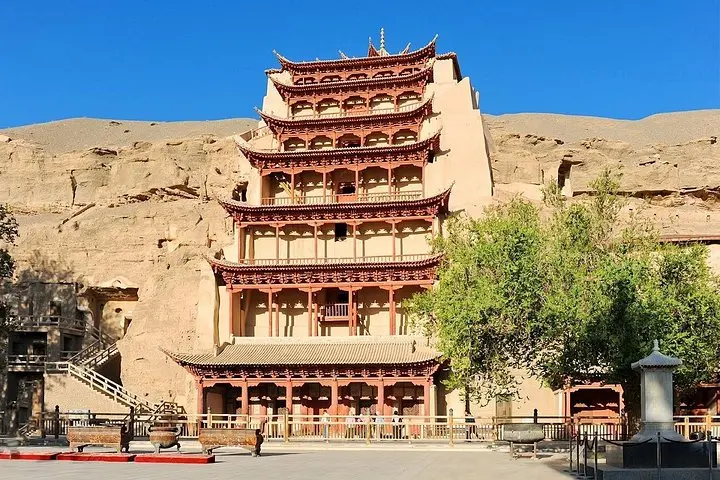
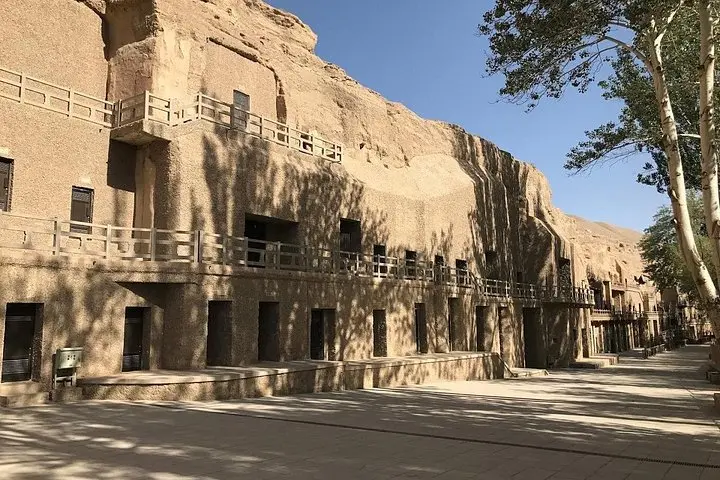
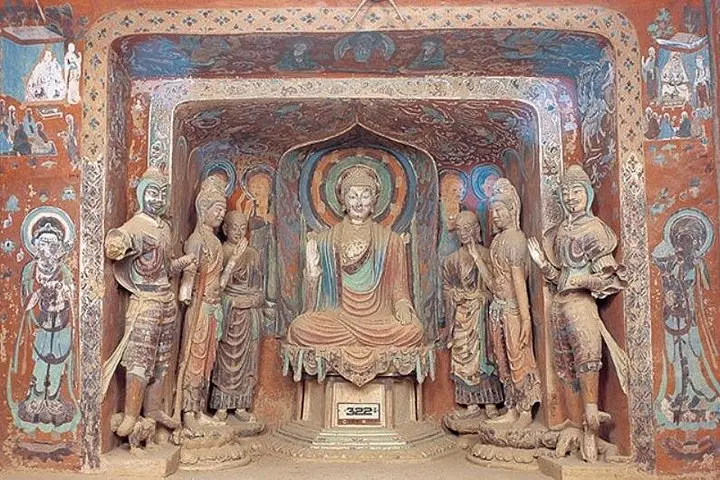
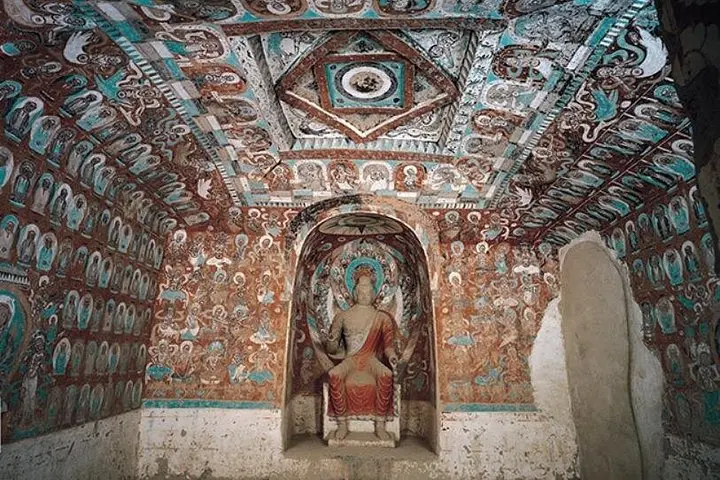
The route follows human and natural stories: Jiayuguan’s fortress marks the western terminus of the Ming-era Great Wall, a deliberate edge against nomadic routes; Dunhuang’s Mogao Caves preserve Buddhist murals painted over a millennium, silent storytellers of Silk Road exchange. Yadan National Geological Park and the Crescent Lake oasis show how wind and water carved and conserved space—dunes that push back in gusts, an oasis that holds migratory birds.
Travel days are drive-heavy but punctuated by short walks, viewpoints and cave visits. Expect paved and gravel access, stairs at historical sites, and sandy trails near dunes. Cultural insight comes easy: local guides and small museums explain caravan logistics, salt trade and mural iconography.
Practical guidance: travel light layers for big diurnal swings, bring sturdy walking shoes for rocky viewpoints and sand, carry 2–3 liters of water per day in summer, and plan photography for golden hour when colors are most vivid. Respect site rules—Mogao Caves limit flashes and close photography in sensitive sections—and allow extra time for unexpected photo stops and borderless desert light.
Yes—this private tour lists entrance fees, shuttle bus transfers and hotels as included in the itinerary.
Expect several hours of driving between Zhangye, Jiayuguan and Dunhuang with short stops for major sites; days are drive-heavy but include 2–3 hour site visits.
The tour is labeled physically easy overall, but many attractions have stairs and uneven surfaces; travelers with serious mobility issues should consult the operator in advance.
Yes—booking requests passport details; international travelers must hold a valid Chinese visa and carry passport information as requested.
Love China Tours operates guided outdoor trips and adventures with an emphasis on safety, stewardship, and memorable experiences.
A dry wind lifts grit from the Gobi as the minivan threads the Hexi Corridor—an ancient artery that once funneled traders, scholars and caravans from central China toward Central Asia. On day one the driver drops you at Danxia Geopark where layered red-and-ochre ridges slope like turned pages; color bands sharpen in late afternoon light and the geology seems to read aloud its history.
A dry wind lifts grit from the Gobi as the minivan threads the Hexi Corridor—an ancient artery that once funneled traders, scholars and caravans from central China toward Central Asia. On day one the driver drops you at Danxia Geopark where layered red-and-ochre ridges slope like turned pages; color bands sharpen in late afternoon light and the geology seems to read aloud its history.
The route follows human and natural stories: Jiayuguan’s fortress marks the western terminus of the Ming-era Great Wall, a deliberate edge against nomadic routes; Dunhuang’s Mogao Caves preserve Buddhist murals painted over a millennium, silent storytellers of Silk Road exchange. Yadan National Geological Park and the Crescent Lake oasis show how wind and water carved and conserved space—dunes that push back in gusts, an oasis that holds migratory birds.
Travel days are drive-heavy but punctuated by short walks, viewpoints and cave visits. Expect paved and gravel access, stairs at historical sites, and sandy trails near dunes. Cultural insight comes easy: local guides and small museums explain caravan logistics, salt trade and mural iconography.
Practical guidance: travel light layers for big diurnal swings, bring sturdy walking shoes for rocky viewpoints and sand, carry 2–3 liters of water per day in summer, and plan photography for golden hour when colors are most vivid. Respect site rules—Mogao Caves limit flashes and close photography in sensitive sections—and allow extra time for unexpected photo stops and borderless desert light.