THE ADVENTURE COLLECTIVE® · Independent discovery and booking for outdoor travel

Four days of coastal cliffs, pine forest camps and polished Nordingrå granite — this guided Skuleskogen trek covers sandy beaches, canyons and UNESCO-protected High Coast scenery with transport, meals and camping gear included.
Four days of coastal cliffs, pine forest camps and polished Nordingrå granite — this guided Skuleskogen trek covers sandy beaches, canyons and UNESCO-protected High Coast scenery with transport, meals and camping gear included.
You wake to wind off the Bothnian Sea and a pine-scented morning that pulls you from a coastal campfire. Over four days the trail moves you from sandy strands into old-growth pine and across bare, polished granite where the land lifts sharply from the sea — this is the High Coast, a landscape still rising from the last Ice Age.
Verified experiences and guided adventures in the surrounding area.
Operated by Stockholm Nature AB · Docksta, Västernorrland County
You wake to wind off the Bothnian Sea and a pine-scented morning that pulls you from a coastal campfire. Over four days the trail moves you from sandy strands into old-growth pine and across bare, polished granite where the land lifts sharply from the sea — this is the High Coast, a landscape still rising from the last Ice Age.
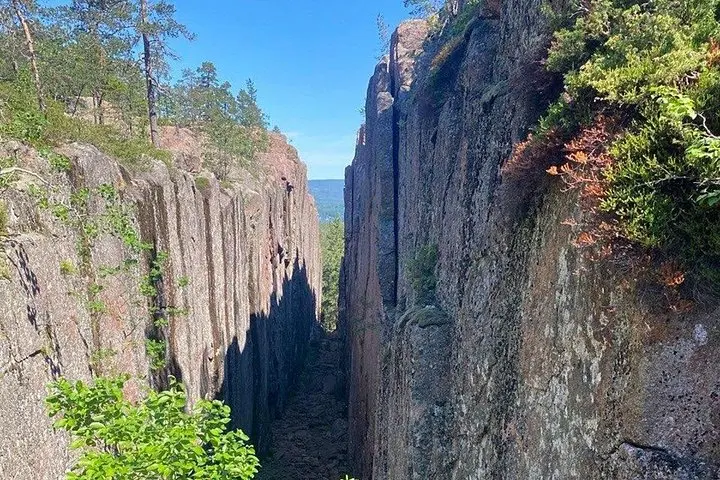
Skuleskogen sits inside the Höga Kusten UNESCO World Heritage area, carved from Nordingrå granite and shaped by post-glacial uplift. The park’s low mountains and steep cliffs record thousands of years of geology; local culture is rooted in fishing, forest work and small coastal settlements that read the tides as closely as the weather.
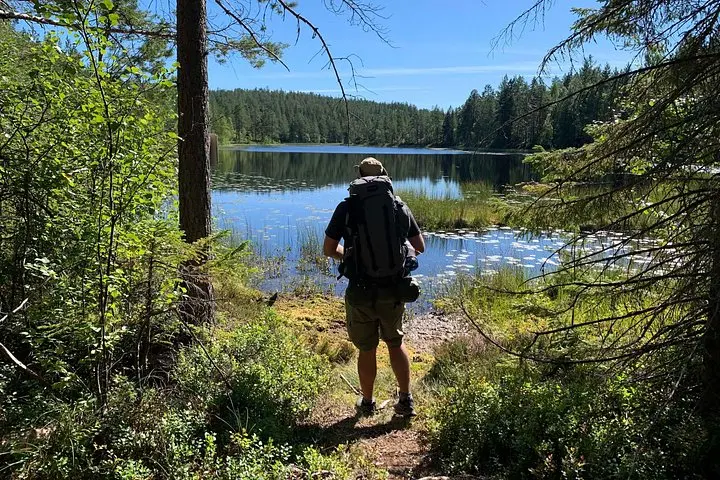
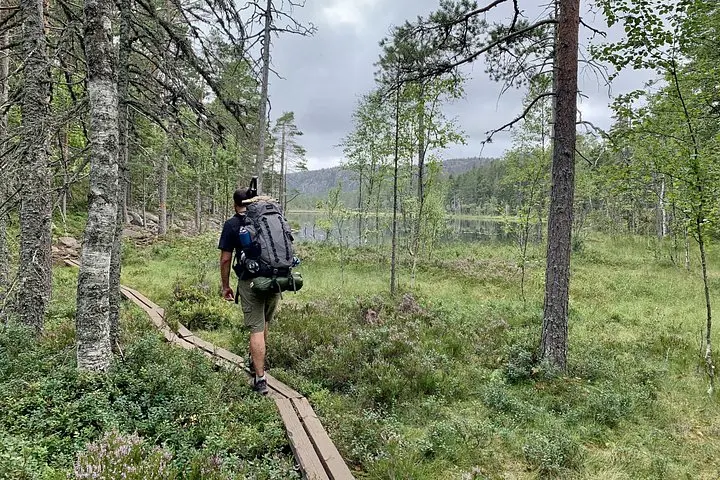
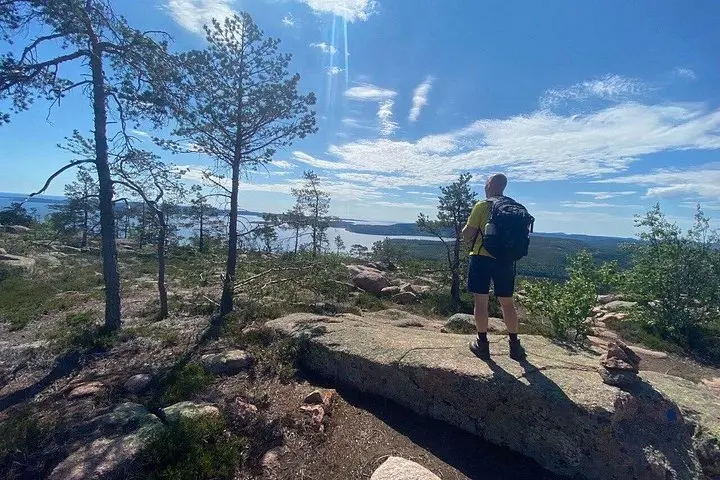
Expect varied terrain: packed sand, root-carpeted forest tracks, boardwalks over wetlands and open granite slabs with exposed sections. Wildlife is abundant — moose browse the understory, hares and foxes slip between trees, and seabirds call from offshore skerries. On clear nights and the right season there’s a chance to see the Aurora Borealis sweep over the coast.
Practical side: the program is fully supported — roundtrip train, guide, organic meals and camping gear are provided. Daily distances typically range 8–15 km with moderate ascents to exposed ridgelines (cumulative gains a few hundred meters on steeper days). Trails can be muddy in spring and buggy in summer; waterproof footwear and layered clothing are critical. Plan for 10–15 kg in a personal pack for overnight items, and follow your guide’s Leave No Trace instructions when camping on shorelines and in forest clearings.
Daily hikes are rated moderate: expect 8–15 km per day on mixed terrain with some short, steep sections and exposed rock; guides tailor pace to the group.
Yes — the trip includes all necessary camping equipment; you only need personal clothing, toiletries and a small daypack.
There’s a seasonal chance to see the Aurora Borealis on clear nights, but sightings depend on solar activity and clear skies, not guaranteed.
Roundtrip train transportation is included in the tour; confirm specific train times with the operator after booking.
Stockholm Nature AB operates guided outdoor trips and adventures with an emphasis on safety, stewardship, and memorable experiences.
You wake to wind off the Bothnian Sea and a pine-scented morning that pulls you from a coastal campfire. Over four days the trail moves you from sandy strands into old-growth pine and across bare, polished granite where the land lifts sharply from the sea — this is the High Coast, a landscape still rising from the last Ice Age.
You wake to wind off the Bothnian Sea and a pine-scented morning that pulls you from a coastal campfire. Over four days the trail moves you from sandy strands into old-growth pine and across bare, polished granite where the land lifts sharply from the sea — this is the High Coast, a landscape still rising from the last Ice Age.
Skuleskogen sits inside the Höga Kusten UNESCO World Heritage area, carved from Nordingrå granite and shaped by post-glacial uplift. The park’s low mountains and steep cliffs record thousands of years of geology; local culture is rooted in fishing, forest work and small coastal settlements that read the tides as closely as the weather.
Expect varied terrain: packed sand, root-carpeted forest tracks, boardwalks over wetlands and open granite slabs with exposed sections. Wildlife is abundant — moose browse the understory, hares and foxes slip between trees, and seabirds call from offshore skerries. On clear nights and the right season there’s a chance to see the Aurora Borealis sweep over the coast.
Practical side: the program is fully supported — roundtrip train, guide, organic meals and camping gear are provided. Daily distances typically range 8–15 km with moderate ascents to exposed ridgelines (cumulative gains a few hundred meters on steeper days). Trails can be muddy in spring and buggy in summer; waterproof footwear and layered clothing are critical. Plan for 10–15 kg in a personal pack for overnight items, and follow your guide’s Leave No Trace instructions when camping on shorelines and in forest clearings.