THE ADVENTURE COLLECTIVE® · Independent discovery and booking for outdoor travel

Spend four days crossing the High Atlas: acclimatize in walnut groves, sleep at the Toubkal Refuge, and summit Mount Toubkal (4,167 m) while visiting traditional Berber villages. This guided private trek balances cultural encounters with serious mountain terrain.
Spend four days crossing the High Atlas: acclimatize in walnut groves, sleep at the Toubkal Refuge, and summit Mount Toubkal (4,167 m) while visiting traditional Berber villages. This guided private trek balances cultural encounters with serious mountain terrain.
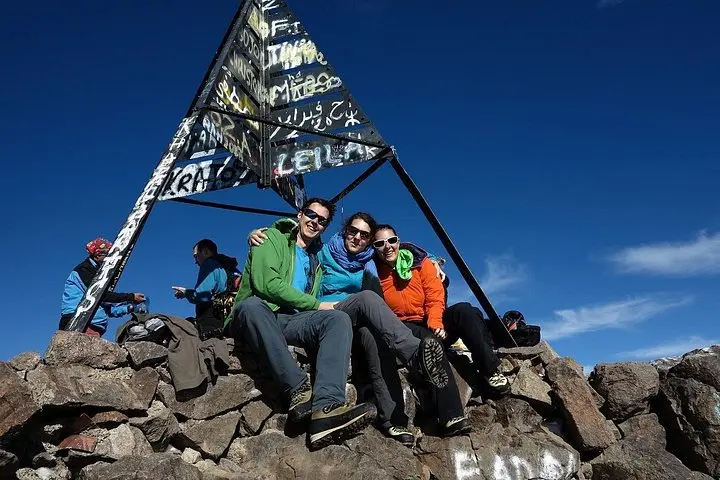
You step out of the van as cold mountain air hits your face and the trail pulls you up into the bones of the High Atlas. Juniper and walnut trees line a copper-green valley; a stream dares you to keep pace as muleteers and guides sort gear. Over four days you move from gentle acclimatization walks to a summit push on North Africa's roof at 4,167 m.
Verified experiences and guided adventures in the surrounding area.
Operated by Morocco Tours Services · Imlil, Marrakesh-Safi
You step out of the van as cold mountain air hits your face and the trail pulls you up into the bones of the High Atlas. Juniper and walnut trees line a copper-green valley; a stream dares you to keep pace as muleteers and guides sort gear. Over four days you move from gentle acclimatization walks to a summit push on North Africa's roof at 4,167 m.
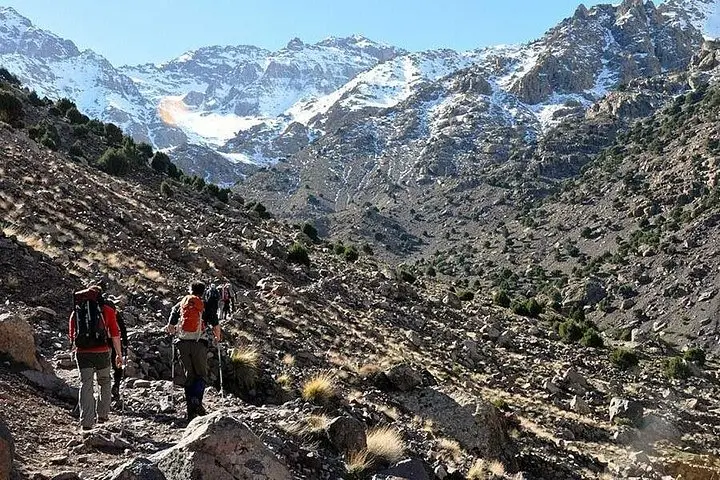
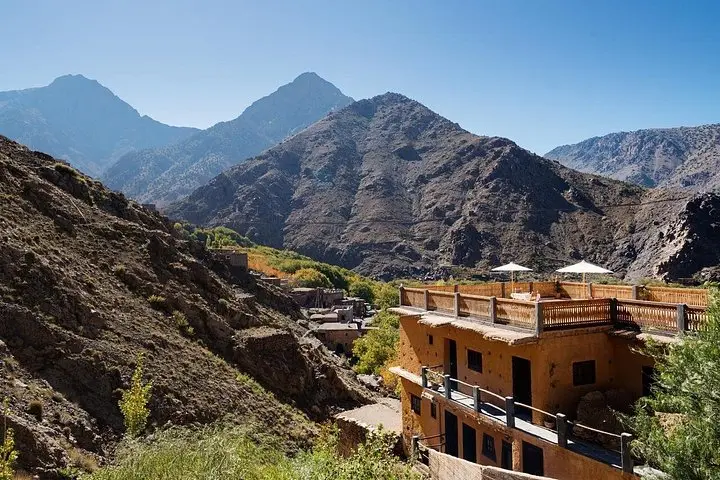
The route threads through Azzaden Valley and old Berber (Amazigh) settlements where stone houses and terraced fields speak to centuries of mountain life. Geologically the Atlas is a folded chain of ancient crystalline rocks—granite ridges and scree slopes give way to grassy cols. You pass Ighouliden waterfalls, reach the Aguelzim pass (~3,560 m) and sleep in the Toubkal Refuge at ~3,200 m before the 900 m final ascent and an almost 2,500 m descent back to Imlil.
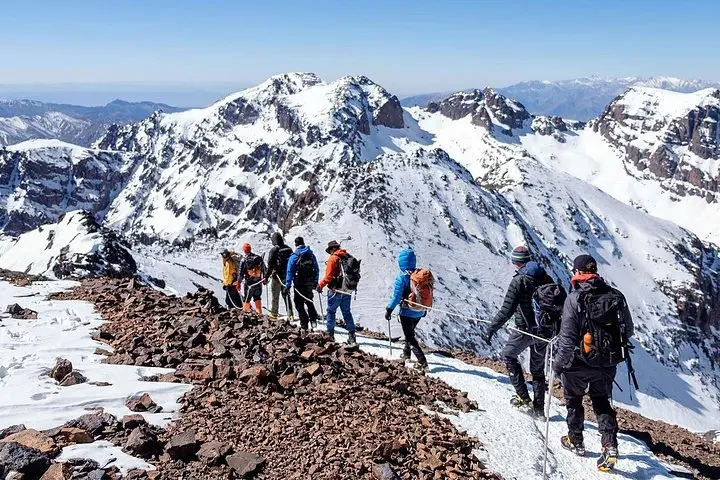
Expect mixed terrain: rocky tracks, occasional snowfields (seasonal), and long switchbacks. Culture is immediate—local guides, shared meals, and mule logistics keep the focus on steady progress and respect for village life.
Practical edge: train with sustained uphill hikes, bring a warm sleeping liner for refuge bunks, and use trekking poles for the long descent. Start summit day before dawn for stable snow and clearer weather windows. Hydrate, pace for altitude, and leave no trace—the region is fragile and increasingly visited. This is a demanding, high-reward trek that combines technical non-technical climbing with authentic mountain culture.
No technical climbing skills are needed—this is a non-technical but strenuous trek; experience with long days and steep terrain is recommended.
Late spring to early autumn offers milder trails; winter brings snow and may require crampons and alpine experience.
Yes—this tour includes accommodations (guesthouses, refuge), breakfasts, lunches and dinners listed in the itinerary, plus transfers from Marrakech.
Expect a pre-dawn start, about 900 m of ascent to 4,167 m and a lengthy descent (~2,500 m) back to Imlil—plan for 8–9 hours and altitude-related challenges.
Morocco Tours Services operates guided outdoor trips and adventures with an emphasis on safety, stewardship, and memorable experiences.
You step out of the van as cold mountain air hits your face and the trail pulls you up into the bones of the High Atlas. Juniper and walnut trees line a copper-green valley; a stream dares you to keep pace as muleteers and guides sort gear. Over four days you move from gentle acclimatization walks to a summit push on North Africa's roof at 4,167 m.
You step out of the van as cold mountain air hits your face and the trail pulls you up into the bones of the High Atlas. Juniper and walnut trees line a copper-green valley; a stream dares you to keep pace as muleteers and guides sort gear. Over four days you move from gentle acclimatization walks to a summit push on North Africa's roof at 4,167 m.
The route threads through Azzaden Valley and old Berber (Amazigh) settlements where stone houses and terraced fields speak to centuries of mountain life. Geologically the Atlas is a folded chain of ancient crystalline rocks—granite ridges and scree slopes give way to grassy cols. You pass Ighouliden waterfalls, reach the Aguelzim pass (~3,560 m) and sleep in the Toubkal Refuge at ~3,200 m before the 900 m final ascent and an almost 2,500 m descent back to Imlil.
Expect mixed terrain: rocky tracks, occasional snowfields (seasonal), and long switchbacks. Culture is immediate—local guides, shared meals, and mule logistics keep the focus on steady progress and respect for village life.
Practical edge: train with sustained uphill hikes, bring a warm sleeping liner for refuge bunks, and use trekking poles for the long descent. Start summit day before dawn for stable snow and clearer weather windows. Hydrate, pace for altitude, and leave no trace—the region is fragile and increasingly visited. This is a demanding, high-reward trek that combines technical non-technical climbing with authentic mountain culture.