THE ADVENTURE COLLECTIVE® · Independent discovery and booking for outdoor travel

A four-day guided trek from Marrakech to the summit of Jebel Toubkal (4,167 m), combining mule-supported luggage, local guides, and nights in mountain lodges and the high refuge. Expect steep ascents, rocky scree, and panoramic views across the High Atlas.
A four-day guided trek from Marrakech to the summit of Jebel Toubkal (4,167 m), combining mule-supported luggage, local guides, and nights in mountain lodges and the high refuge. Expect steep ascents, rocky scree, and panoramic views across the High Atlas.
Dawn over the High Atlas arrives cold and clear; hikers step out of a stone guesthouse in Aremd and follow a thin ribbon of trail that climbs toward marabout Sidi Chamharouch. The air sharpens as the valley narrows and the landscape changes from terraced fields to stony slopes where the refuge perches at roughly 3,200 m, a last hearth before the final push to Toubkal's summit.
Verified experiences and guided adventures in the surrounding area.
Operated by Smart Morocco Tours Excursions · Imlil, Marrakesh-Safi
Dawn over the High Atlas arrives cold and clear; hikers step out of a stone guesthouse in Aremd and follow a thin ribbon of trail that climbs toward marabout Sidi Chamharouch. The air sharpens as the valley narrows and the landscape changes from terraced fields to stony slopes where the refuge perches at roughly 3,200 m, a last hearth before the final push to Toubkal's summit.
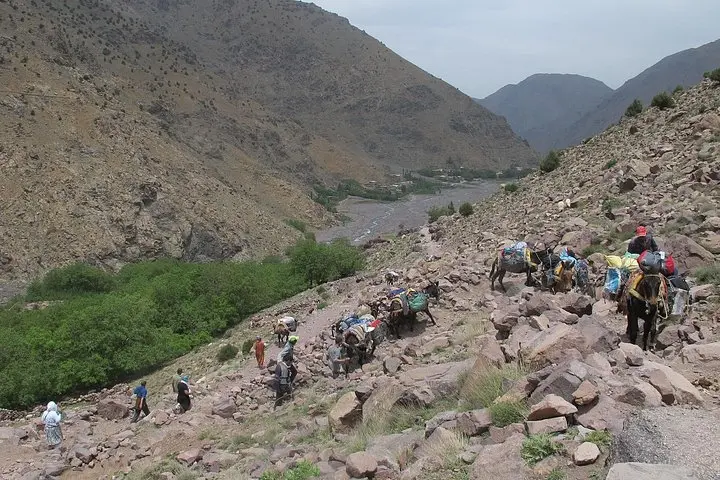
The four-day route threads local Berber villages, seasonal pastures and ancient mule tracks. Historically these passes linked mountain communities long before trekking became a modern pursuit; the geology is primarily volcanic and schist, carved into serrated ridges and deep drainages that drain toward the Sous valley. Cultural markers, like whitewashed shrines and stacked stone terraces, appear between stretches of pumice and scree, offering a tangible sense of local life.
Practical expectations: the itinerary includes transfers from Marrakech, a first-day approach through Oukaimeden to Tachddirt (≈2,300 m), a night in Aremd (≈1,900 m), a climb to the refuge (≈3,207 m) and an early-morning summit attempt of Jebel Toubkal (4,167 m) before returning to Imlil and Marrakech. Trails vary from firm mule tracks to loose scree; average daily walking includes 4–6 hours with significant elevation gain, especially on summit day.
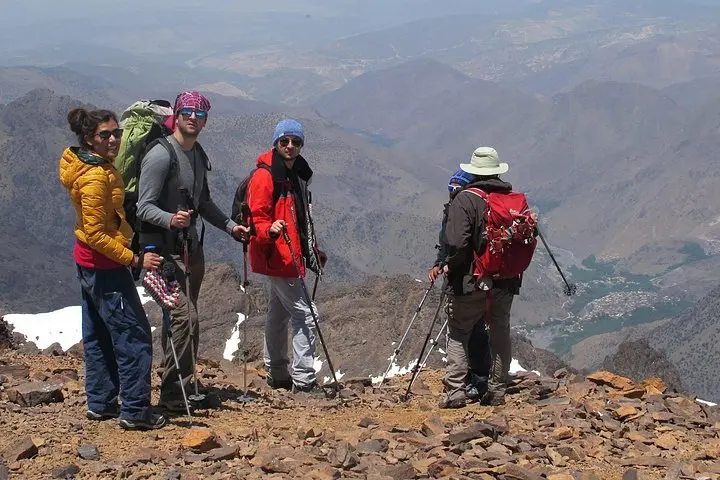
On the ground you'll rely on a guide, mules for luggage, and mountain food prepared locally. Bring layered clothing for cold mornings, sturdy boots for scree, and time your summit for early starts to avoid afternoon wind and sun. The route rewards steady pacing: the summit view across peaks and the valley below makes the effort unmistakably worth it.
Summit day is the most demanding: expect 3–6 hours round-trip from the refuge to the 4,167 m peak with sustained elevation gain over loose terrain; a steady pace and early start are essential.
Yes — the itinerary includes mule transport for luggage so you only need a small daypack on hiking days.
No technical equipment is required for the normal summer route; guided parties use walking boots and poles rather than ropes or crampons in non-glacial conditions.
Physically fit beginners with prior multi-hour hikes can do it when guided, but be mindful of altitude and choose a moderate pace; the trip is not recommended for those with serious heart or back conditions.
Smart Morocco Tours Excursions operates guided outdoor trips and adventures with an emphasis on safety, stewardship, and memorable experiences.
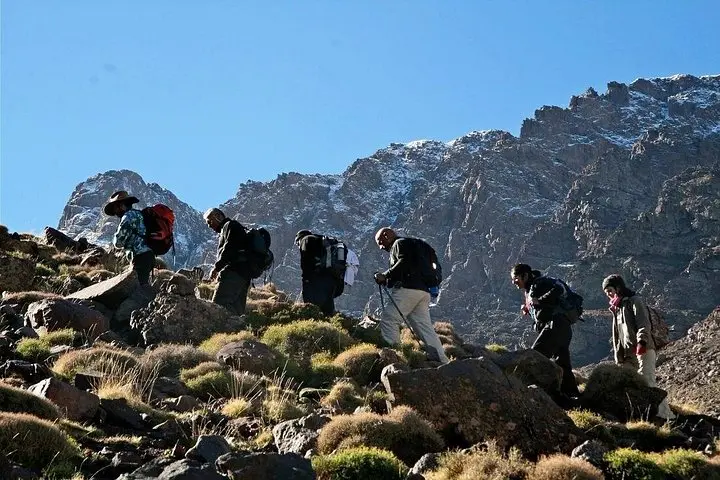
Dawn over the High Atlas arrives cold and clear; hikers step out of a stone guesthouse in Aremd and follow a thin ribbon of trail that climbs toward marabout Sidi Chamharouch. The air sharpens as the valley narrows and the landscape changes from terraced fields to stony slopes where the refuge perches at roughly 3,200 m, a last hearth before the final push to Toubkal's summit.
Dawn over the High Atlas arrives cold and clear; hikers step out of a stone guesthouse in Aremd and follow a thin ribbon of trail that climbs toward marabout Sidi Chamharouch. The air sharpens as the valley narrows and the landscape changes from terraced fields to stony slopes where the refuge perches at roughly 3,200 m, a last hearth before the final push to Toubkal's summit.
The four-day route threads local Berber villages, seasonal pastures and ancient mule tracks. Historically these passes linked mountain communities long before trekking became a modern pursuit; the geology is primarily volcanic and schist, carved into serrated ridges and deep drainages that drain toward the Sous valley. Cultural markers, like whitewashed shrines and stacked stone terraces, appear between stretches of pumice and scree, offering a tangible sense of local life.
Practical expectations: the itinerary includes transfers from Marrakech, a first-day approach through Oukaimeden to Tachddirt (≈2,300 m), a night in Aremd (≈1,900 m), a climb to the refuge (≈3,207 m) and an early-morning summit attempt of Jebel Toubkal (4,167 m) before returning to Imlil and Marrakech. Trails vary from firm mule tracks to loose scree; average daily walking includes 4–6 hours with significant elevation gain, especially on summit day.
On the ground you'll rely on a guide, mules for luggage, and mountain food prepared locally. Bring layered clothing for cold mornings, sturdy boots for scree, and time your summit for early starts to avoid afternoon wind and sun. The route rewards steady pacing: the summit view across peaks and the valley below makes the effort unmistakably worth it.