THE ADVENTURE COLLECTIVE® · Independent discovery and booking for outdoor travel

A four-day guided trek across Ilha Grande’s wild east takes walkers from historic Dois Rios to the quiet beaches of Parnaioca and Aventureiro. Expect 10–16 km days on uneven, verdant trails and simple resident lodgings off the grid.
A four-day guided trek across Ilha Grande’s wild east takes walkers from historic Dois Rios to the quiet beaches of Parnaioca and Aventureiro. Expect 10–16 km days on uneven, verdant trails and simple resident lodgings off the grid.
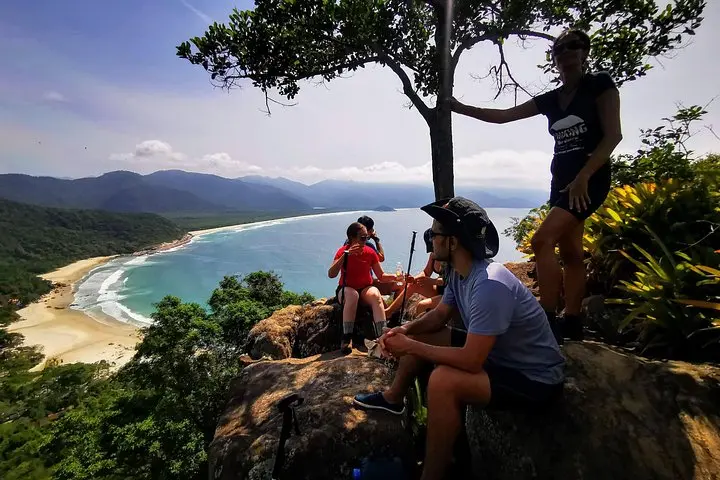
You step off the boat at Vila do Abraão and the island swallows the mainland noise—salt air, insects tuning like radio static, and a narrow street that leads into the green throat of the Atlantic Forest. Over four days the trail pulls you along ridge lines, through leaf litter and through small fishing villages where time is measured by generator hours and tide.
Verified experiences and guided adventures in the surrounding area.
Operated by Ilha Grande Hiking · Vila do Abraão, Rio de Janeiro
You step off the boat at Vila do Abraão and the island swallows the mainland noise—salt air, insects tuning like radio static, and a narrow street that leads into the green throat of the Atlantic Forest. Over four days the trail pulls you along ridge lines, through leaf litter and through small fishing villages where time is measured by generator hours and tide.
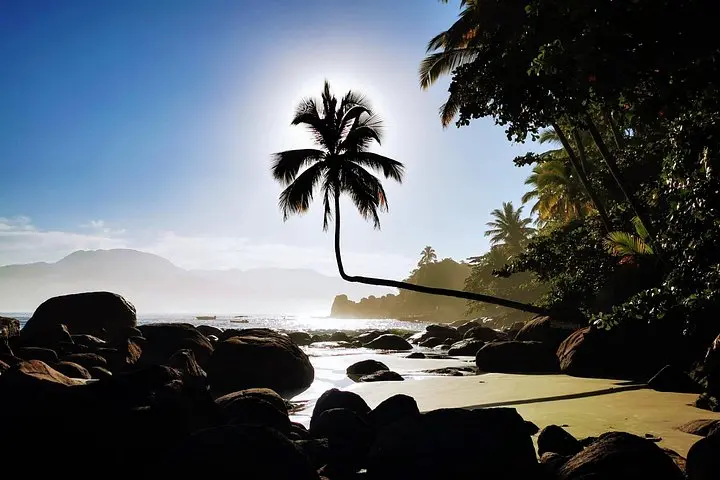
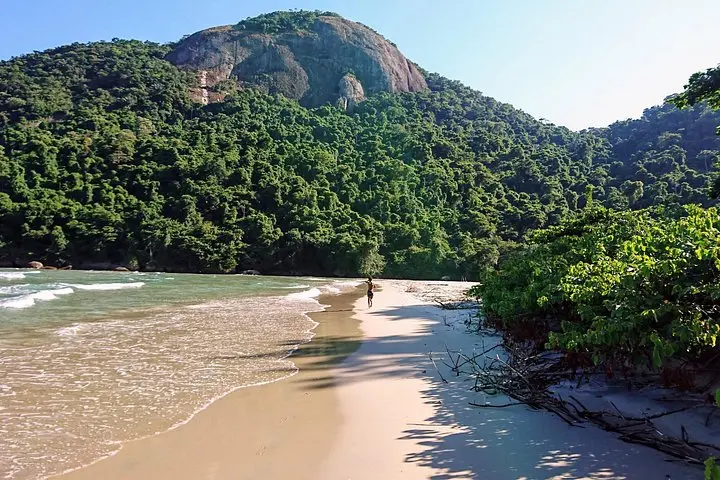
Ilha Grande sits on ancient crystalline bedrock with steep headlands carved by wave action; the island’s trails cut through dense, humid forest that shelters endemic plants and fragments of history. Dois Rios carries a weighty past: a former colonial quarantine and prison whose ruins are now a muted museum. Parnaioca and Aventureiro feel intentionally off-grid—few power lines, showers warmed by wood fire, and a photography-famous lone coconut tree framing the surf.
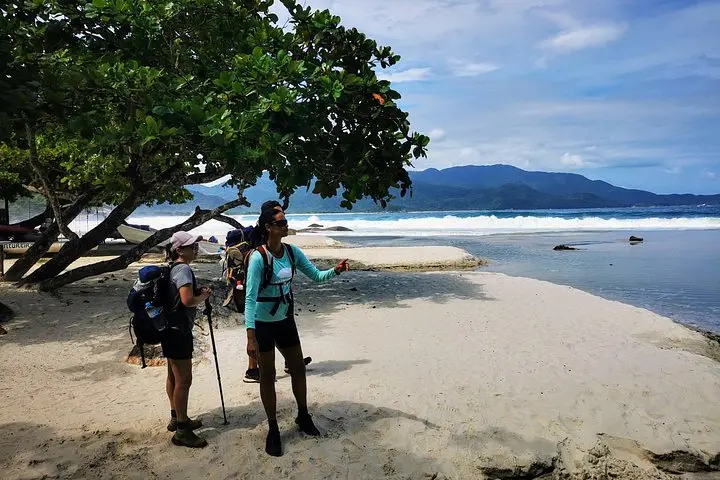
Expect daily walking of 10–16 km over uneven, often rooty and rocky paths with short, steep pitches and beach-level recoveries. Local guides read tides and village rhythms; lodgings are family-run pousadas or simple resident stays that prioritize low-impact tourism.
Practical notes: travel light but bring reliable footwear, 2–3 liters of water capacity and a rain shell (showers or sudden downpours are common in summer). Carry cash for small purchases; mobile signal is patchy. Plan this on drier months (May–October) for more stable trails. Move deliberately, leave no trace, and let the island’s slow cadence set your pace.
No—this itinerary uses resident lodgings and simple pousadas, so you can travel light without tents or cooking equipment.
Expect 10–16 km per day on variable terrain with short steep sections; the route is physically demanding and suited to fit, experienced hikers.
Villages provide drinking water at lodgings but carry a refillable bottle and a small purifier or tablets as a backup.
May–October tends to be drier with more predictable trails; December–March is hotter and wetter, increasing the chance of muddy sections and rain interruptions.
Ilha Grande Hiking operates guided outdoor trips and adventures with an emphasis on safety, stewardship, and memorable experiences.
You step off the boat at Vila do Abraão and the island swallows the mainland noise—salt air, insects tuning like radio static, and a narrow street that leads into the green throat of the Atlantic Forest. Over four days the trail pulls you along ridge lines, through leaf litter and through small fishing villages where time is measured by generator hours and tide.
You step off the boat at Vila do Abraão and the island swallows the mainland noise—salt air, insects tuning like radio static, and a narrow street that leads into the green throat of the Atlantic Forest. Over four days the trail pulls you along ridge lines, through leaf litter and through small fishing villages where time is measured by generator hours and tide.
Ilha Grande sits on ancient crystalline bedrock with steep headlands carved by wave action; the island’s trails cut through dense, humid forest that shelters endemic plants and fragments of history. Dois Rios carries a weighty past: a former colonial quarantine and prison whose ruins are now a muted museum. Parnaioca and Aventureiro feel intentionally off-grid—few power lines, showers warmed by wood fire, and a photography-famous lone coconut tree framing the surf.
Expect daily walking of 10–16 km over uneven, often rooty and rocky paths with short, steep pitches and beach-level recoveries. Local guides read tides and village rhythms; lodgings are family-run pousadas or simple resident stays that prioritize low-impact tourism.
Practical notes: travel light but bring reliable footwear, 2–3 liters of water capacity and a rain shell (showers or sudden downpours are common in summer). Carry cash for small purchases; mobile signal is patchy. Plan this on drier months (May–October) for more stable trails. Move deliberately, leave no trace, and let the island’s slow cadence set your pace.