THE ADVENTURE COLLECTIVE® · Independent discovery and booking for outdoor travel

A compact four-day circuit through Turkey’s most elemental landscapes: Cappadocia’s rock-cut churches and fairy chimneys, Pamukkale’s white travertines, and the marble avenues of Ephesus. Practical and paced for visitors who want layered history with accessible walking.
A compact four-day circuit through Turkey’s most elemental landscapes: Cappadocia’s rock-cut churches and fairy chimneys, Pamukkale’s white travertines, and the marble avenues of Ephesus. Practical and paced for visitors who want layered history with accessible walking.
You step out under a wide Anatolian sky and the valley ahead is carved like a story—soft volcanic ash turned to chimneyed pinnacles, white calcite terraces glinting like frozen waterfalls, and the marble streets of an ancient Roman metropolis stretching beside olive groves.
Verified experiences and guided adventures in the surrounding area.
Operated by Turista Travel Agency · Göreme, Nevşehir
You step out under a wide Anatolian sky and the valley ahead is carved like a story—soft volcanic ash turned to chimneyed pinnacles, white calcite terraces glinting like frozen waterfalls, and the marble streets of an ancient Roman metropolis stretching beside olive groves.
This four-day circuit threads Cappadocia’s lunar fields (Devrent), the mushroom-shaped fairy chimneys of Paşabağ, the hand-thrown pottery workshops of Avanos, and the cliffcastle of Uçhisar with the underground passages at Kaymaklı. Then the route swings west to Pamukkale’s gleaming travertines and the thermal necropolis of Hierapolis before finishing in Ephesus—one of the eastern Mediterranean’s best-preserved classical cities and the reputed House of the Virgin Mary.
Geology and history arrive together: tuff deposited by ancient eruptions sculpted Cappadocia, while mineral-rich thermal water created Pamukkale’s terraces over millennia. Layers of Hittite, Roman, Byzantine and Ottoman presence shape towns and craft traditions you’ll see in museums, frescoed rock churches and pottery studios.
Practical edge: expect mostly easy walking but uneven cobbles, carved rock steps and low ceilings in underground passages; Pamukkale requires barefoot walking in protected areas. Daily travel is by air-conditioned minivan with moderate transfers; plan for early mornings and 2–4 hours of guided exploration each day. Bring supportive shoes, sun protection, and a small daypack with water. Modest dress suits religious and rural sites; tipping guides and drivers is customary. The itinerary stacks unforgettable geology and ancient cities into four tightly paced days—ideal if you want concentrated cultural terrain without long independent transfers.
Expect 2–4 hours of guided walking daily over uneven surfaces—short transfers by minivan separate main sites.
Most major admissions listed in the itinerary are included and lunches are provided; confirm specifics with your operator before booking.
The tour is rated easy and suitable for a broad range of abilities, though underground city passages and some steps may be difficult for those with mobility limits.
Yes—certain travertine terraces require barefoot access to protect the mineral deposits; follow guide instructions and carry a towel or sandals for other areas.
Turista Travel Agency operates guided outdoor trips and adventures with an emphasis on safety, stewardship, and memorable experiences.
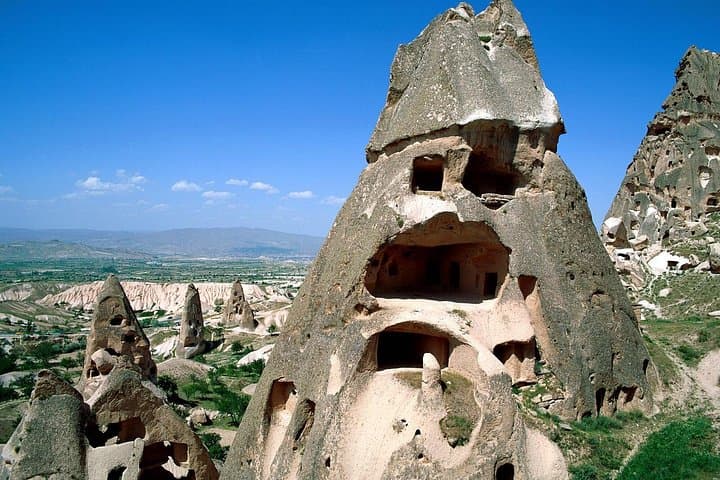


You step out under a wide Anatolian sky and the valley ahead is carved like a story—soft volcanic ash turned to chimneyed pinnacles, white calcite terraces glinting like frozen waterfalls, and the marble streets of an ancient Roman metropolis stretching beside olive groves.
You step out under a wide Anatolian sky and the valley ahead is carved like a story—soft volcanic ash turned to chimneyed pinnacles, white calcite terraces glinting like frozen waterfalls, and the marble streets of an ancient Roman metropolis stretching beside olive groves.
This four-day circuit threads Cappadocia’s lunar fields (Devrent), the mushroom-shaped fairy chimneys of Paşabağ, the hand-thrown pottery workshops of Avanos, and the cliffcastle of Uçhisar with the underground passages at Kaymaklı. Then the route swings west to Pamukkale’s gleaming travertines and the thermal necropolis of Hierapolis before finishing in Ephesus—one of the eastern Mediterranean’s best-preserved classical cities and the reputed House of the Virgin Mary.
Geology and history arrive together: tuff deposited by ancient eruptions sculpted Cappadocia, while mineral-rich thermal water created Pamukkale’s terraces over millennia. Layers of Hittite, Roman, Byzantine and Ottoman presence shape towns and craft traditions you’ll see in museums, frescoed rock churches and pottery studios.
Practical edge: expect mostly easy walking but uneven cobbles, carved rock steps and low ceilings in underground passages; Pamukkale requires barefoot walking in protected areas. Daily travel is by air-conditioned minivan with moderate transfers; plan for early mornings and 2–4 hours of guided exploration each day. Bring supportive shoes, sun protection, and a small daypack with water. Modest dress suits religious and rural sites; tipping guides and drivers is customary. The itinerary stacks unforgettable geology and ancient cities into four tightly paced days—ideal if you want concentrated cultural terrain without long independent transfers.