THE ADVENTURE COLLECTIVE® · Independent discovery and booking for outdoor travel

See three of Turkey’s UNESCO stars in four days: fairy chimneys and cave hotels in Cappadocia, the chalk-white terraces of Pamukkale and the marble streets of Ephesus. This fast-paced itinerary pairs expert local guides with overnight travel to squeeze maximum sightseeing into a compact trip.
See three of Turkey’s UNESCO stars in four days: fairy chimneys and cave hotels in Cappadocia, the chalk-white terraces of Pamukkale and the marble streets of Ephesus. This fast-paced itinerary pairs expert local guides with overnight travel to squeeze maximum sightseeing into a compact trip.
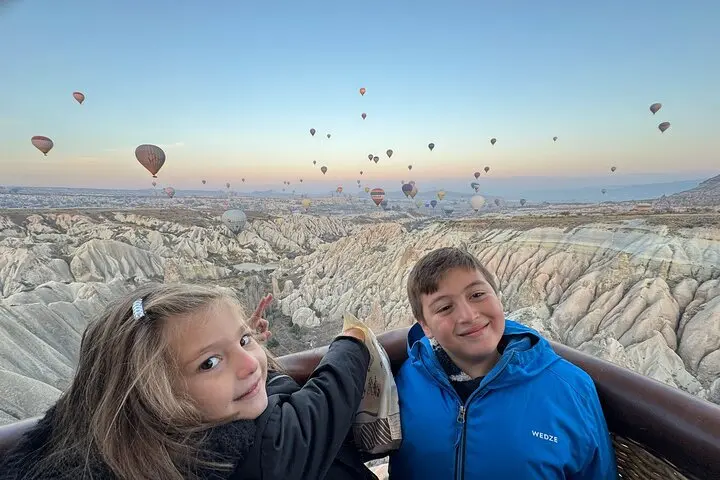
You step off the early flight and the Anatolian plateunfolds beneath you — a patchwork of ochre valleys and honeycombed rock that seems to hold secrets in every cleft. By mid-morning in Göreme, the landscape has a mood of deliberate theater: fairy chimneys rise like weather-sculpted towers, pigeon houses dot cliff faces, and the wind pulls curtains of dust across a horizon threaded with cave openings.
Verified experiences and guided adventures in the surrounding area.
Operated by CENGO · Istanbul, Istanbul
You step off the early flight and the Anatolian plateunfolds beneath you — a patchwork of ochre valleys and honeycombed rock that seems to hold secrets in every cleft. By mid-morning in Göreme, the landscape has a mood of deliberate theater: fairy chimneys rise like weather-sculpted towers, pigeon houses dot cliff faces, and the wind pulls curtains of dust across a horizon threaded with cave openings.
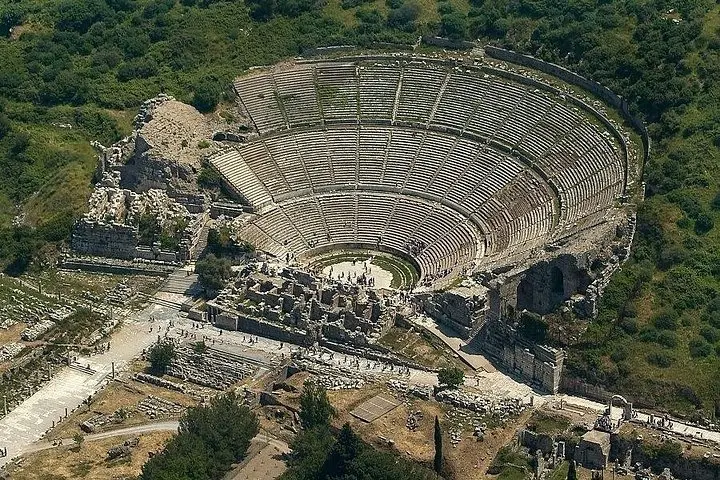
This compact four-day itinerary stitches together Turkey’s headline UNESCO sites with efficient logistics and local guides who know which viewpoints avoid the crowd. Day one brings the north Cappadocia (Red) circuit — panoramic terraces, Zelve’s rock monasteries and the three-headed cones at Pasabag. Day two covers the Green (South) route: subterranean cities, pigeon valley and Ortahisar’s fortress carved from stone, before an overnight bus to Denizli. On day three the terraces of Pamukkale wash into view — white travertines formed by mineral-rich thermal springs atop the ruins of Hierapolis. Day four slows the pace with Ephesus: the marble spine of Curetes Street, the façade of Celsus and the theater where history still echoes.
Geology and history are inseparable here. Cappadocia’s tuff formed by ancient volcanoes was soft enough for people to carve homes and churches centuries ago; Pamukkale’s terraces are the present-day work of thermal waters mineralizing over millennia; Ephesus preserves the marble of a Roman metropolis once balancing trade, religion and empire.
Culturally, expect layered encounters: roadside tea offered by hosts, bazaars that trade handwoven textiles and spices, and small boutique hotels built into cave walls where mornings smell of fresh simit and strong Turkish coffee. Guides often weave local folklore with facts — why pigeons mattered, or how shepherds adapted to the landscape.
Practical guidance: start in Istanbul but be prepared for early wake-ups and domestic flights within Turkey; the itinerary maximizes daylight by using overnight bus travel between regions. Book the optional Cappadocia hot-air balloon early if you want sunrise photos — slots fill fast. Wear sturdy walking shoes with good traction for uneven stone, and carry a lightweight, quick-dry layer; mornings and nights can be brisk even in summer. Hydrate: thermal springs and open plateaus can be deceptively dehydrating.
For photographers and planners: pack a daypack, allocate buffer time for transfers, and budget for small museum or pool fees not always included. In four days you’ll move fast, but the route is designed so each stop leaves a clear impression — the lunar hollows of Cappadocia, the cool white of Pamukkale, and the marble avenues of Ephesus — a concentrated survey of Turkey’s ancient and geological highs.
Yes — balloon rides are extremely popular and run daily weather permitting; book early if you want a sunrise flight as spaces sell out.
Flights between Istanbul, Cappadocia and Izmir are included in the itinerary with baggage allowance noted — check your e-ticket for exact allowances.
Yes — the itinerary includes short free windows, for example in Göreme between tours and before bus departures; full days are guided.
No — swimming in the Cleopatra (Antique) Pool is optional and usually requires a small extra entry fee paid on site.
Not recommended for those with significant mobility limitations — many sites have uneven ground, steps and narrow tunnels (e.g., underground cities).
Turkish lira is preferred for small purchases; cards work at larger sites and hotels but cash is useful for tips, local markets and optional entrances.
CENGO operates guided outdoor trips and adventures with an emphasis on safety, stewardship, and memorable experiences.

You step off the early flight and the Anatolian plateunfolds beneath you — a patchwork of ochre valleys and honeycombed rock that seems to hold secrets in every cleft. By mid-morning in Göreme, the landscape has a mood of deliberate theater: fairy chimneys rise like weather-sculpted towers, pigeon houses dot cliff faces, and the wind pulls curtains of dust across a horizon threaded with cave openings.
You step off the early flight and the Anatolian plateunfolds beneath you — a patchwork of ochre valleys and honeycombed rock that seems to hold secrets in every cleft. By mid-morning in Göreme, the landscape has a mood of deliberate theater: fairy chimneys rise like weather-sculpted towers, pigeon houses dot cliff faces, and the wind pulls curtains of dust across a horizon threaded with cave openings.
This compact four-day itinerary stitches together Turkey’s headline UNESCO sites with efficient logistics and local guides who know which viewpoints avoid the crowd. Day one brings the north Cappadocia (Red) circuit — panoramic terraces, Zelve’s rock monasteries and the three-headed cones at Pasabag. Day two covers the Green (South) route: subterranean cities, pigeon valley and Ortahisar’s fortress carved from stone, before an overnight bus to Denizli. On day three the terraces of Pamukkale wash into view — white travertines formed by mineral-rich thermal springs atop the ruins of Hierapolis. Day four slows the pace with Ephesus: the marble spine of Curetes Street, the façade of Celsus and the theater where history still echoes.
Geology and history are inseparable here. Cappadocia’s tuff formed by ancient volcanoes was soft enough for people to carve homes and churches centuries ago; Pamukkale’s terraces are the present-day work of thermal waters mineralizing over millennia; Ephesus preserves the marble of a Roman metropolis once balancing trade, religion and empire.
Culturally, expect layered encounters: roadside tea offered by hosts, bazaars that trade handwoven textiles and spices, and small boutique hotels built into cave walls where mornings smell of fresh simit and strong Turkish coffee. Guides often weave local folklore with facts — why pigeons mattered, or how shepherds adapted to the landscape.
Practical guidance: start in Istanbul but be prepared for early wake-ups and domestic flights within Turkey; the itinerary maximizes daylight by using overnight bus travel between regions. Book the optional Cappadocia hot-air balloon early if you want sunrise photos — slots fill fast. Wear sturdy walking shoes with good traction for uneven stone, and carry a lightweight, quick-dry layer; mornings and nights can be brisk even in summer. Hydrate: thermal springs and open plateaus can be deceptively dehydrating.
For photographers and planners: pack a daypack, allocate buffer time for transfers, and budget for small museum or pool fees not always included. In four days you’ll move fast, but the route is designed so each stop leaves a clear impression — the lunar hollows of Cappadocia, the cool white of Pamukkale, and the marble avenues of Ephesus — a concentrated survey of Turkey’s ancient and geological highs.