THE ADVENTURE COLLECTIVE® · Independent discovery and booking for outdoor travel

Drive from Cairo into the Western Desert for four days of off-road jeeps, night camps under vast stars, and surreal chalk formations in the White Desert. This multi-day tour pairs oasis springs and Bedouin villages with geological spectacles and practical desert travel.
Drive from Cairo into the Western Desert for four days of off-road jeeps, night camps under vast stars, and surreal chalk formations in the White Desert. This multi-day tour pairs oasis springs and Bedouin villages with geological spectacles and practical desert travel.
The morning road from Cairo thins into a ribbon of dust and stone; palms at Bahariya appear like punctuation marks against low black mountains, and the desert takes hold of the senses. By late afternoon the jeeps push off the asphalt and the Black Desert’s rust-stained outcrops loom like dark sentries. Night falls and the White Desert reveals itself—chalky, mushroom-shaped formations that the wind seems to have carved with deliberate hands—while a campfire throws light against an immense black sky.
Verified experiences and guided adventures in the surrounding area.
Operated by This is Egypt Tours · Bawiti, Giza Governorate
The morning road from Cairo thins into a ribbon of dust and stone; palms at Bahariya appear like punctuation marks against low black mountains, and the desert takes hold of the senses. By late afternoon the jeeps push off the asphalt and the Black Desert’s rust-stained outcrops loom like dark sentries. Night falls and the White Desert reveals itself—chalky, mushroom-shaped formations that the wind seems to have carved with deliberate hands—while a campfire throws light against an immense black sky.
This route threads through millennia: inland oases have supported settlements and caravan traffic since pharaonic and Roman times, and Bahariya’s springs and salt flats record the region’s geologic shifts. The Black Desert’s dark rocks are iron-rich basalts and dolerites; the White Desert is sculpted chalk and limestone, wind-reduced to alien shapes that change subtly with each season. Local Bedouin culture remains visible in villages, hospitality, and guiding traditions; the English Mountain outpost recalls early 20th-century strategic use of these viewpoints.
Practical guidance: the trip is off-road and multi-day—expect long jeep drives (hours between stops), short walks among formations, and nights in simple desert camps. Bring at least 3 liters of water per day, sun protection, and warm layers for nights that drop sharply. Footwear should handle loose sand and rocky ledges. You’ll need to share passport details ahead for permits to enter protected zones; national park fees are usually included. Time your travel for spring or autumn to avoid extreme heat; if you go in summer, plan very early starts and minimal midday exertion. Respect fragile chalk formations—stay on established tracks, pack out waste, and follow guides’ instructions for campfires and camping locations.
No—tours are guided with experienced drivers and camp staff; basic mobility and willingness to sleep in simple desert camps are enough.
Most operators include national park tickets and permits—confirm before booking and provide passport details at least 24 hours in advance.
Summer daytime highs can exceed 40°C (104°F); spring and autumn offer milder daytime temps and cooler nights, making them the most comfortable seasons.
Camps are basic: prepared sleeping tents, shared bathroom arrangements or portable facilities, and communal meals—expect rustic comfort rather than hotel amenities.
This is Egypt Tours operates guided outdoor trips and adventures with an emphasis on safety, stewardship, and memorable experiences.
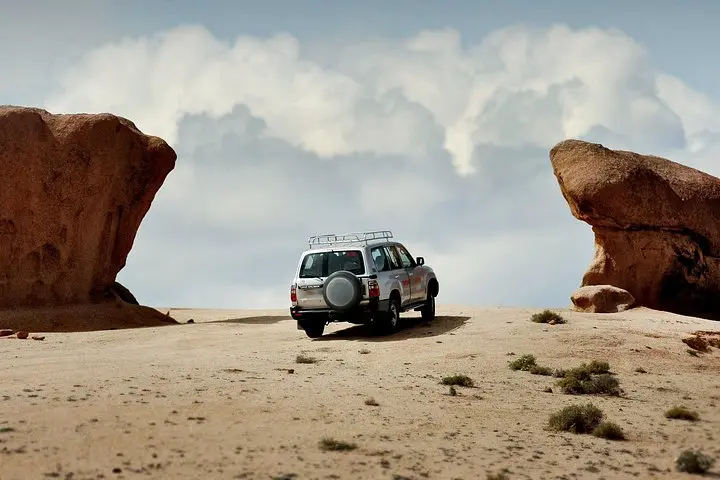
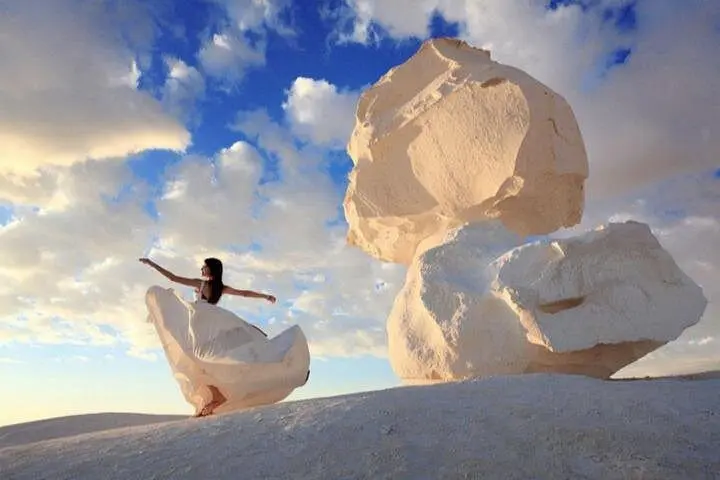
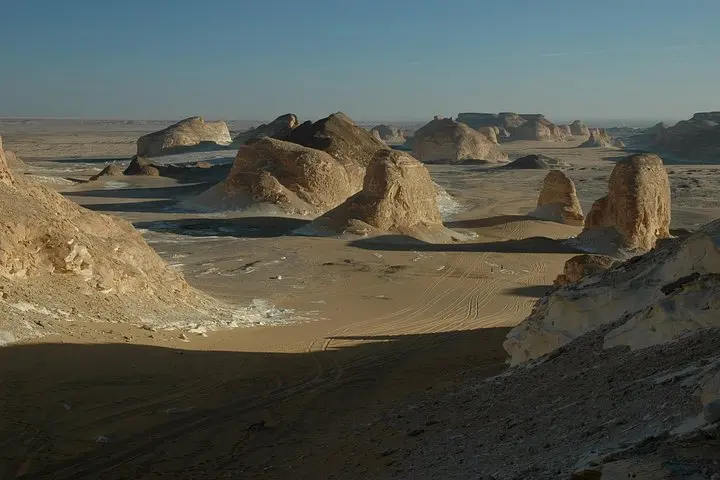
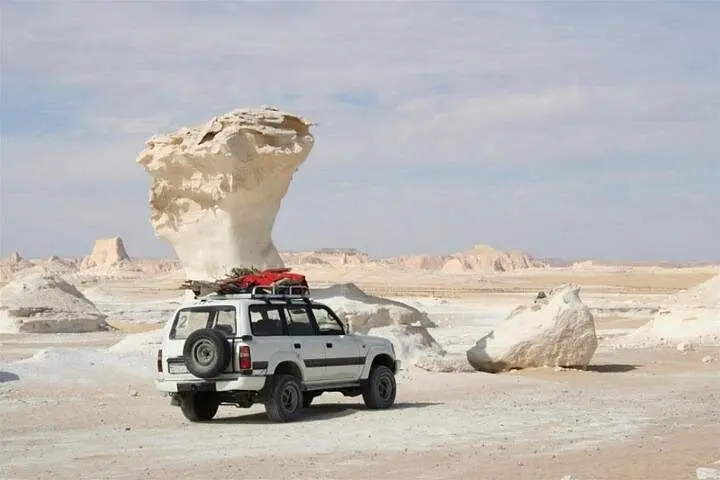
The morning road from Cairo thins into a ribbon of dust and stone; palms at Bahariya appear like punctuation marks against low black mountains, and the desert takes hold of the senses. By late afternoon the jeeps push off the asphalt and the Black Desert’s rust-stained outcrops loom like dark sentries. Night falls and the White Desert reveals itself—chalky, mushroom-shaped formations that the wind seems to have carved with deliberate hands—while a campfire throws light against an immense black sky.
The morning road from Cairo thins into a ribbon of dust and stone; palms at Bahariya appear like punctuation marks against low black mountains, and the desert takes hold of the senses. By late afternoon the jeeps push off the asphalt and the Black Desert’s rust-stained outcrops loom like dark sentries. Night falls and the White Desert reveals itself—chalky, mushroom-shaped formations that the wind seems to have carved with deliberate hands—while a campfire throws light against an immense black sky.
This route threads through millennia: inland oases have supported settlements and caravan traffic since pharaonic and Roman times, and Bahariya’s springs and salt flats record the region’s geologic shifts. The Black Desert’s dark rocks are iron-rich basalts and dolerites; the White Desert is sculpted chalk and limestone, wind-reduced to alien shapes that change subtly with each season. Local Bedouin culture remains visible in villages, hospitality, and guiding traditions; the English Mountain outpost recalls early 20th-century strategic use of these viewpoints.
Practical guidance: the trip is off-road and multi-day—expect long jeep drives (hours between stops), short walks among formations, and nights in simple desert camps. Bring at least 3 liters of water per day, sun protection, and warm layers for nights that drop sharply. Footwear should handle loose sand and rocky ledges. You’ll need to share passport details ahead for permits to enter protected zones; national park fees are usually included. Time your travel for spring or autumn to avoid extreme heat; if you go in summer, plan very early starts and minimal midday exertion. Respect fragile chalk formations—stay on established tracks, pack out waste, and follow guides’ instructions for campfires and camping locations.