THE ADVENTURE COLLECTIVE® · Independent discovery and booking for outdoor travel

Move between breath and trail on this four-day private yoga trek from McLeod Ganj to Kareri Lake. Expect forested climbs, a steep summit day to 3,100 m, tented camps, and daily guided yoga to help you move and recover.
Move between breath and trail on this four-day private yoga trek from McLeod Ganj to Kareri Lake. Expect forested climbs, a steep summit day to 3,100 m, tented camps, and daily guided yoga to help you move and recover.
A dawn mist clings to the pines as the trail out of McLeod Ganj narrows and the air begins to bite. You slip into a rhythm—breath, footing, mantra—while the Dhauladhar slopes watch and occasionally push a gust of cold toward you. Camps are small clearings under firs; evenings are stretched out by a shared fire and a teacher guiding slow, steady asanas to unwind hips tightened by uphill steps.
Verified experiences and guided adventures in the surrounding area.
Operated by Chalo! Travels · McLeod Ganj, Himachal Pradesh
A dawn mist clings to the pines as the trail out of McLeod Ganj narrows and the air begins to bite. You slip into a rhythm—breath, footing, mantra—while the Dhauladhar slopes watch and occasionally push a gust of cold toward you. Camps are small clearings under firs; evenings are stretched out by a shared fire and a teacher guiding slow, steady asanas to unwind hips tightened by uphill steps.
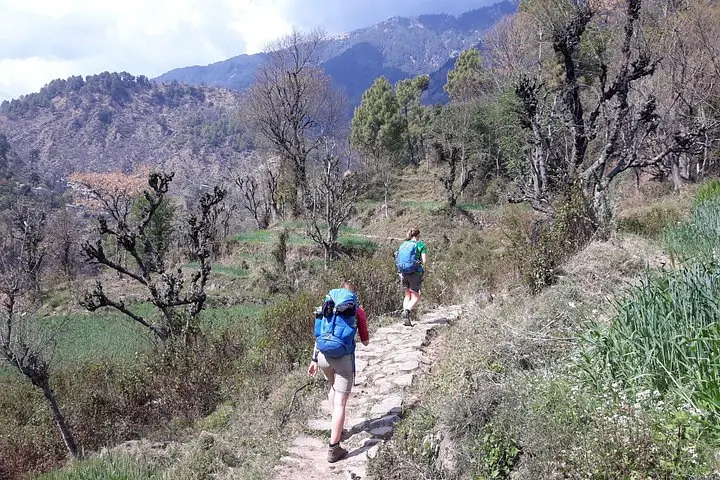
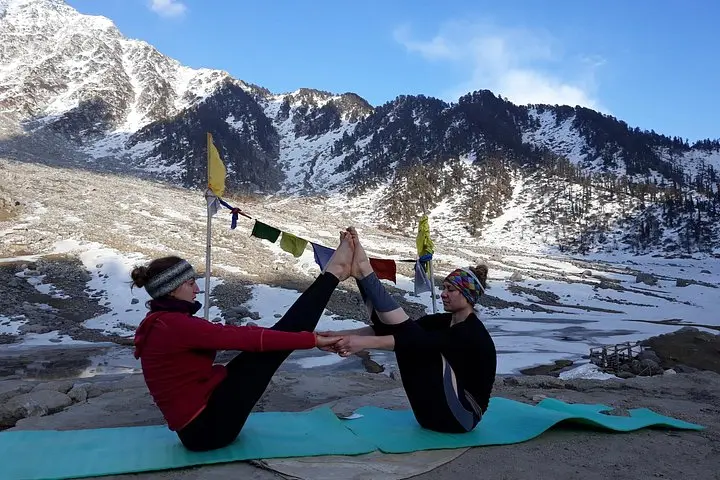
This four-day loop links village paths, ancient oak and conifer forest, and the holy Kareri Lake at roughly 3,100 m. The geology is immediate: steep, folded Dhauladhar ridgelines of slate and granite lift rapidly from the Kangra valley, carving narrow gullies and sudden viewpoints. Culturally, the route crosses shepherd pastures and small Kangra villages with Tibetan influences visible in McLeod Ganj’s prayer flags and local cafés.
Expect moderate daily distances (roughly 6–12 km per day) with the steepest ascent on day two—around 800–1,200 m of gain toward the lake depending on the start point—and mixed terrain: packed dirt, rocky switchbacks, and grassy sidles. Nights are in tents; mornings and afternoons include guided yoga and pranayama to aid recovery and altitude adjustment.
Practical notes: hydrate and pace the climb, carry a warm sleeping bag rated to at least -5°C, and use trekking poles for the steeper sections. Mobile signal is spotty; cash for small village purchases helps. This trip is best in late spring to early autumn when trails are stable and views are clear—yet each season offers its own character and light.
No—classes are adapted for all levels with emphasis on breathing, stretching, and recovery for hikers.
Kareri Lake sits around 3,100 m; some may notice mild symptoms—your guide will advise pacing, hydration, and breathing exercises to help.
Three nights are in shared tents; organizers provide basic camping gear and sleeping pads, but bring your own sleeping bag.
Yes—the tour is private and flexible, but you should meet the stated fitness requirements and disclose health issues during booking.
Chalo! Travels operates guided outdoor trips and adventures with an emphasis on safety, stewardship, and memorable experiences.
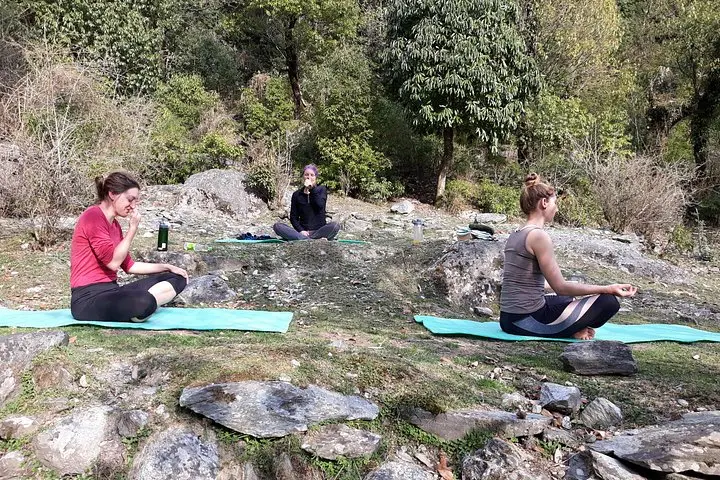
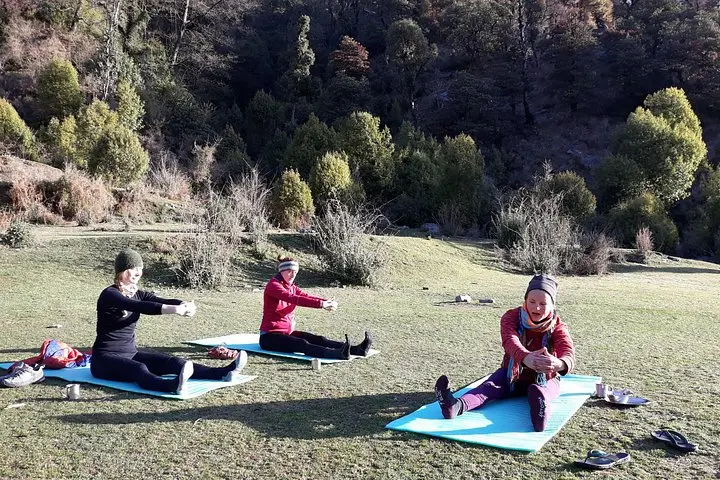
A dawn mist clings to the pines as the trail out of McLeod Ganj narrows and the air begins to bite. You slip into a rhythm—breath, footing, mantra—while the Dhauladhar slopes watch and occasionally push a gust of cold toward you. Camps are small clearings under firs; evenings are stretched out by a shared fire and a teacher guiding slow, steady asanas to unwind hips tightened by uphill steps.
A dawn mist clings to the pines as the trail out of McLeod Ganj narrows and the air begins to bite. You slip into a rhythm—breath, footing, mantra—while the Dhauladhar slopes watch and occasionally push a gust of cold toward you. Camps are small clearings under firs; evenings are stretched out by a shared fire and a teacher guiding slow, steady asanas to unwind hips tightened by uphill steps.
This four-day loop links village paths, ancient oak and conifer forest, and the holy Kareri Lake at roughly 3,100 m. The geology is immediate: steep, folded Dhauladhar ridgelines of slate and granite lift rapidly from the Kangra valley, carving narrow gullies and sudden viewpoints. Culturally, the route crosses shepherd pastures and small Kangra villages with Tibetan influences visible in McLeod Ganj’s prayer flags and local cafés.
Expect moderate daily distances (roughly 6–12 km per day) with the steepest ascent on day two—around 800–1,200 m of gain toward the lake depending on the start point—and mixed terrain: packed dirt, rocky switchbacks, and grassy sidles. Nights are in tents; mornings and afternoons include guided yoga and pranayama to aid recovery and altitude adjustment.
Practical notes: hydrate and pace the climb, carry a warm sleeping bag rated to at least -5°C, and use trekking poles for the steeper sections. Mobile signal is spotty; cash for small village purchases helps. This trip is best in late spring to early autumn when trails are stable and views are clear—yet each season offers its own character and light.