THE ADVENTURE COLLECTIVE® · Independent discovery and booking for outdoor travel

Head offshore from Mutrah for a focused four-hour charter that targets mahi mahi, yellowfin tuna and barracuda in the Gulf of Oman. Local Omani captains, professional gear and short travel from Muscat make this a compact, high-reward ocean outing.
Head offshore from Mutrah for a focused four-hour charter that targets mahi mahi, yellowfin tuna and barracuda in the Gulf of Oman. Local Omani captains, professional gear and short travel from Muscat make this a compact, high-reward ocean outing.
You step off Mutrah’s stone quay before dawn and the sea is already thinking ahead—small swell, a cool breeze that pulls salt into your nose, and the hull of Big Catch sitting low and patient in the harbor.
Verified experiences and guided adventures in the surrounding area.
Operated by Sidab Sea Tours · Muscat, Muscat
You step off Mutrah’s stone quay before dawn and the sea is already thinking ahead—small swell, a cool breeze that pulls salt into your nose, and the hull of Big Catch sitting low and patient in the harbor.
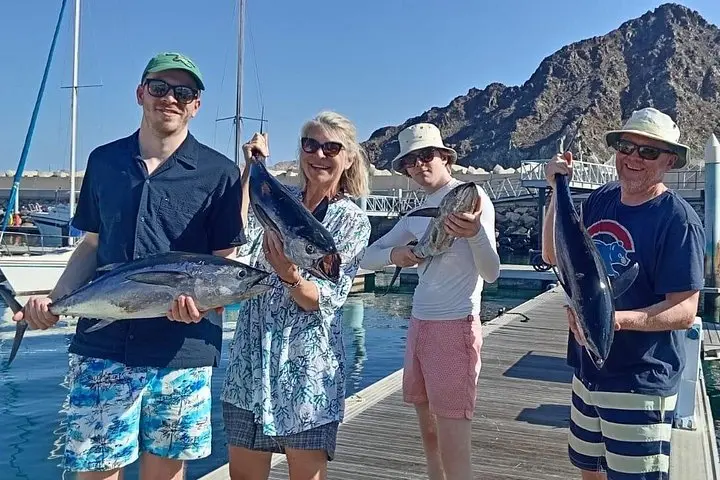
By the time the marina shrinks behind you, the city’s low white buildings and the stony face of the Al Hajar range have become a frame for the blue beyond. The captain trims the engine and points toward the Gulf of Oman, where currents and temperature breaks collect life into tight, hungry packets: mahi mahi flashing like brass, yellowfin patrolling in clean lines, occasional barracuda cruising with a predator’s calm.
The waters off Muscat have been a working sea for centuries. Muscat’s ports once buzzed with dhows carrying dates, frankincense and pearls; today, modern launches chase a different prize but follow the same oceanic logic—reading wind, swell and birds to find the fish.
Geologically, the Gulf is shaped by the meeting of the Arabian continental shelf and deeper ocean trenches; upwelling and the narrow continental shelf create nutrient-rich pockets that attract pelagic species. Culturally, fishing here is both commercial livelihood and a practiced craft: Omani captains bring local knowledge, plotting spots that change by season and tide rather than fixed GPS points.
On a four-hour charter aboard Big Catch, the rhythm is straightforward and workmanlike. Lines go out, bait hits the water, and the sea tests you. There are sharp, physical moments—when a tuna takes, the rod bites back and the deck becomes a theater of rope and muscle—but much of the time is watching: birds circling like punctuation, the water changing from deep cobalt to teal where a school rides high.
Practical notes matter. Mornings are cooler and more productive; mid-summer heat is intense and sun protection is mandatory. Boats are equipped with professional gear and basic safety kit; snacks, bottled water and soda are included. Many charters offer snorkeling stops if you want to see reefs or a quick dip near the Daymaniyat Islands.
If you plan to bring a camera, think sea-spray protection and fast shutter speeds for action shots. Respect local regulations and conservation rules—Daymaniyat is a protected area—and discuss catch-handling with your captain if you don’t plan to keep fish.
A four-hour trip in Muscat is compact but full: it blends the city’s maritime legacy with open-ocean possibility, and rewards a small investment of time with the raw, immediate payoff of open-water angling under a wide Arabian sky.
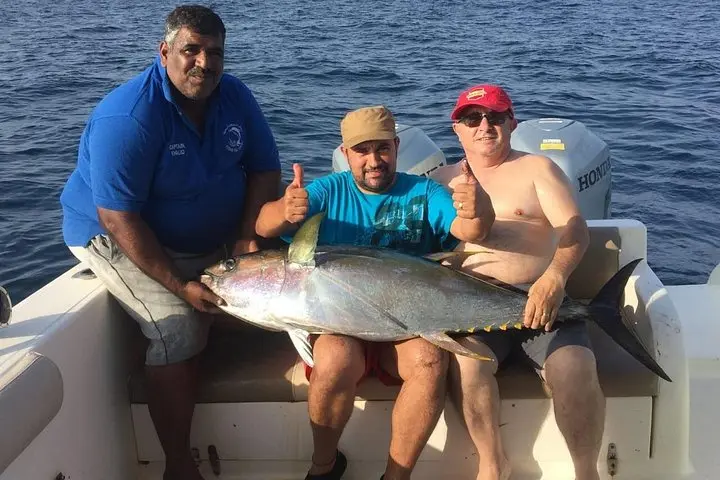
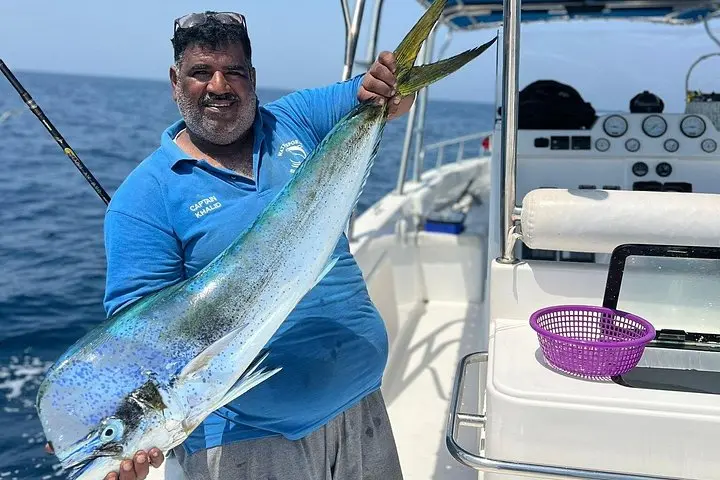
Common targets are mahi mahi (dorado), yellowfin tuna, bluefin tuna and barracuda, though actual species depend on season and sea conditions.
Yes—boats are equipped with professional fishing gear; you can also bring personal rods if preferred but check with the operator first.
No—trips accommodate beginners; captains provide instruction on baiting, casting and fighting fish.
Yes—bottled water, snacks and soda are included in the charter's amenities.
Full refund is available if you cancel at least 24 hours before departure; trips may be canceled for bad weather.
Some itineraries include snorkeling stops, particularly near the Daymaniyat Islands; confirm availability when booking.
Sidab Sea Tours operates guided outdoor trips and adventures with an emphasis on safety, stewardship, and memorable experiences.
You step off Mutrah’s stone quay before dawn and the sea is already thinking ahead—small swell, a cool breeze that pulls salt into your nose, and the hull of Big Catch sitting low and patient in the harbor.
You step off Mutrah’s stone quay before dawn and the sea is already thinking ahead—small swell, a cool breeze that pulls salt into your nose, and the hull of Big Catch sitting low and patient in the harbor.
By the time the marina shrinks behind you, the city’s low white buildings and the stony face of the Al Hajar range have become a frame for the blue beyond. The captain trims the engine and points toward the Gulf of Oman, where currents and temperature breaks collect life into tight, hungry packets: mahi mahi flashing like brass, yellowfin patrolling in clean lines, occasional barracuda cruising with a predator’s calm.
The waters off Muscat have been a working sea for centuries. Muscat’s ports once buzzed with dhows carrying dates, frankincense and pearls; today, modern launches chase a different prize but follow the same oceanic logic—reading wind, swell and birds to find the fish.
Geologically, the Gulf is shaped by the meeting of the Arabian continental shelf and deeper ocean trenches; upwelling and the narrow continental shelf create nutrient-rich pockets that attract pelagic species. Culturally, fishing here is both commercial livelihood and a practiced craft: Omani captains bring local knowledge, plotting spots that change by season and tide rather than fixed GPS points.
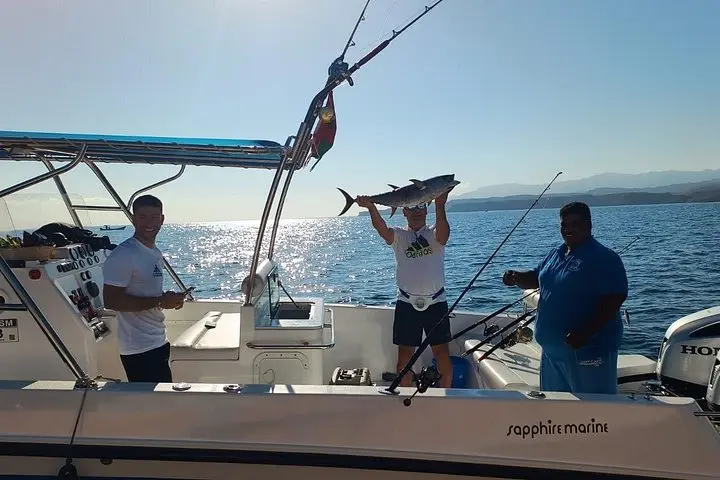
On a four-hour charter aboard Big Catch, the rhythm is straightforward and workmanlike. Lines go out, bait hits the water, and the sea tests you. There are sharp, physical moments—when a tuna takes, the rod bites back and the deck becomes a theater of rope and muscle—but much of the time is watching: birds circling like punctuation, the water changing from deep cobalt to teal where a school rides high.
Practical notes matter. Mornings are cooler and more productive; mid-summer heat is intense and sun protection is mandatory. Boats are equipped with professional gear and basic safety kit; snacks, bottled water and soda are included. Many charters offer snorkeling stops if you want to see reefs or a quick dip near the Daymaniyat Islands.
If you plan to bring a camera, think sea-spray protection and fast shutter speeds for action shots. Respect local regulations and conservation rules—Daymaniyat is a protected area—and discuss catch-handling with your captain if you don’t plan to keep fish.
A four-hour trip in Muscat is compact but full: it blends the city’s maritime legacy with open-ocean possibility, and rewards a small investment of time with the raw, immediate payoff of open-water angling under a wide Arabian sky.