THE ADVENTURE COLLECTIVE® · Independent discovery and booking for outdoor travel

Spend four hours snowshoeing in Grand Teton National Park with a naturalist guide. Small groups, provided equipment, and interpretive stops make this a beginner‑friendly way to explore winter backcountry.
Spend four hours snowshoeing in Grand Teton National Park with a naturalist guide. Small groups, provided equipment, and interpretive stops make this a beginner‑friendly way to explore winter backcountry.
Snow compresses under the frames of rented snowshoes as a naturalist guide points to a faint set of tracks winding toward dark stands of lodgepole pine. The Tetons rise as a raw skyline to the west—vertical ridgelines cut by ice—while the valley below keeps a winter hush. On this four‑hour guided snowshoe in Grand Teton National Park, small groups move at a steady, easy pace across rolling hills and forested groves, stopping to read animal signs and warm with tea.
Verified experiences and guided adventures in the surrounding area.
Operated by Jackson Hole Eco Tour Adventures · Jackson, Wyoming
Snow compresses under the frames of rented snowshoes as a naturalist guide points to a faint set of tracks winding toward dark stands of lodgepole pine. The Tetons rise as a raw skyline to the west—vertical ridgelines cut by ice—while the valley below keeps a winter hush. On this four‑hour guided snowshoe in Grand Teton National Park, small groups move at a steady, easy pace across rolling hills and forested groves, stopping to read animal signs and warm with tea.
The Teton Range is a classic fault‑block uplift sculpted by Pleistocene glaciers; the surrounding valley records the human history of Shoshone people, mountain men, and ranching families. Naturalist guides interpret snow science, winter ecology, and how seasonal freeze‑thaw shapes aspen stands and elk wintering grounds—linking geology, wildlife, and cultural stories to what you see beneath your feet.
Expect roughly 2–4 miles of travel in a typical four‑hour program, with 200–400 feet of elevation change depending on route and snow conditions. Terrain alternates between open meadow, packed track, and sheltered tree runs; fresh powder slows pace, crusty surfaces make footing quicker. Tours cap at seven participants; snowshoes, poles, gaiters, snacks, bottled water and hot beverages are provided. Meet in downtown Jackson (Home Ranch Welcome Center, 210 N Cache St) for transport to the trailhead.
Dress in layered, waterproof clothing, bring sun protection and a small daypack for extra layers and camera gear. Morning outings usually offer calmer winds and cleaner light; midday can soften snow. Keep distance from wildlife and follow your guide’s instructions. This outing delivers an interpretive, low‑technical introduction to winter backcountry in the Greater Yellowstone ecosystem.
No—these guided programs are beginner friendly and guides fit all necessary snowshoe equipment; if you can walk, you can snowshoe.
Operators supply snowshoes, poles, gaiters, snacks, bottled water and hot beverages—bring layered clothing, appropriate boots, sunglasses, and any personal medication.
Children under 8 require booking a private tour for comfort and flexibility; shared group tours are capped at seven participants.
Trips can be canceled for safety; the operator’s policy allows full refunds if canceled at least 24 hours prior and may cancel same‑day for hazardous weather.
Jackson Hole Eco Tour Adventures operates guided outdoor trips and adventures with an emphasis on safety, stewardship, and memorable experiences.
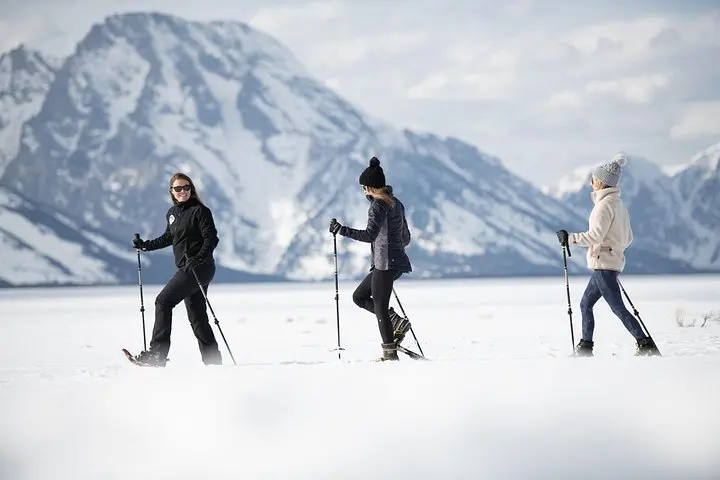
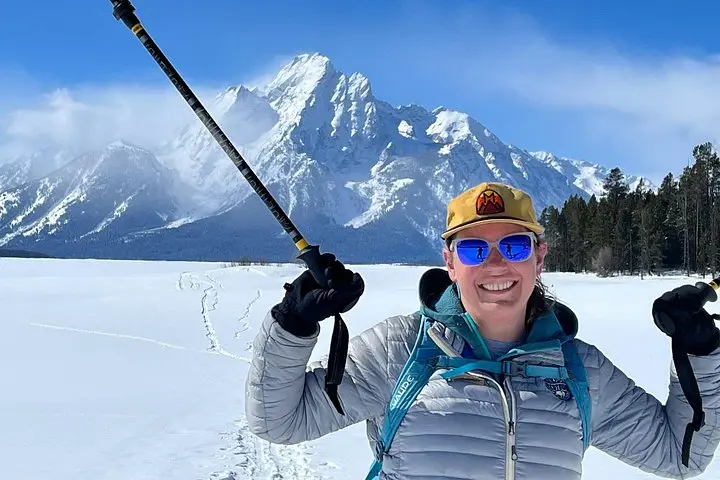
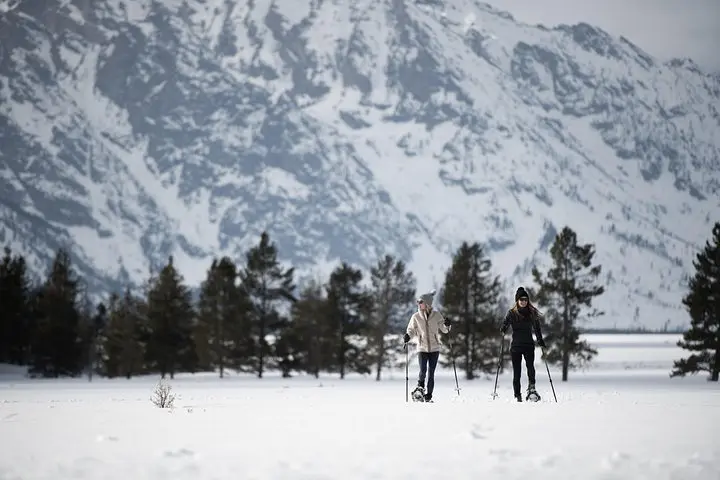
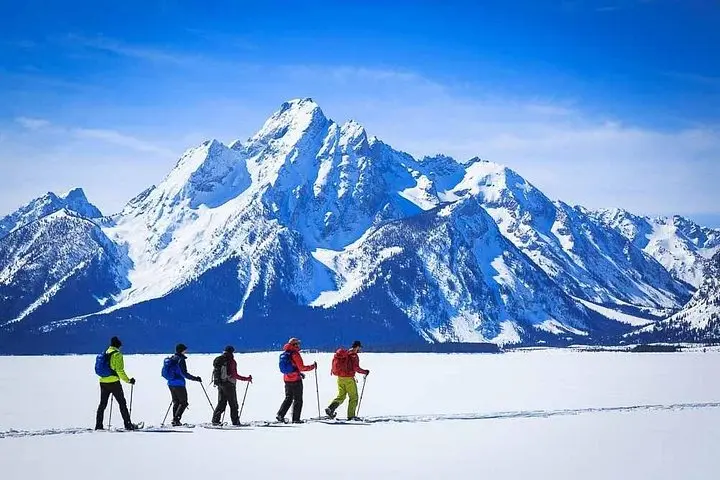
Snow compresses under the frames of rented snowshoes as a naturalist guide points to a faint set of tracks winding toward dark stands of lodgepole pine. The Tetons rise as a raw skyline to the west—vertical ridgelines cut by ice—while the valley below keeps a winter hush. On this four‑hour guided snowshoe in Grand Teton National Park, small groups move at a steady, easy pace across rolling hills and forested groves, stopping to read animal signs and warm with tea.
Snow compresses under the frames of rented snowshoes as a naturalist guide points to a faint set of tracks winding toward dark stands of lodgepole pine. The Tetons rise as a raw skyline to the west—vertical ridgelines cut by ice—while the valley below keeps a winter hush. On this four‑hour guided snowshoe in Grand Teton National Park, small groups move at a steady, easy pace across rolling hills and forested groves, stopping to read animal signs and warm with tea.
The Teton Range is a classic fault‑block uplift sculpted by Pleistocene glaciers; the surrounding valley records the human history of Shoshone people, mountain men, and ranching families. Naturalist guides interpret snow science, winter ecology, and how seasonal freeze‑thaw shapes aspen stands and elk wintering grounds—linking geology, wildlife, and cultural stories to what you see beneath your feet.
Expect roughly 2–4 miles of travel in a typical four‑hour program, with 200–400 feet of elevation change depending on route and snow conditions. Terrain alternates between open meadow, packed track, and sheltered tree runs; fresh powder slows pace, crusty surfaces make footing quicker. Tours cap at seven participants; snowshoes, poles, gaiters, snacks, bottled water and hot beverages are provided. Meet in downtown Jackson (Home Ranch Welcome Center, 210 N Cache St) for transport to the trailhead.
Dress in layered, waterproof clothing, bring sun protection and a small daypack for extra layers and camera gear. Morning outings usually offer calmer winds and cleaner light; midday can soften snow. Keep distance from wildlife and follow your guide’s instructions. This outing delivers an interpretive, low‑technical introduction to winter backcountry in the Greater Yellowstone ecosystem.