THE ADVENTURE COLLECTIVE® · Independent discovery and booking for outdoor travel

Drive 80 km from Puerto Madryn over wind-scoured steppes to the cliffs of Punta Ninfas, where a lone lighthouse overlooks a year-round colony of southern elephant seals. This full-day 4x4 tour blends coastal geology, wildlife viewing, and easy hiking along cliff-top paths.
Drive 80 km from Puerto Madryn over wind-scoured steppes to the cliffs of Punta Ninfas, where a lone lighthouse overlooks a year-round colony of southern elephant seals. This full-day 4x4 tour blends coastal geology, wildlife viewing, and easy hiking along cliff-top paths.
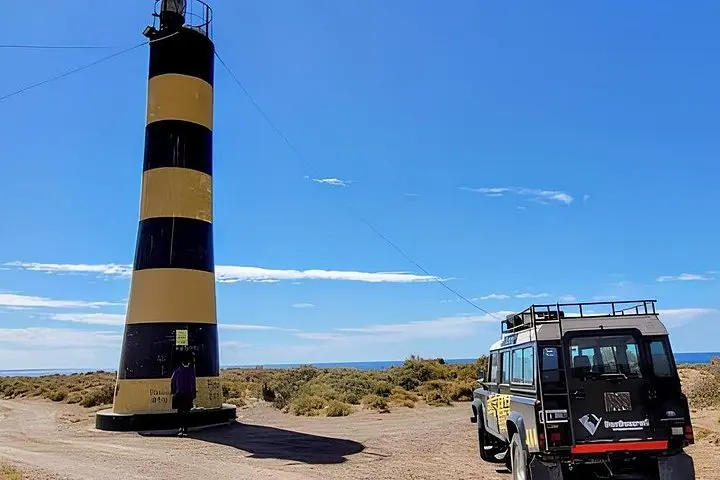
The first thing you notice is how the sea keeps time here—tides that erode and reveal, a coastline reading like a slow-motion clock. You meet your guide in Puerto Madryn before dawn, climb into a canvas-roofed 4x4 and head east across low, wind-swept steppes. The road narrows and the world opens: salt-browned grass, low dunes, and then the cliffs of Punta Ninfas rising several meters above the Gulf, the rusted white of a solitary lighthouse pointing where sailors have navigated for a century.
Verified experiences and guided adventures in the surrounding area.
Operated by Tangol · Puerto Madryn, Chubut
The first thing you notice is how the sea keeps time here—tides that erode and reveal, a coastline reading like a slow-motion clock. You meet your guide in Puerto Madryn before dawn, climb into a canvas-roofed 4x4 and head east across low, wind-swept steppes. The road narrows and the world opens: salt-browned grass, low dunes, and then the cliffs of Punta Ninfas rising several meters above the Gulf, the rusted white of a solitary lighthouse pointing where sailors have navigated for a century.
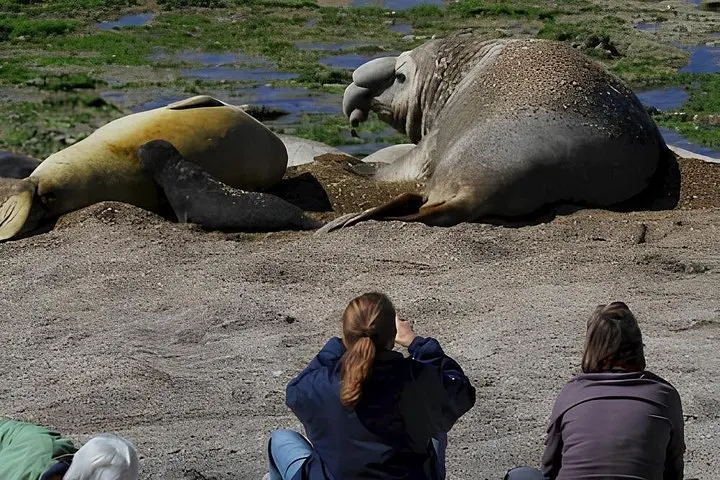
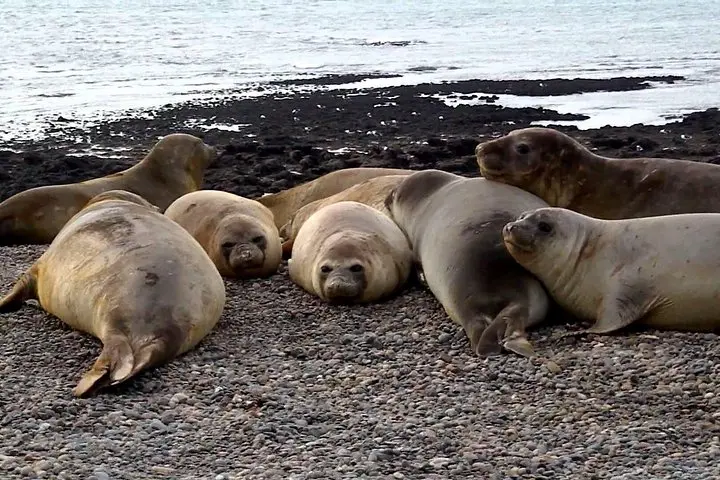
At the cliff edge, the elephant seals own the shore. Bulls snort and roll, cows and pups jostle toward the surf; their breathing is a physical presence, a percussion that competes with the ocean. Guides keep the group to defined pathways and explain the pulse of their seasons—breeding from September through December, and the quieter molting months from January to April—so visitors can watch without reshaping animal behavior.
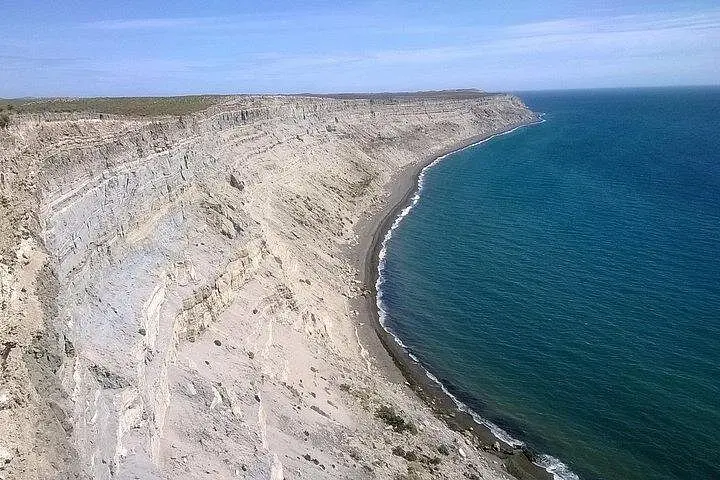
Geology here is blunt and honest: marine terraces, sandstone outcrops and sandbars shaped by persistent winds and the ebb of the Gulf of Nuevo. Punta Ninfas' lighthouse is more than a landmark; it marks a corridor of wildlife and human navigation where Welsh and Spanish settlers once eyed the horizon for ships and flocks. The ride itself is part of the narrative—an 80 km loop of scrub and coastline that reads like Patagonia in small chapters, each bend revealing a new angle on the sea and the seals.
Culturally, Puerto Madryn is the staging town—named by Welsh settlers and now an ecotourism hub where guides balance visitor access with conservation law. Local operators time departures around tides; high and low tides dramatically change the view and where seals haul out, so flexibility is built into the itinerary.
Practicalities: the full experience lasts about seven hours with pickup from centrally located hotels. Wear sturdy walking shoes for gravel and coastal dunes; windproof layers are non-negotiable even on sunny days. Bring binoculars and a telephoto lens—best photos come from a respectful distance. Hydrate and carry sun protection; the steppe offers little shade. Follow your guide’s instructions about approach distances and noise. Lunch and refreshments are included, but if you have dietary needs, notify the operator when you book.
This trip is for travelers with moderate fitness who want a close but responsible encounter with one of Patagonia’s most dramatic marine mammals. It’s not a water activity but a landscape-and-wildlife day: the thrill is in watching the tide and the seals set the pace, the 4x4 giving you both reach and access. For anyone curious about big animals, sharp light and hard coastline, Punta Ninfas delivers—quiet, raw, and governed by the ocean’s slow clock.
The 4x4 drive covers about 80 km each way as part of a full-day loop; including stops, expect a 6–8 hour excursion.
No—guides set safe viewing distances. Approaching seals can be dangerous for you and stressful for the animals; always follow instructions.
Yes—a meal with drinks is included; notify the operator in advance for vegetarian or gluten-free options.
Breeding season runs roughly September to December when pups are commonly seen; molting occurs from January to April.
Families and active seniors can participate, but travelers should have moderate fitness and be able to navigate uneven terrain.
The schedule is tide-dependent; the operator confirms exact pickup times the day before and may adjust plans for safety.
Tangol operates guided outdoor trips and adventures with an emphasis on safety, stewardship, and memorable experiences.
The first thing you notice is how the sea keeps time here—tides that erode and reveal, a coastline reading like a slow-motion clock. You meet your guide in Puerto Madryn before dawn, climb into a canvas-roofed 4x4 and head east across low, wind-swept steppes. The road narrows and the world opens: salt-browned grass, low dunes, and then the cliffs of Punta Ninfas rising several meters above the Gulf, the rusted white of a solitary lighthouse pointing where sailors have navigated for a century.
The first thing you notice is how the sea keeps time here—tides that erode and reveal, a coastline reading like a slow-motion clock. You meet your guide in Puerto Madryn before dawn, climb into a canvas-roofed 4x4 and head east across low, wind-swept steppes. The road narrows and the world opens: salt-browned grass, low dunes, and then the cliffs of Punta Ninfas rising several meters above the Gulf, the rusted white of a solitary lighthouse pointing where sailors have navigated for a century.
At the cliff edge, the elephant seals own the shore. Bulls snort and roll, cows and pups jostle toward the surf; their breathing is a physical presence, a percussion that competes with the ocean. Guides keep the group to defined pathways and explain the pulse of their seasons—breeding from September through December, and the quieter molting months from January to April—so visitors can watch without reshaping animal behavior.
Geology here is blunt and honest: marine terraces, sandstone outcrops and sandbars shaped by persistent winds and the ebb of the Gulf of Nuevo. Punta Ninfas' lighthouse is more than a landmark; it marks a corridor of wildlife and human navigation where Welsh and Spanish settlers once eyed the horizon for ships and flocks. The ride itself is part of the narrative—an 80 km loop of scrub and coastline that reads like Patagonia in small chapters, each bend revealing a new angle on the sea and the seals.
Culturally, Puerto Madryn is the staging town—named by Welsh settlers and now an ecotourism hub where guides balance visitor access with conservation law. Local operators time departures around tides; high and low tides dramatically change the view and where seals haul out, so flexibility is built into the itinerary.
Practicalities: the full experience lasts about seven hours with pickup from centrally located hotels. Wear sturdy walking shoes for gravel and coastal dunes; windproof layers are non-negotiable even on sunny days. Bring binoculars and a telephoto lens—best photos come from a respectful distance. Hydrate and carry sun protection; the steppe offers little shade. Follow your guide’s instructions about approach distances and noise. Lunch and refreshments are included, but if you have dietary needs, notify the operator when you book.
This trip is for travelers with moderate fitness who want a close but responsible encounter with one of Patagonia’s most dramatic marine mammals. It’s not a water activity but a landscape-and-wildlife day: the thrill is in watching the tide and the seals set the pace, the 4x4 giving you both reach and access. For anyone curious about big animals, sharp light and hard coastline, Punta Ninfas delivers—quiet, raw, and governed by the ocean’s slow clock.