
4x4 Volcano Explorer: Private Off-Road Tour of Mount Batur’s Frozen Lava
Drive across Mount Batur’s frozen lava fields in a custom 4x4 with a private local guide. This rain-or-shine tour delivers close-up geology, wide caldera views and a chance to see millions of bats at cliff roosts.
An Adventure In Ubud.
Drive across Mount Batur’s frozen lava fields in a custom 4x4 with a private local guide. This rain-or-shine tour delivers close-up geology, wide caldera views and a chance to see millions of bats at cliff roosts.
Read the full experience
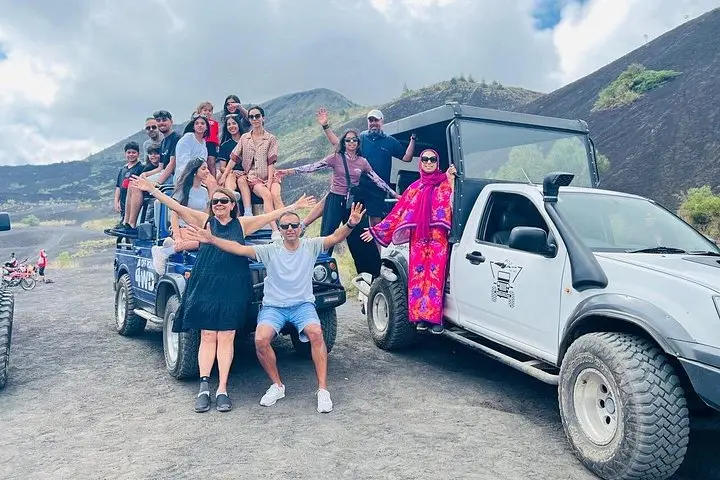
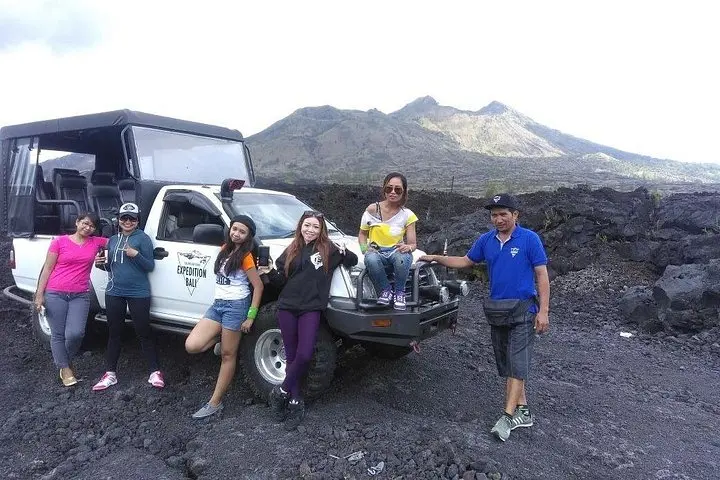
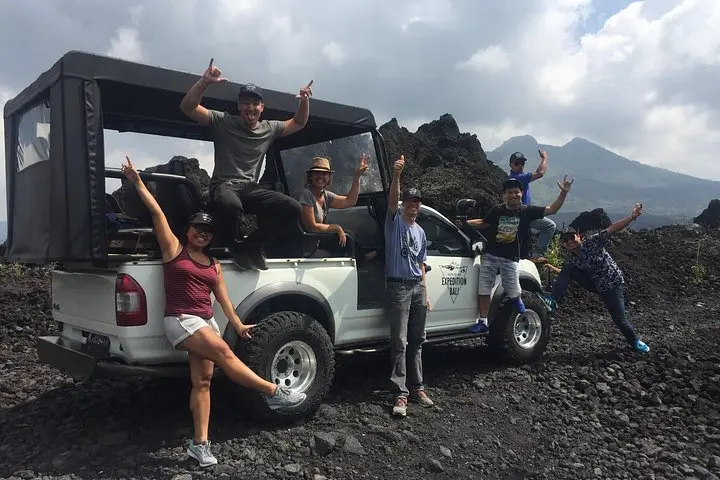
A raw wind cuts across the caldera as the 4x4 climbs toward the black fields — heat from volcanic rock still holds the story of past eruptions. You arrive where the landscape is stripped of trees and rimmed by sharp ridgelines; the vehicle’s tyres whisper over hardened lava and black sand while the guide points out sculpted flows and a lava-formed cave carved by trapped air.
A raw wind cuts across the caldera as the 4x4 climbs toward the black fields — heat from volcanic rock still holds the story of past eruptions. You arrive where the landscape is stripped of trees and rimmed by sharp ridgelines; the vehicle’s tyres whisper over hardened lava and black sand while the guide points out sculpted flows and a lava-formed cave carved by trapped air.
This region of eastern Bali is defined by Mount Batur and its caldera, shaped by repeated eruptions over centuries and sitting above Lake Batur. Local villages around Kintamani have farmed these slopes for generations; terraces and hot springs speak to a culture adapted to volcanic soils and seasonal rains.
Geology shows layers of basaltic flows and pumice; from Caldera Point the panorama can include Mount Abang, distant Mount Agung, Lake Batur and, on very clear days, Mount Rinjani on Lombok and the Indian Ocean beyond.
Practical guidance: tours run morning and afternoon, last roughly 2–5 hours, and use purpose-built 4x4s that handle rough, wet conditions. Expect short walks across uneven lava and black sand; bring sturdy shoes, a windproof layer, sun protection and plenty of water. Rain is common outside the dry season; the route is accessible in light rain but can be slippery. Respect village life — ask before photographing people and avoid leaving trash. If you have motion sensitivity, choose a morning slot and sit forward-facing. The reward is a rare, tactile landscape where rivers of once-molten rock now lie silent, and bats wheel like living punctuation against the rim of the caldera.
Frequently asked questions
Tours run approximately 2–5 hours and are private, typically with a dedicated vehicle and guide for your group.
Yes—vehicles are purpose-built for wet conditions and the operator runs rain-or-shine, but walking surfaces can be slippery after heavy rain.
On clear days you can see Mount Agung and, across the Lombok Strait, Mount Rinjani; visibility depends on weather and haze.
No technical climbing is required—short walks over uneven lava and sand are the main on-foot activity, so basic mobility is sufficient.
About This Experience
Expedition Bali Tours operates guided outdoor trips and adventures with an emphasis on safety, stewardship, and memorable experiences.
Adventure tips
Recommended gear
- Sturdy hiking shoes: Protects feet on sharp lava and provides traction on loose black sand.
- Windbreaker or light waterproof: Shields you from sudden rain and strong caldera winds.
- Sun protection: Sunglasses, hat and SPF protect against intense high-elevation sun.
- Reusable water bottle: Hydration is important; bottled volcanic spring water is often provided but refillable bottles reduce waste.
Photos of the experience
Related adventures & guides
Read the full experience
A raw wind cuts across the caldera as the 4x4 climbs toward the black fields — heat from volcanic rock still holds the story of past eruptions. You arrive where the landscape is stripped of trees and rimmed by sharp ridgelines; the vehicle’s tyres whisper over hardened lava and black sand while the guide points out sculpted flows and a lava-formed cave carved by trapped air.
A raw wind cuts across the caldera as the 4x4 climbs toward the black fields — heat from volcanic rock still holds the story of past eruptions. You arrive where the landscape is stripped of trees and rimmed by sharp ridgelines; the vehicle’s tyres whisper over hardened lava and black sand while the guide points out sculpted flows and a lava-formed cave carved by trapped air.
This region of eastern Bali is defined by Mount Batur and its caldera, shaped by repeated eruptions over centuries and sitting above Lake Batur. Local villages around Kintamani have farmed these slopes for generations; terraces and hot springs speak to a culture adapted to volcanic soils and seasonal rains.
Geology shows layers of basaltic flows and pumice; from Caldera Point the panorama can include Mount Abang, distant Mount Agung, Lake Batur and, on very clear days, Mount Rinjani on Lombok and the Indian Ocean beyond.
Practical guidance: tours run morning and afternoon, last roughly 2–5 hours, and use purpose-built 4x4s that handle rough, wet conditions. Expect short walks across uneven lava and black sand; bring sturdy shoes, a windproof layer, sun protection and plenty of water. Rain is common outside the dry season; the route is accessible in light rain but can be slippery. Respect village life — ask before photographing people and avoid leaving trash. If you have motion sensitivity, choose a morning slot and sit forward-facing. The reward is a rare, tactile landscape where rivers of once-molten rock now lie silent, and bats wheel like living punctuation against the rim of the caldera.
Make a day of it nearby.
Verified experiences and guided adventures in the surrounding area.