THE ADVENTURE COLLECTIVE® · Independent discovery and booking for outdoor travel

Trace five days of Khmer history from sunrise at Angkor Wat to the jungle-split ruins of Beng Mealea and the river-carved lingas of Kulen. This private A/C tour blends major sites with remote temples and local craft stops.
Trace five days of Khmer history from sunrise at Angkor Wat to the jungle-split ruins of Beng Mealea and the river-carved lingas of Kulen. This private A/C tour blends major sites with remote temples and local craft stops.
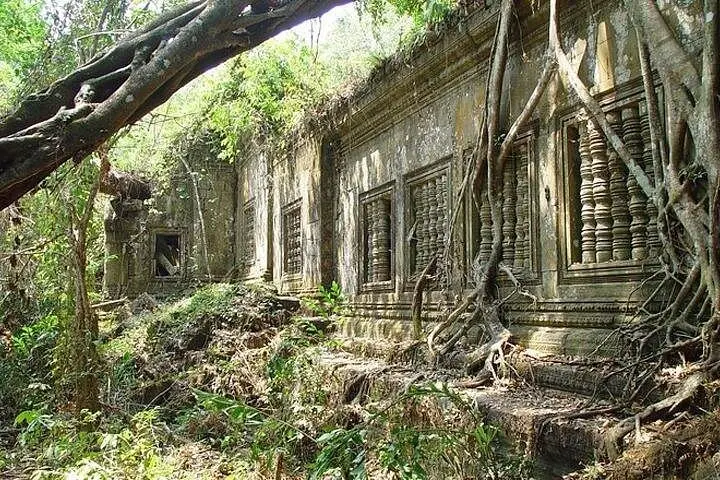
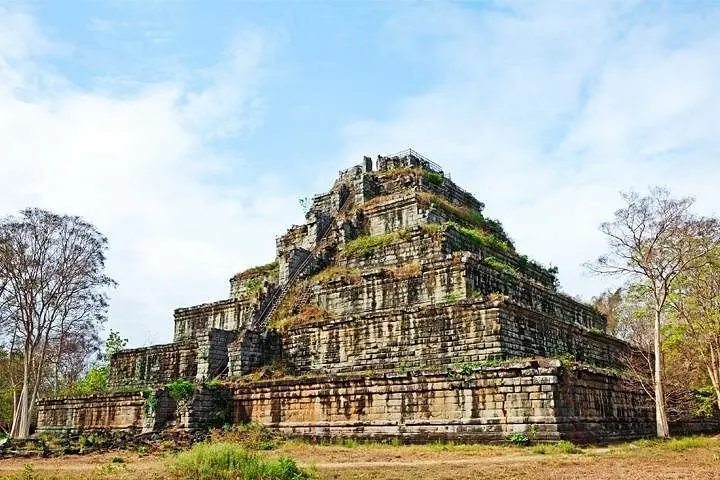
Morning light cuts across the moat at Angkor Wat and the stone faces hold the day like quiet sentries. On this five-day loop from Siem Reap you step out of town and into landscape where carved stones and jungle trade stories: Bayon’s four-faced towers watch the road, Beng Mealea lets fig roots tug at lintels, and the seven-tier pyramid of Koh Ker sits like a remote crown on the plain.
Verified experiences and guided adventures in the surrounding area.
Operated by Angkor Express Boat · Siem Reap, Siem Reap Province
Morning light cuts across the moat at Angkor Wat and the stone faces hold the day like quiet sentries. On this five-day loop from Siem Reap you step out of town and into landscape where carved stones and jungle trade stories: Bayon’s four-faced towers watch the road, Beng Mealea lets fig roots tug at lintels, and the seven-tier pyramid of Koh Ker sits like a remote crown on the plain.
The route traces the arc of the Khmer Empire — 9th to 13th centuries — when capitals moved and temple styles evolved from Bakong’s sandstone platforms to the later classical symmetry of Angkor Wat. Geologically the region is low-lying alluvium pierced by sandstone outcrops; Phnom Kulen is an uplifted block whose rivers have smoothed sacred lingas into the riverbed. Culturally the temples are active heritage: monks maintain rituals, local artisans keep stone and woodcraft alive, and markets in Siem Reap supply fresh rice and cold drinks.
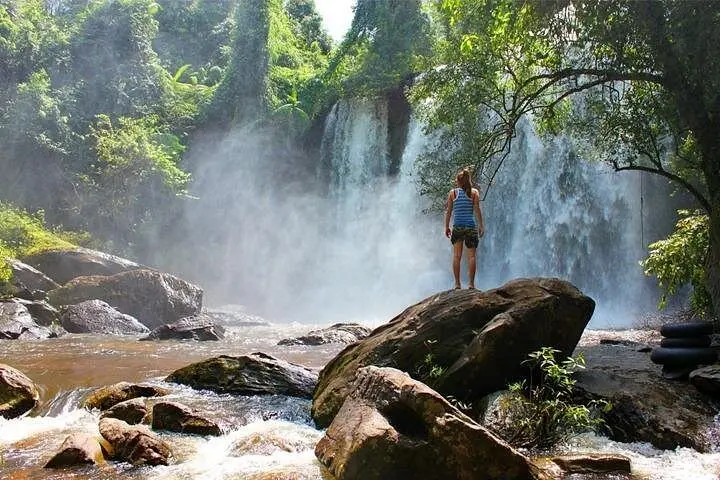
Practical edge: expect long days and short walking sections at each site — uneven stone, steps and occasional muddy tracks at Beng Mealea and Koh Ker. The tour includes private A/C transfer and an English-speaking guide, but temple admission pass is required (buy on arrival or let your guide assist). Wear modest, lightweight clothing that covers shoulders and knees; bring sturdy shoes, sun protection, and at least 2 liters of water per day. Start early for sunrise at Angkor Wat, save afternoon for Phnom Kulen’s waterfall if you want a swim, and leave time to browse Artisan D’Angkor for locally made souvenirs. Roads to Koh Ker are long; bring motion-sickness remedies and a patient spirit — the countryside and remote ruins reward the drive.
You can buy the Angkor Archaeological Park pass in Siem Reap upon arrival; guides often assist to speed the process—buy ahead if you want to be at Angkor Wat for sunrise.
The tour is suitable for most fitness levels but involves long days, short walks through ruins, climbing temple steps, and some uneven terrain—comfortable shoes help.
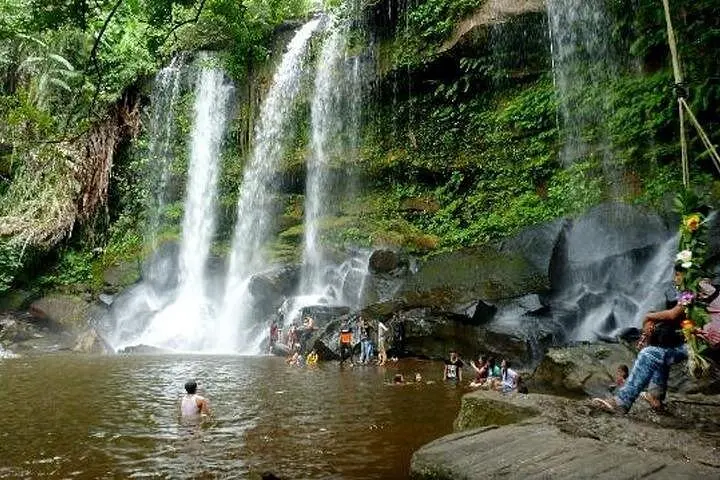
Yes, there are swimming spots at the waterfall on Kulen Mountain; use caution on slippery rocks and follow local guidance for safe areas.
This listing includes an English-speaking licensed guide, private A/C vehicle, drinking water, towels, and hotel pickup/drop-off; admission fees are typically separate unless noted.
Angkor Express Boat operates guided outdoor trips and adventures with an emphasis on safety, stewardship, and memorable experiences.
Morning light cuts across the moat at Angkor Wat and the stone faces hold the day like quiet sentries. On this five-day loop from Siem Reap you step out of town and into landscape where carved stones and jungle trade stories: Bayon’s four-faced towers watch the road, Beng Mealea lets fig roots tug at lintels, and the seven-tier pyramid of Koh Ker sits like a remote crown on the plain.
Morning light cuts across the moat at Angkor Wat and the stone faces hold the day like quiet sentries. On this five-day loop from Siem Reap you step out of town and into landscape where carved stones and jungle trade stories: Bayon’s four-faced towers watch the road, Beng Mealea lets fig roots tug at lintels, and the seven-tier pyramid of Koh Ker sits like a remote crown on the plain.
The route traces the arc of the Khmer Empire — 9th to 13th centuries — when capitals moved and temple styles evolved from Bakong’s sandstone platforms to the later classical symmetry of Angkor Wat. Geologically the region is low-lying alluvium pierced by sandstone outcrops; Phnom Kulen is an uplifted block whose rivers have smoothed sacred lingas into the riverbed. Culturally the temples are active heritage: monks maintain rituals, local artisans keep stone and woodcraft alive, and markets in Siem Reap supply fresh rice and cold drinks.
Practical edge: expect long days and short walking sections at each site — uneven stone, steps and occasional muddy tracks at Beng Mealea and Koh Ker. The tour includes private A/C transfer and an English-speaking guide, but temple admission pass is required (buy on arrival or let your guide assist). Wear modest, lightweight clothing that covers shoulders and knees; bring sturdy shoes, sun protection, and at least 2 liters of water per day. Start early for sunrise at Angkor Wat, save afternoon for Phnom Kulen’s waterfall if you want a swim, and leave time to browse Artisan D’Angkor for locally made souvenirs. Roads to Koh Ker are long; bring motion-sickness remedies and a patient spirit — the countryside and remote ruins reward the drive.