THE ADVENTURE COLLECTIVE® · Independent discovery and booking for outdoor travel

Five days of Cambodia’s greatest temple sites and a forested mountain escape: sunrise at Angkor Wat, the pink carvings of Banteay Srei, remote Koh Ker, overgrown Beng Mealea and Kulen’s river of Lingas. Practical tips for passes, packing and pacing included.
Five days of Cambodia’s greatest temple sites and a forested mountain escape: sunrise at Angkor Wat, the pink carvings of Banteay Srei, remote Koh Ker, overgrown Beng Mealea and Kulen’s river of Lingas. Practical tips for passes, packing and pacing included.
Sunrise slips over the moat at Angkor Wat and the towers catch a pale gold that seems to lift the stone from the jungle itself. You stand with other early risers as the reflection pool trembles in the breeze; later, the day will stretch from carved galleries to broken causeways where roots have grown through lintels.
Verified experiences and guided adventures in the surrounding area.
Operated by Angkor Focus Travel · Siem Reap, Siem Reap Province
Sunrise slips over the moat at Angkor Wat and the towers catch a pale gold that seems to lift the stone from the jungle itself. You stand with other early risers as the reflection pool trembles in the breeze; later, the day will stretch from carved galleries to broken causeways where roots have grown through lintels.
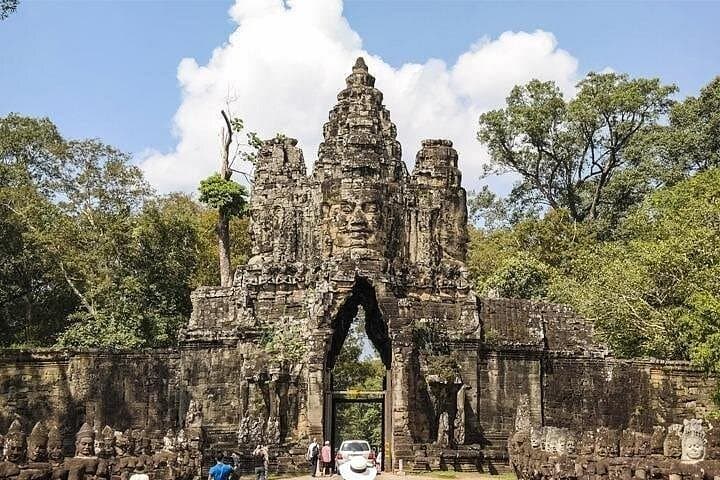
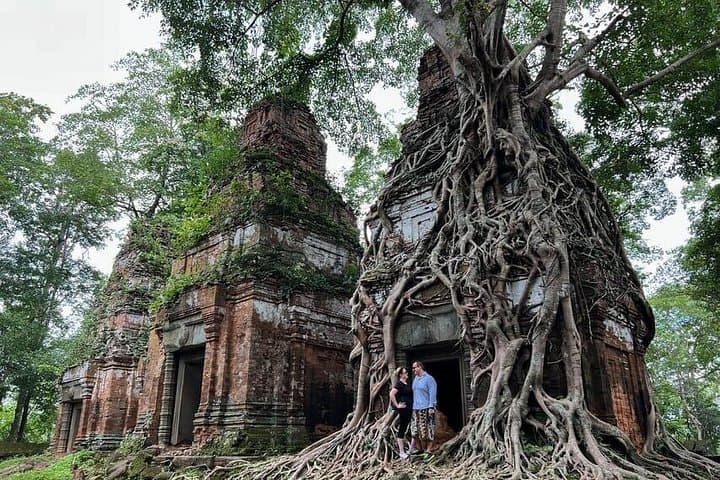
This five-day loop moves from Angkor Thom’s Bayon faces to the pink sandstone carvings of Banteay Srei, then pushes into quieter country to Koh Ker and the collapsed majesty of Beng Mealea. Geologically, the region is composed largely of soft sandstone laid down in riverbeds and later sculpted by Khmer masons; the same softness invites roots and moss to take hold, especially in Ta Prohm and Beng Mealea.
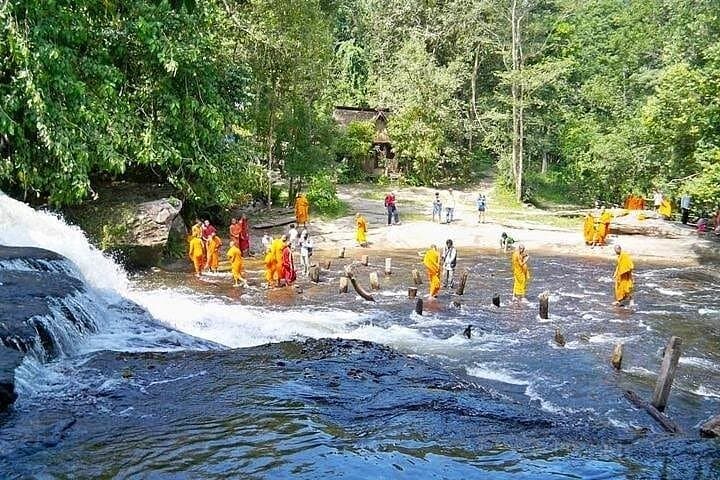
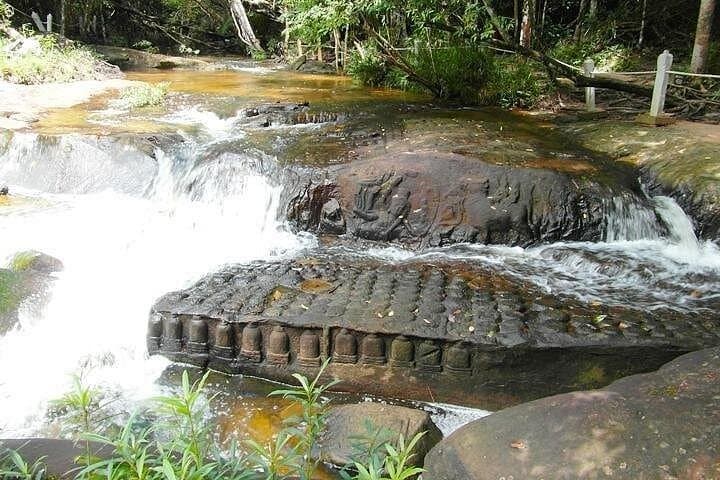
Culturally, the itinerary traces the Khmer empire’s arc—Hariharalaya (Rolous), the 10th–12th century temple mountains, and Jayavarman VII’s Buddhist complexes—so expect a mix of Hindu iconography and later Buddhist interventions. Kulen Mountain offers a different note: a forested sandstone plateau, the 1,000 Lingas riverbed, and a popular waterfall where locals swim.
Practical guidance: buy a multi-day Angkor pass in Siem Reap, dress modestly for temple entry (shoulders and knees), and plan for long drives—Koh Ker is roughly 150 km from town on variable roads. Bring a refillable water bottle, sun protection, sturdy walking shoes, and a light rain layer in the wet season. Mornings are best for big sites to avoid crowds and heat; afternoons suit quieter ruins and the Kulen waterfall. Expect uneven steps, loose blocks, and rooted masonry—move deliberately, and give smaller temples time to reveal their details.
Yes—Angkor Park requires a valid pass (1-, 3- or 7-day) which the guide will typically help you purchase on day one.
Many temples are safe to explore but have uneven steps and loose stone; guided visits provide historical context and safer routing through complex ruins.
Yes—swimming is commonly allowed at designated pools below the falls, but currents can be strong after heavy rain; exercise caution.
Koh Ker is about 150 km northeast of Siem Reap—plan for a long day with 3–4 hours of driving each way depending on road conditions.
Angkor Focus Travel operates guided outdoor trips and adventures with an emphasis on safety, stewardship, and memorable experiences.
Sunrise slips over the moat at Angkor Wat and the towers catch a pale gold that seems to lift the stone from the jungle itself. You stand with other early risers as the reflection pool trembles in the breeze; later, the day will stretch from carved galleries to broken causeways where roots have grown through lintels.
Sunrise slips over the moat at Angkor Wat and the towers catch a pale gold that seems to lift the stone from the jungle itself. You stand with other early risers as the reflection pool trembles in the breeze; later, the day will stretch from carved galleries to broken causeways where roots have grown through lintels.
This five-day loop moves from Angkor Thom’s Bayon faces to the pink sandstone carvings of Banteay Srei, then pushes into quieter country to Koh Ker and the collapsed majesty of Beng Mealea. Geologically, the region is composed largely of soft sandstone laid down in riverbeds and later sculpted by Khmer masons; the same softness invites roots and moss to take hold, especially in Ta Prohm and Beng Mealea.
Culturally, the itinerary traces the Khmer empire’s arc—Hariharalaya (Rolous), the 10th–12th century temple mountains, and Jayavarman VII’s Buddhist complexes—so expect a mix of Hindu iconography and later Buddhist interventions. Kulen Mountain offers a different note: a forested sandstone plateau, the 1,000 Lingas riverbed, and a popular waterfall where locals swim.
Practical guidance: buy a multi-day Angkor pass in Siem Reap, dress modestly for temple entry (shoulders and knees), and plan for long drives—Koh Ker is roughly 150 km from town on variable roads. Bring a refillable water bottle, sun protection, sturdy walking shoes, and a light rain layer in the wet season. Mornings are best for big sites to avoid crowds and heat; afternoons suit quieter ruins and the Kulen waterfall. Expect uneven steps, loose blocks, and rooted masonry—move deliberately, and give smaller temples time to reveal their details.