THE ADVENTURE COLLECTIVE® · Independent discovery and booking for outdoor travel

A rapid, five-day guided trek from Pokhara to Annapurna Base Camp that moves from terraced hills and Gurung villages into the high sanctuary below Annapurna’s peaks. Ideal for fit trekkers who want a condensed, authentic Himalayan experience.
A rapid, five-day guided trek from Pokhara to Annapurna Base Camp that moves from terraced hills and Gurung villages into the high sanctuary below Annapurna’s peaks. Ideal for fit trekkers who want a condensed, authentic Himalayan experience.
Morning light breaks over Pokhara and the Annapurna massif slowly pulls itself into view — a jagged skyline of snow and rock that dares you forward. The five-day trek from Pokhara to Annapurna Base Camp (ABC) moves quickly from humid terraced hills into bamboo forests, then into high, wind-swept moraine where the sanctuary’s bowl opens and the glaciers seem to breathe.
Verified experiences and guided adventures in the surrounding area.
Operated by AM Travels and Tours · Pokhara, Gandaki Province
Morning light breaks over Pokhara and the Annapurna massif slowly pulls itself into view — a jagged skyline of snow and rock that dares you forward. The five-day trek from Pokhara to Annapurna Base Camp (ABC) moves quickly from humid terraced hills into bamboo forests, then into high, wind-swept moraine where the sanctuary’s bowl opens and the glaciers seem to breathe.
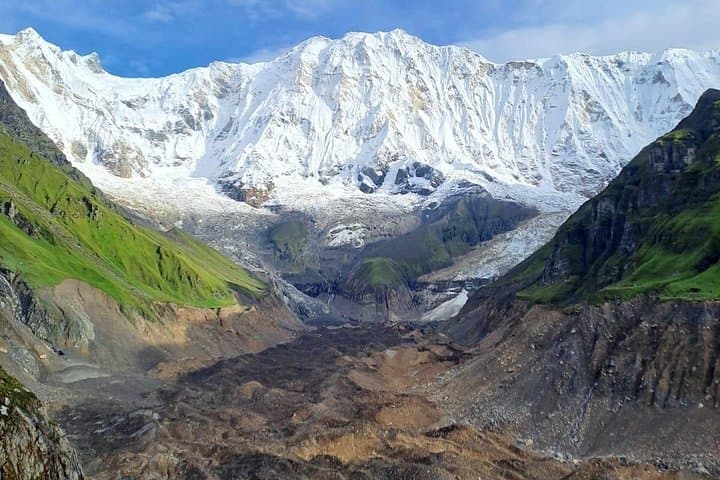
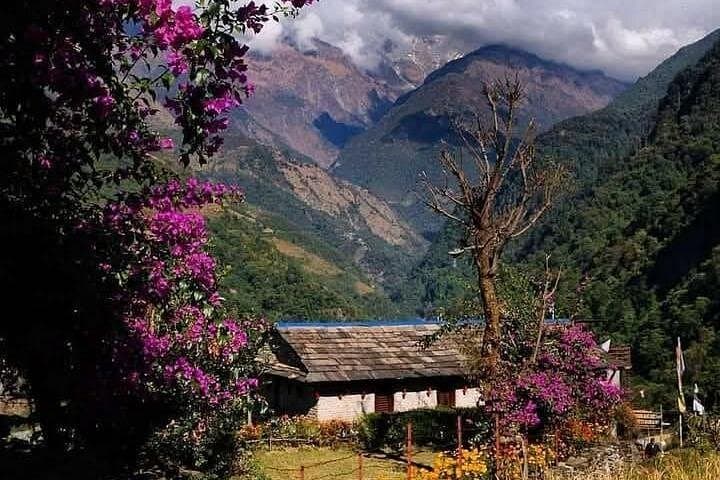
Geology here tells of ancient uplift and more recent glacial sculpting: steep carved valleys and a natural amphitheater ringed by Annapurna I and Machhapuchhre. Culturally, the route threads Gurung and Magar villages — Ghandruk’s stone houses, prayer flags, and tea-house hospitality are as much a part of the trail as the switchbacks. Guides bring local history alive and explain how the Annapurna Conservation Area balances visitor pressure with livelihoods.
Practical guidance is straightforward. Expect 4–7 hours of walking each day on uneven stone steps, muddy trails, and steep ascents to 4,130 m at ABC. Tea houses provide simple meals and rooms; pack layers for early starts and icy nights. Acclimatize by pacing the ascent, stay hydrated, and carry a basic first-aid kit — altitude can arrive quietly. Permits (ACAP and TIMS) and a knowledgeable local guide simplify logistics and support sustainable travel.
This itinerary compresses the classic circuit into a short, immersive push: dramatic sunrise photos at ABC, hot chai in village lodges, and long descent back toward Pokhara. It’s an efficient, vivid Himalayan experience — strenuous but accessible to well-prepared trekkers who respect altitude and the mountain’s rhythms.
Yes — you’ll need the Annapurna Conservation Area Permit (ACAP) and a TIMS card; guides commonly arrange these at the start in Pokhara.
The route is strenuous due to daily elevation gain and long steps; first-time trekkers should be in good shape and consider extra acclimatization time.
Simple tea-house lodges offer shared or private rooms, basic hot meals (dal bhat, noodles, soup) and limited power; bring snacks and a sleeping liner.
Pre- and post-monsoon seasons (mid-September–November and March–May) offer the most stable weather and best visibility.
AM Travels and Tours operates guided outdoor trips and adventures with an emphasis on safety, stewardship, and memorable experiences.
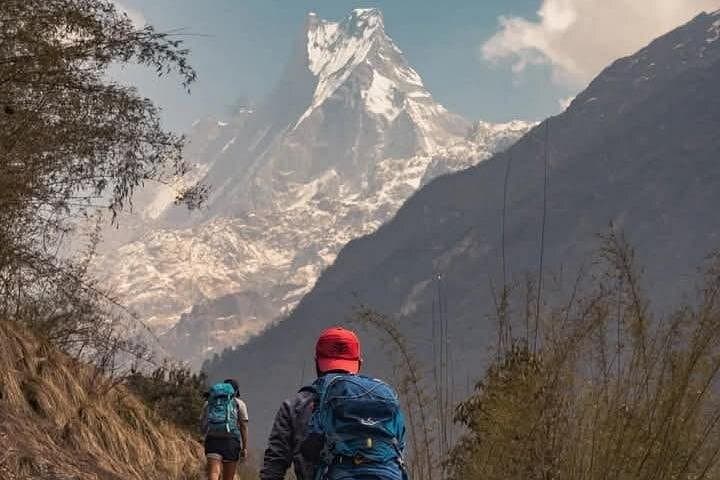

Morning light breaks over Pokhara and the Annapurna massif slowly pulls itself into view — a jagged skyline of snow and rock that dares you forward. The five-day trek from Pokhara to Annapurna Base Camp (ABC) moves quickly from humid terraced hills into bamboo forests, then into high, wind-swept moraine where the sanctuary’s bowl opens and the glaciers seem to breathe.
Morning light breaks over Pokhara and the Annapurna massif slowly pulls itself into view — a jagged skyline of snow and rock that dares you forward. The five-day trek from Pokhara to Annapurna Base Camp (ABC) moves quickly from humid terraced hills into bamboo forests, then into high, wind-swept moraine where the sanctuary’s bowl opens and the glaciers seem to breathe.
Geology here tells of ancient uplift and more recent glacial sculpting: steep carved valleys and a natural amphitheater ringed by Annapurna I and Machhapuchhre. Culturally, the route threads Gurung and Magar villages — Ghandruk’s stone houses, prayer flags, and tea-house hospitality are as much a part of the trail as the switchbacks. Guides bring local history alive and explain how the Annapurna Conservation Area balances visitor pressure with livelihoods.
Practical guidance is straightforward. Expect 4–7 hours of walking each day on uneven stone steps, muddy trails, and steep ascents to 4,130 m at ABC. Tea houses provide simple meals and rooms; pack layers for early starts and icy nights. Acclimatize by pacing the ascent, stay hydrated, and carry a basic first-aid kit — altitude can arrive quietly. Permits (ACAP and TIMS) and a knowledgeable local guide simplify logistics and support sustainable travel.
This itinerary compresses the classic circuit into a short, immersive push: dramatic sunrise photos at ABC, hot chai in village lodges, and long descent back toward Pokhara. It’s an efficient, vivid Himalayan experience — strenuous but accessible to well-prepared trekkers who respect altitude and the mountain’s rhythms.