THE ADVENTURE COLLECTIVE® · Independent discovery and booking for outdoor travel

A compact 5-day trek from Pokhara to Poon Hill that blends mountain panoramas with Gurung village culture. Expect rhododendron forests, stone stairways, and sunrise views over the Annapurna massif.
A compact 5-day trek from Pokhara to Poon Hill that blends mountain panoramas with Gurung village culture. Expect rhododendron forests, stone stairways, and sunrise views over the Annapurna massif.
Dawn breaks over the terraced hills as a column of trekkers climbs the stone steps toward Poon Hill. The air is thin, cold, and sharpened by the Himalaya’s silhouette; eastern light casts Annapurna and Dhaulagiri into hard relief. This five-day route threads village trails and rhododendron forest between Nayapul and Pokhara, finishing with panoramic sunrise views at Poon Hill (≈3,210 m).
Verified experiences and guided adventures in the surrounding area.
Operated by Nepal Mountain Club Pvt Ltd · Pokhara, Gandaki Province
Dawn breaks over the terraced hills as a column of trekkers climbs the stone steps toward Poon Hill. The air is thin, cold, and sharpened by the Himalaya’s silhouette; eastern light casts Annapurna and Dhaulagiri into hard relief. This five-day route threads village trails and rhododendron forest between Nayapul and Pokhara, finishing with panoramic sunrise views at Poon Hill (≈3,210 m).
The trail follows old mule and trade routes used by Gurung and Magar communities; stone stairways and teahouses reflect a long local history of hospitality. Geologically, the Annapurna massif rises from river-cut valleys—ancient sediments forced upward into jagged peaks—so expect steep switchbacks, river crossings, and occasional loose scree where water has cut into the trail.
Cultural notes: Ghandruk offers a compact Gurung village experience and a small cultural museum; locals keep living traditions alive, from communal festivals to terrace farming. Wildlife is active in the quieter hours—pheasants call in the understory and langur or rhesus macaque may cross the path.
Practical guidance: hikers should be in moderate condition, carry layered clothing for large temperature swings, and plan early starts for summit views while avoiding midday clouds. Guesthouses provide simple meals; water-treatment and a headlamp are essential. Daily walking ranges from 4–6 hours with one steep pre-dawn ascent to Poon Hill. Altitude is moderate but monitor for symptoms above 2,500 m. With a local guide and TIMS/ACAP permit in hand, this trek balances high-mountain scenery with approachable villages—an efficient, immersive introduction to Annapurna’s foothills.
Yes—TIMS and Annapurna Conservation Area Project (ACAP) permits are required and typically arranged by your operator or purchased at the park entrance.
The pre-dawn climb to the viewpoint is steep but short (~30–60 minutes from Ghorepani); overall days average 4–6 hours of hiking with steady ascents and descents.
Guesthouses (teahouses) offer simple private or dorm rooms, hot meals, and basic charging—bring cash and be prepared for basic bathroom facilities.
Poon Hill (~3,210 m) is moderate altitude; most trekkers tolerate it if they hydrate, ascend gradually, and watch for early symptoms—descend and seek help if symptoms worsen.
Nepal Mountain Club Pvt Ltd operates guided outdoor trips and adventures with an emphasis on safety, stewardship, and memorable experiences.
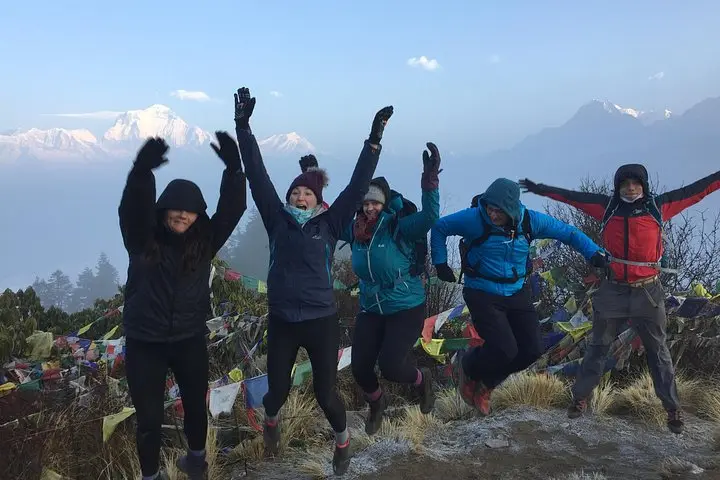
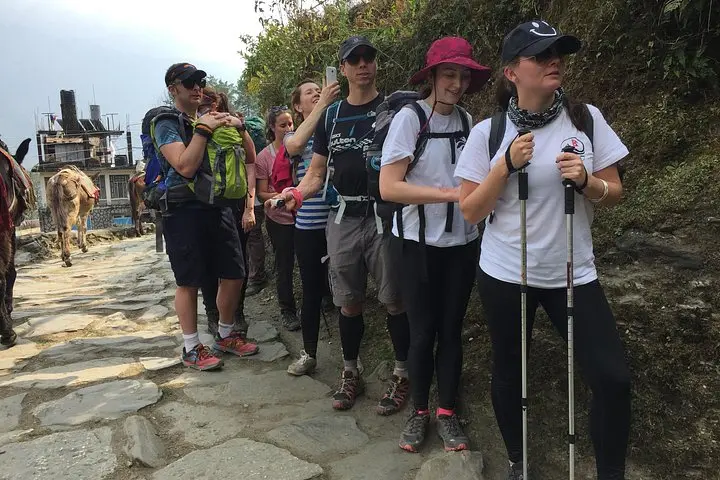
Dawn breaks over the terraced hills as a column of trekkers climbs the stone steps toward Poon Hill. The air is thin, cold, and sharpened by the Himalaya’s silhouette; eastern light casts Annapurna and Dhaulagiri into hard relief. This five-day route threads village trails and rhododendron forest between Nayapul and Pokhara, finishing with panoramic sunrise views at Poon Hill (≈3,210 m).
Dawn breaks over the terraced hills as a column of trekkers climbs the stone steps toward Poon Hill. The air is thin, cold, and sharpened by the Himalaya’s silhouette; eastern light casts Annapurna and Dhaulagiri into hard relief. This five-day route threads village trails and rhododendron forest between Nayapul and Pokhara, finishing with panoramic sunrise views at Poon Hill (≈3,210 m).
The trail follows old mule and trade routes used by Gurung and Magar communities; stone stairways and teahouses reflect a long local history of hospitality. Geologically, the Annapurna massif rises from river-cut valleys—ancient sediments forced upward into jagged peaks—so expect steep switchbacks, river crossings, and occasional loose scree where water has cut into the trail.
Cultural notes: Ghandruk offers a compact Gurung village experience and a small cultural museum; locals keep living traditions alive, from communal festivals to terrace farming. Wildlife is active in the quieter hours—pheasants call in the understory and langur or rhesus macaque may cross the path.
Practical guidance: hikers should be in moderate condition, carry layered clothing for large temperature swings, and plan early starts for summit views while avoiding midday clouds. Guesthouses provide simple meals; water-treatment and a headlamp are essential. Daily walking ranges from 4–6 hours with one steep pre-dawn ascent to Poon Hill. Altitude is moderate but monitor for symptoms above 2,500 m. With a local guide and TIMS/ACAP permit in hand, this trek balances high-mountain scenery with approachable villages—an efficient, immersive introduction to Annapurna’s foothills.