THE ADVENTURE COLLECTIVE® · Independent discovery and booking for outdoor travel

Traverse Morocco’s imperial cities, Atlas passes, and the orange dunes of Erg Chebbi on a compact 5-day route from Casablanca to Marrakech. Expect long drives, short hikes, a sunset camel ride, and a night under the desert sky.
Traverse Morocco’s imperial cities, Atlas passes, and the orange dunes of Erg Chebbi on a compact 5-day route from Casablanca to Marrakech. Expect long drives, short hikes, a sunset camel ride, and a night under the desert sky.
You step from Casablanca’s Atlantic breeze into a cab and the country folds out: white-washed medinas, cedar forests, and a road that climbs through the High Atlas until the desert takes the wheel. Over five days the itinerary reads like a cross-section of Morocco—imperial cities, cedar-clad passes, canyon walls, and finally, hours of wind-sculpted sand in Erg Chebbi.
Verified experiences and guided adventures in the surrounding area.
Operated by Caravane Du Grand Erg · Merzouga, Errachidia Province
You step from Casablanca’s Atlantic breeze into a cab and the country folds out: white-washed medinas, cedar forests, and a road that climbs through the High Atlas until the desert takes the wheel. Over five days the itinerary reads like a cross-section of Morocco—imperial cities, cedar-clad passes, canyon walls, and finally, hours of wind-sculpted sand in Erg Chebbi.
The route threads history and geology. Rabat’s Oudaya Kasbah and Hassan Tower point to 17th-century statecraft; Meknes and Fez echo older dynasties with fortified gates and the UNESCO-listed Fez medina. The Middle and High Atlas are uplifted limestone and volcanic foothills; Tizi n’Tichka reaches roughly 2,260 m, offering panoramic views over terraced Berber villages. Eastward the Ziz Valley’s palm oases mark a transition into Saharan erg—dunes that shift color with the sun and hold millennia of wind-borne stories.
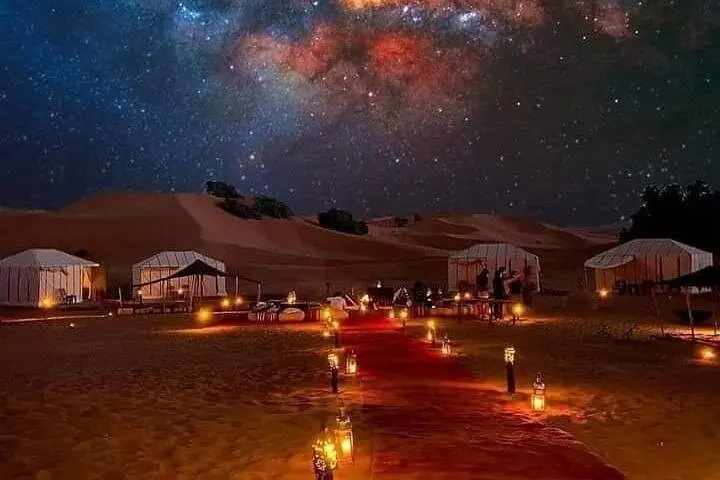
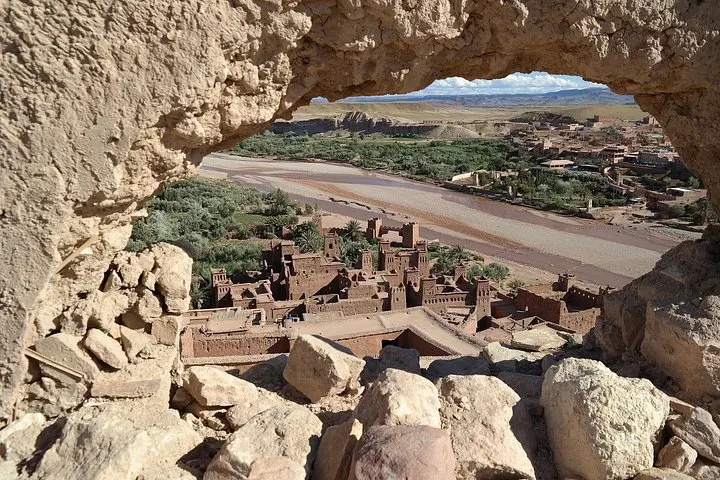
Cultural moments are compact and vivid: indigo dye vats at Fez’s tanneries, evening drums at a desert camp, and kasbah architecture of rammed earth and mudbrick along the road. Expect long driving days punctuated by short walks—a canyon stroll at Todra, sunrise from a dune, and guided navigation through narrow medina alleys.
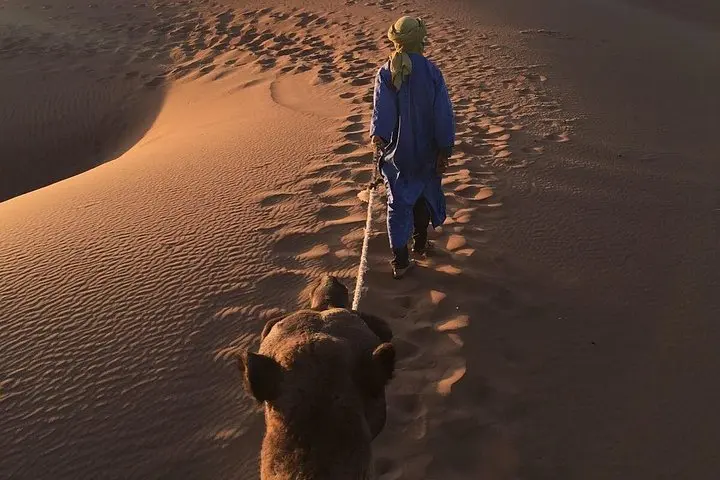
Practical guidance: pack layers for cold desert nights and warm days, bring cash for souks and small villages, and allow time for motion on mountain passes. The trip blends comfortable vehicle travel (4x4/SUV) with light trekking and a 1-hour camel ride at sunset; basic mobility is sufficient but prepare for uneven surfaces and sand.
Expect several long driving legs—some days up to 6–7 hours—broken by regular stops for photos, short walks, and meals.
Yes; camel treks are guided and short (about 1 hour at sunset), but let the operator know if you have mobility issues or back concerns.
Visa requirements vary by nationality—check Moroccan entry rules before travel; routine vaccinations are recommended; consult your health provider for up-to-date advice.
Bring a small, soft overnight bag for desert camp; larger suitcases remain in the vehicle. Confirm baggage limits with the operator in advance.
Caravane Du Grand Erg operates guided outdoor trips and adventures with an emphasis on safety, stewardship, and memorable experiences.
You step from Casablanca’s Atlantic breeze into a cab and the country folds out: white-washed medinas, cedar forests, and a road that climbs through the High Atlas until the desert takes the wheel. Over five days the itinerary reads like a cross-section of Morocco—imperial cities, cedar-clad passes, canyon walls, and finally, hours of wind-sculpted sand in Erg Chebbi.
You step from Casablanca’s Atlantic breeze into a cab and the country folds out: white-washed medinas, cedar forests, and a road that climbs through the High Atlas until the desert takes the wheel. Over five days the itinerary reads like a cross-section of Morocco—imperial cities, cedar-clad passes, canyon walls, and finally, hours of wind-sculpted sand in Erg Chebbi.
The route threads history and geology. Rabat’s Oudaya Kasbah and Hassan Tower point to 17th-century statecraft; Meknes and Fez echo older dynasties with fortified gates and the UNESCO-listed Fez medina. The Middle and High Atlas are uplifted limestone and volcanic foothills; Tizi n’Tichka reaches roughly 2,260 m, offering panoramic views over terraced Berber villages. Eastward the Ziz Valley’s palm oases mark a transition into Saharan erg—dunes that shift color with the sun and hold millennia of wind-borne stories.
Cultural moments are compact and vivid: indigo dye vats at Fez’s tanneries, evening drums at a desert camp, and kasbah architecture of rammed earth and mudbrick along the road. Expect long driving days punctuated by short walks—a canyon stroll at Todra, sunrise from a dune, and guided navigation through narrow medina alleys.
Practical guidance: pack layers for cold desert nights and warm days, bring cash for souks and small villages, and allow time for motion on mountain passes. The trip blends comfortable vehicle travel (4x4/SUV) with light trekking and a 1-hour camel ride at sunset; basic mobility is sufficient but prepare for uneven surfaces and sand.