THE ADVENTURE COLLECTIVE® · Independent discovery and booking for outdoor travel

Five days that compress Sri Lanka’s heart: coastal Negombo, the rock palace of Sigiriya, elephant congregations at Minneriya, Kandy’s sacred tooth and cool tea country in Nuwara Eliya. This private loop balances cultural sites with wildlife and manageable drives.
Five days that compress Sri Lanka’s heart: coastal Negombo, the rock palace of Sigiriya, elephant congregations at Minneriya, Kandy’s sacred tooth and cool tea country in Nuwara Eliya. This private loop balances cultural sites with wildlife and manageable drives.
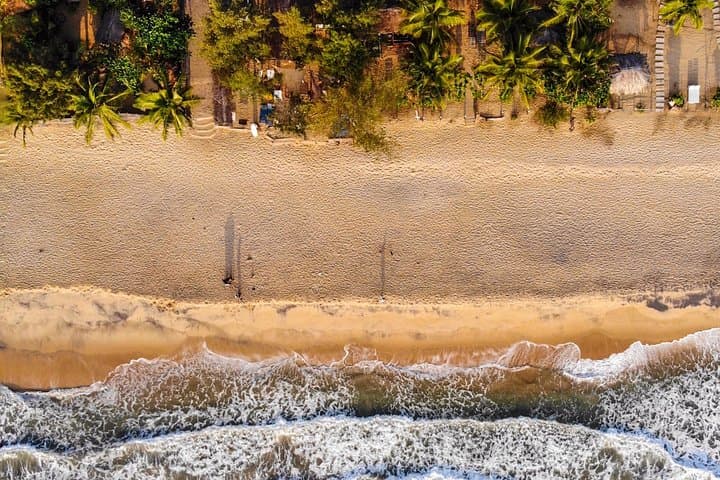
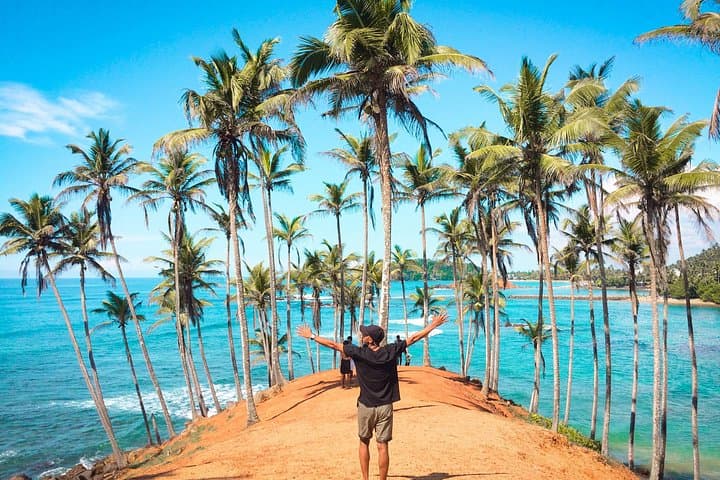
You step off the plane into humid night air and a chauffeur-guide greets you with a garland — a small, fragrant promise of what’s ahead. The first morning opens on Negombo’s lagoon: fisherfolk hauling nets, gulls bickering over fresh catch, and a narrow Dutch canal that threads the town like a quiet artery. From the flat coastal plain the road climbs inland, trading palm-fringed beaches for a patchwork of paddy fields and, eventually, the sheer vertical face of Sigiriya — a 200‑metre rock that rises like a fortress from the Central Province.
Verified experiences and guided adventures in the surrounding area.
Operated by Royal Travel LK · Sigiriya, Central Province
You step off the plane into humid night air and a chauffeur-guide greets you with a garland — a small, fragrant promise of what’s ahead. The first morning opens on Negombo’s lagoon: fisherfolk hauling nets, gulls bickering over fresh catch, and a narrow Dutch canal that threads the town like a quiet artery. From the flat coastal plain the road climbs inland, trading palm-fringed beaches for a patchwork of paddy fields and, eventually, the sheer vertical face of Sigiriya — a 200‑metre rock that rises like a fortress from the Central Province.
Climbing Sigiriya is both historical and kinetic. The ascent uses iron staircases and carved steps that negotiate roughly 200m of elevation gain; expect steep, exposed sections and about 1,000–1,200 steps to reach the palace terraces. The rock is an ancient magmatic mass — a hard, erosion-resistant remnant — and atop it sits the ruins of a 5th‑century royal complex, frescoes, and engineered gardens that show surprising hydraulic sophistication.
Nearby, Dambulla’s cave temples offer the opposite sensation: cool, shadowed interiors thick with murals and 2,000 years of Buddhist devotion. Move through the Cultural Triangle to Polonnaruwa and its open-air city of stone carvings, vatadages (circular relic houses), and the waterworks of medieval kings. By late afternoon you can be in Minneriya National Park, where the dry season corrals elephants around an ancient reservoir — an extraordinary wildlife moment that is best observed patiently from the vehicle.
Kandy shifts the mood again: manicured Peradeniya Botanical Garden, the ceremonial rhythms of the Temple of the Tooth, and a city perched at ~500m with cooler evenings. The final leg takes you higher into tea country; Nuwara Eliya sits near 1,900m, where the air is noticeably cooler and the slopes are stitched with emerald tea terraces and colonial bungalows. Gregory Lake offers a gentle finish: lakeshore walks, swan boats and a chance to digest the past five days.
Practicalities: the full loop covers roughly 600–700 km of driving over five days—expect multiple 2–4 hour drives between stops on mostly paved roads, with hairpin turns into the hill country. Bring sturdy walking shoes for Sigiriya’s stairs and uneven archaeological sites, sun protection for lowland days, and a warm layer for evenings in Nuwara Eliya. Respect temple dress codes (shoulders and knees covered), carry local cash for small vendors, and allow time for wildlife viewing rather than rushing — elephants and birds often dictate the pace.
This private, air‑conditioned tour is geared to travelers who want a compact, curated sweep through Sri Lanka’s essential cultural and natural highlights: history, geology and a close look at a landscape that still runs on its old rhythms.
Yes—private transport and flexible pacing make it family‑friendly; note Sigiriya’s exposed stair sections may be challenging for very young children.
The itinerary notes that admissions are not included by default—confirm with the operator which historic site fees are covered at booking.
Expect several drives of 2–4 hours between stops; the whole loop covers roughly 600–700 km across five days.
Yes—booking questions collect special requirements; operators can usually arrange vegetarian, halal or allergy‑friendly meals with advance notice.
Tipping is customary but discretionary; 5–10 USD per day for guides (or local equivalent) is a common guideline for good service.
The operator lists wheelchair accessibility for transport, but major sites like Sigiriya and cave temples have stairs and uneven terrain that limit access.
Royal Travel LK operates guided outdoor trips and adventures with an emphasis on safety, stewardship, and memorable experiences.


You step off the plane into humid night air and a chauffeur-guide greets you with a garland — a small, fragrant promise of what’s ahead. The first morning opens on Negombo’s lagoon: fisherfolk hauling nets, gulls bickering over fresh catch, and a narrow Dutch canal that threads the town like a quiet artery. From the flat coastal plain the road climbs inland, trading palm-fringed beaches for a patchwork of paddy fields and, eventually, the sheer vertical face of Sigiriya — a 200‑metre rock that rises like a fortress from the Central Province.
You step off the plane into humid night air and a chauffeur-guide greets you with a garland — a small, fragrant promise of what’s ahead. The first morning opens on Negombo’s lagoon: fisherfolk hauling nets, gulls bickering over fresh catch, and a narrow Dutch canal that threads the town like a quiet artery. From the flat coastal plain the road climbs inland, trading palm-fringed beaches for a patchwork of paddy fields and, eventually, the sheer vertical face of Sigiriya — a 200‑metre rock that rises like a fortress from the Central Province.
Climbing Sigiriya is both historical and kinetic. The ascent uses iron staircases and carved steps that negotiate roughly 200m of elevation gain; expect steep, exposed sections and about 1,000–1,200 steps to reach the palace terraces. The rock is an ancient magmatic mass — a hard, erosion-resistant remnant — and atop it sits the ruins of a 5th‑century royal complex, frescoes, and engineered gardens that show surprising hydraulic sophistication.
Nearby, Dambulla’s cave temples offer the opposite sensation: cool, shadowed interiors thick with murals and 2,000 years of Buddhist devotion. Move through the Cultural Triangle to Polonnaruwa and its open-air city of stone carvings, vatadages (circular relic houses), and the waterworks of medieval kings. By late afternoon you can be in Minneriya National Park, where the dry season corrals elephants around an ancient reservoir — an extraordinary wildlife moment that is best observed patiently from the vehicle.
Kandy shifts the mood again: manicured Peradeniya Botanical Garden, the ceremonial rhythms of the Temple of the Tooth, and a city perched at ~500m with cooler evenings. The final leg takes you higher into tea country; Nuwara Eliya sits near 1,900m, where the air is noticeably cooler and the slopes are stitched with emerald tea terraces and colonial bungalows. Gregory Lake offers a gentle finish: lakeshore walks, swan boats and a chance to digest the past five days.
Practicalities: the full loop covers roughly 600–700 km of driving over five days—expect multiple 2–4 hour drives between stops on mostly paved roads, with hairpin turns into the hill country. Bring sturdy walking shoes for Sigiriya’s stairs and uneven archaeological sites, sun protection for lowland days, and a warm layer for evenings in Nuwara Eliya. Respect temple dress codes (shoulders and knees covered), carry local cash for small vendors, and allow time for wildlife viewing rather than rushing — elephants and birds often dictate the pace.
This private, air‑conditioned tour is geared to travelers who want a compact, curated sweep through Sri Lanka’s essential cultural and natural highlights: history, geology and a close look at a landscape that still runs on its old rhythms.