THE ADVENTURE COLLECTIVE® · Independent discovery and booking for outdoor travel

Small-group sailing, close wildlife encounters and short volcanic hikes define this 5-day east Galápagos cruise aboard the Monserrat. Expect snorkels at Pinnacle Rock, tortoise sightings in Santa Cruz highlands and guided walks across unique volcanic terrain.
Small-group sailing, close wildlife encounters and short volcanic hikes define this 5-day east Galápagos cruise aboard the Monserrat. Expect snorkels at Pinnacle Rock, tortoise sightings in Santa Cruz highlands and guided walks across unique volcanic terrain.
The day you board the Monserrat, the Pacific opens like a promise: low clouds slip off distant volcanic cones and sea lions sun themselves on black lava outcrops as the yacht eases away from Baltra.
Verified experiences and guided adventures in the surrounding area.
Operated by Monserrat Galapagos Cruises · Puerto Ayora, Galápagos Province
The day you board the Monserrat, the Pacific opens like a promise: low clouds slip off distant volcanic cones and sea lions sun themselves on black lava outcrops as the yacht eases away from Baltra.
Onboard, the rhythm is deliberate — mornings for shore hikes and snorkeling, afternoons for reading the water and watching frigatebirds drift on thermal lifts. The Monserrat’s small group size (maximum 20) makes each landing feel intimate; a naturalist guide points out the exact rock where blue-footed boobies tumble in courtship or where a land iguana suns itself among cactus pads.
Geology writes itself on every shore here: tuff cones at Punta Pitt, basalt flows on Santa Cruz, and the stair-stepped volcanic remnant of Bartolomé, whose summit offers a cross-section view of the archipelago’s violent birth. Human history is quieter but present — the trail to the highlands of Santa Cruz threads through former ranchlands and ancient lava tubes where early settlers found shelter and later, scientists catalogued species that exist nowhere else on Earth.
Each island has a personality. Rábida’s red sand dares you to compare it with inland greens; South Plaza is a riot of Opuntia cactus forests and laid-back land iguanas; Bartolomé’s Pinnacle Rock stands like an old guard against the currents, its beaches ringed with penguins and sea turtles. In the water, currents sculpt life: fish and rays migrate through channels while marine iguanas graze on underwater algae like slow, armored divers.
Practicalities are simple but essential. Expect four full days of guided excursions — short hikes up to 1 km on volcanic slopes and frequent wet landings where ankle-support shoes and quick-dry layers matter. Snorkeling is offered at multiple stops; short wetsuits and masks are provided, but bringing a well-fit mask and reef-safe sunscreen improves your comfort and reduces ecological impact.
Pace your days around tide and sun. Early walks are cooler and wildlife is more active; afternoons often bring clearer water for snorkeling. Pack motion-sickness prevention if you’re sensitive — open ocean crossings between islands can be energetic. Remember the guiding principle here: keep your distance, move quietly, and let the islands reveal themselves on their timetable.
By trip’s end — disembarking at San Cristóbal — you’ve seen sea lions claim beaches, boobies perform aerial dances, and tortoises in misty highlands. The Monserrat trip isn’t just a cruise; it’s a practiced passing through a fragile archipelago where small-group travel amplifies encounters without overwhelming the place.
No—Galápagos National Park entrance fees are typically paid on arrival to the islands and are not included in the cruise price.
Yes for older children who can follow guide instructions and handle wet landings; infants must sit on an adult’s lap per booking rules.
Yes—short wetsuits, masks, snorkels and kayaks/SUPs are listed as included, though bringing your own mask can improve fit and comfort.
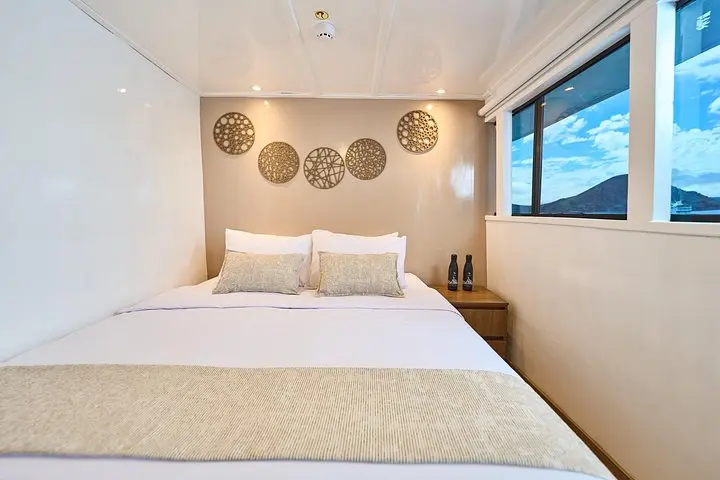
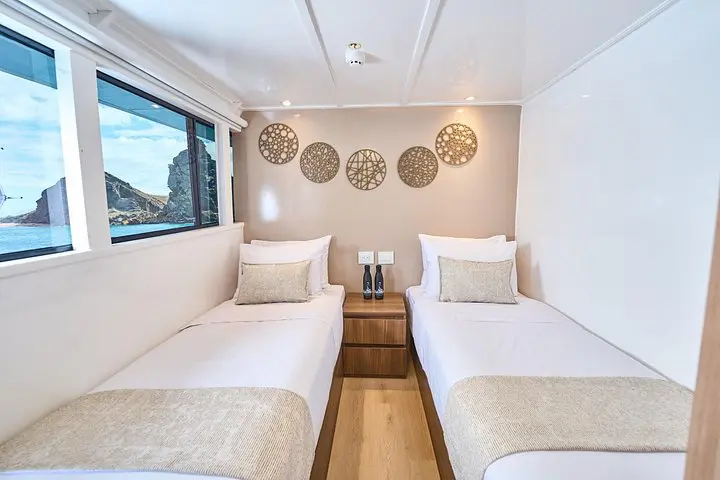
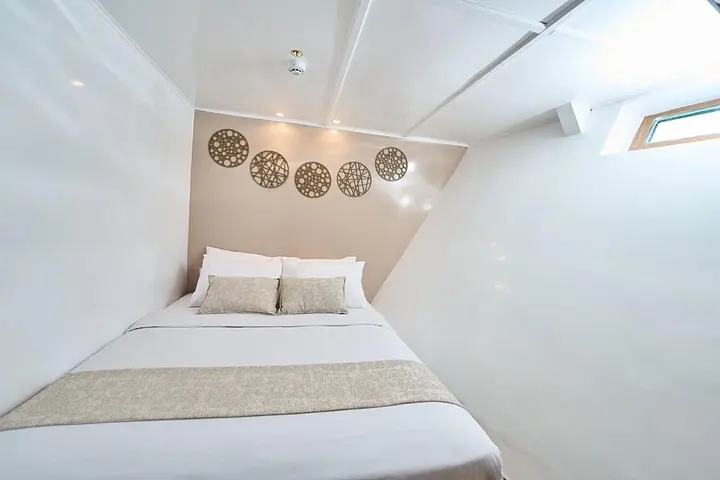
The Monserrat is a small yacht with a maximum of 20 passengers and a high guide-to-guest ratio (1 guide per ~10 guests), offering double cabins as described.
Most travelers fly into Baltra Airport; the meeting time is typically just after arrival, and the tour notes a group meet at the Baltra Airport Passengers Arrival Section.
This itinerary lists an all-sales-final policy—no refunds for cancellations; the operator may cancel for bad weather and will notify passengers accordingly.
Monserrat Galapagos Cruises operates guided outdoor trips and adventures with an emphasis on safety, stewardship, and memorable experiences.
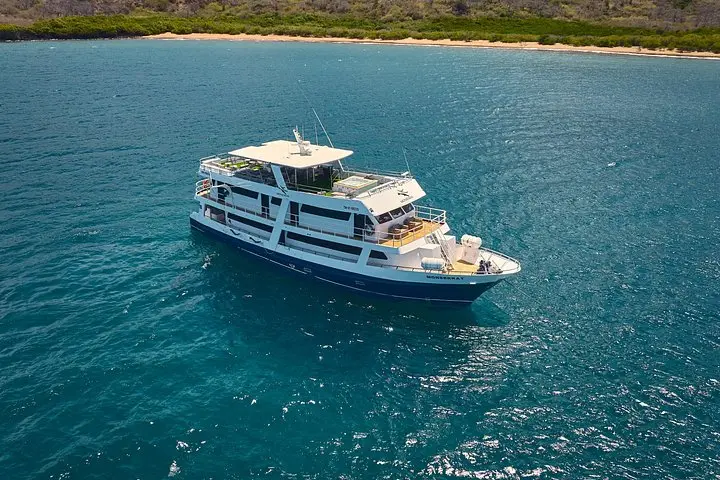
The day you board the Monserrat, the Pacific opens like a promise: low clouds slip off distant volcanic cones and sea lions sun themselves on black lava outcrops as the yacht eases away from Baltra.
The day you board the Monserrat, the Pacific opens like a promise: low clouds slip off distant volcanic cones and sea lions sun themselves on black lava outcrops as the yacht eases away from Baltra.
Onboard, the rhythm is deliberate — mornings for shore hikes and snorkeling, afternoons for reading the water and watching frigatebirds drift on thermal lifts. The Monserrat’s small group size (maximum 20) makes each landing feel intimate; a naturalist guide points out the exact rock where blue-footed boobies tumble in courtship or where a land iguana suns itself among cactus pads.
Geology writes itself on every shore here: tuff cones at Punta Pitt, basalt flows on Santa Cruz, and the stair-stepped volcanic remnant of Bartolomé, whose summit offers a cross-section view of the archipelago’s violent birth. Human history is quieter but present — the trail to the highlands of Santa Cruz threads through former ranchlands and ancient lava tubes where early settlers found shelter and later, scientists catalogued species that exist nowhere else on Earth.
Each island has a personality. Rábida’s red sand dares you to compare it with inland greens; South Plaza is a riot of Opuntia cactus forests and laid-back land iguanas; Bartolomé’s Pinnacle Rock stands like an old guard against the currents, its beaches ringed with penguins and sea turtles. In the water, currents sculpt life: fish and rays migrate through channels while marine iguanas graze on underwater algae like slow, armored divers.
Practicalities are simple but essential. Expect four full days of guided excursions — short hikes up to 1 km on volcanic slopes and frequent wet landings where ankle-support shoes and quick-dry layers matter. Snorkeling is offered at multiple stops; short wetsuits and masks are provided, but bringing a well-fit mask and reef-safe sunscreen improves your comfort and reduces ecological impact.
Pace your days around tide and sun. Early walks are cooler and wildlife is more active; afternoons often bring clearer water for snorkeling. Pack motion-sickness prevention if you’re sensitive — open ocean crossings between islands can be energetic. Remember the guiding principle here: keep your distance, move quietly, and let the islands reveal themselves on their timetable.
By trip’s end — disembarking at San Cristóbal — you’ve seen sea lions claim beaches, boobies perform aerial dances, and tortoises in misty highlands. The Monserrat trip isn’t just a cruise; it’s a practiced passing through a fragile archipelago where small-group travel amplifies encounters without overwhelming the place.